I remember how special it was to get a phone call from you congratulating me on my acceptance. I had just finished a long shift at Chick-fil-A and was gearing up to cover the night shift at the hospital as a medical scribe. To say I was ecstatic when I received your call would be an understatement.
You see, I was fortunate to have been interviewed at multiple medical schools during the crazy medical school application process and so was able to clearly see the differences in what medical schools valued most. Some schools boasted strong research programsbelieving that thesewere what makes the best doctors, others bragged about how their curriculum kept churning out alumni that became political powerhouses, and still others emphasized their high match rates in incredibly competitive specialties. But you were different. During interview day you emphasized what you thought was most important in future doctors: empathy and compassion. You addressed the reality of physician burnout head-on and prioritized the mental health of your students. The feelingI got from each of your admissions committee members was one of warmth and excitement instead of the feeling of competition that I felt during other interviews.So despite these other great choices, I chose you.
I am now a second year medical student and am even more sure of my decision to come here for medical school.Thanks to you I have been able to have many hospital and clinical experiences in surgery, internal medicine, psychiatry, family medicine, Obstetrics and gynecology, Emergency Medicine and pediatrics despite only being a second year medical student. In each specialty, I am able to work side by side with fantastic doctors who are not only willing to teach me medicine, but also advise me on how to move forward along this rigorous path. The early exposure toreal patients has opened my eyes to all the different facets of medicine and made it easier for me to determine what specialties and pathway I want to take and what I want my future career to look like as a practicing physician.
So thank you, TCU and UNTHSC School of Medicine – you rock!
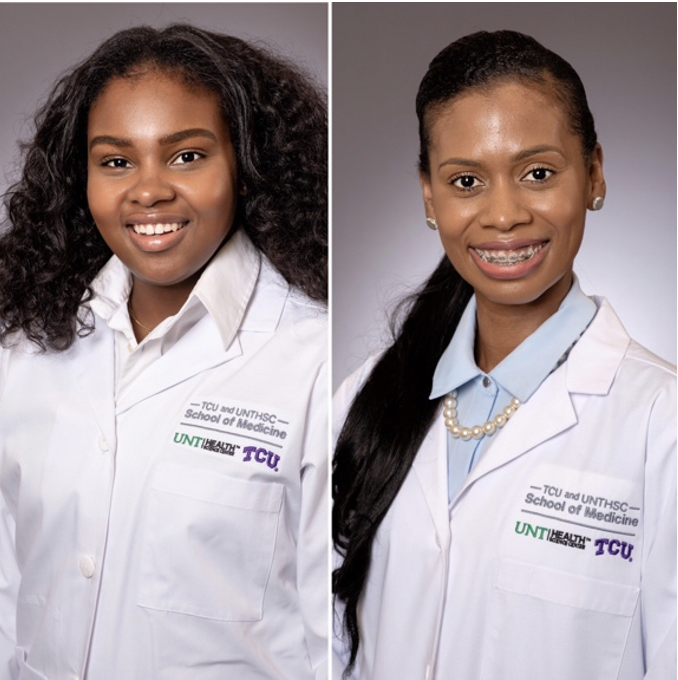
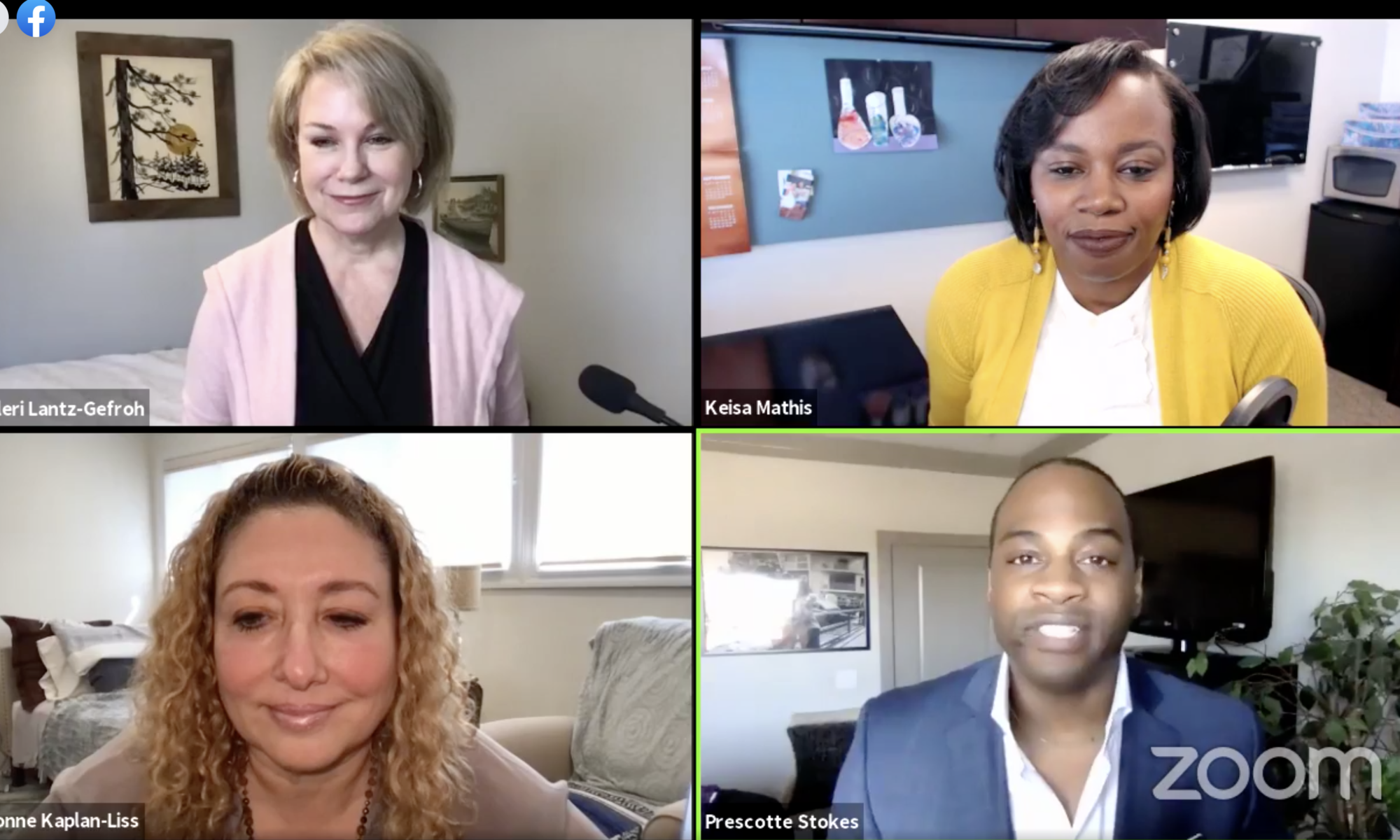
Throughout February, the TCU and UNTHSC School of Medicine is celebrating Black History Month by having conversations with African-American female physicians about their journey into medicine and why younger African-Americans should consider a career in health care.
School of Medicine faculty members Amani Terrell, M.D., associate professor, Kimberly Washington, M.D., assistant professor, Candace Gamble, M.D., assistant professor and Daisy Nwachukwu, M.D., assistant professor, shared their thoughts on a range of topics about the importance of having more African-American representation in healthcare.
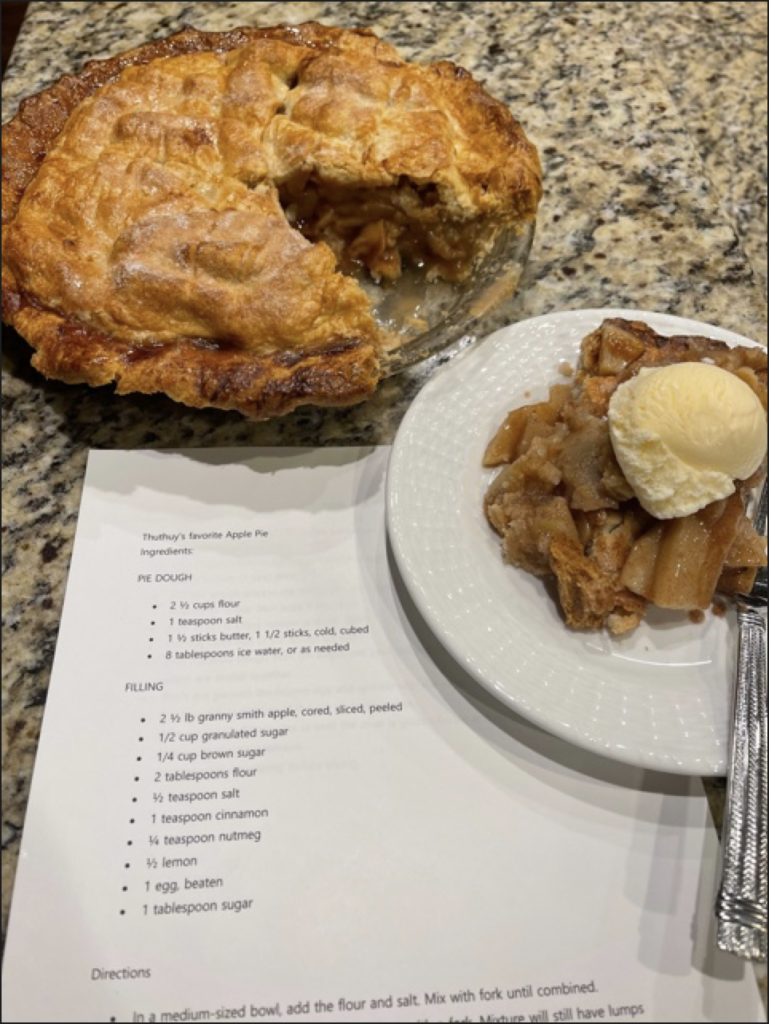
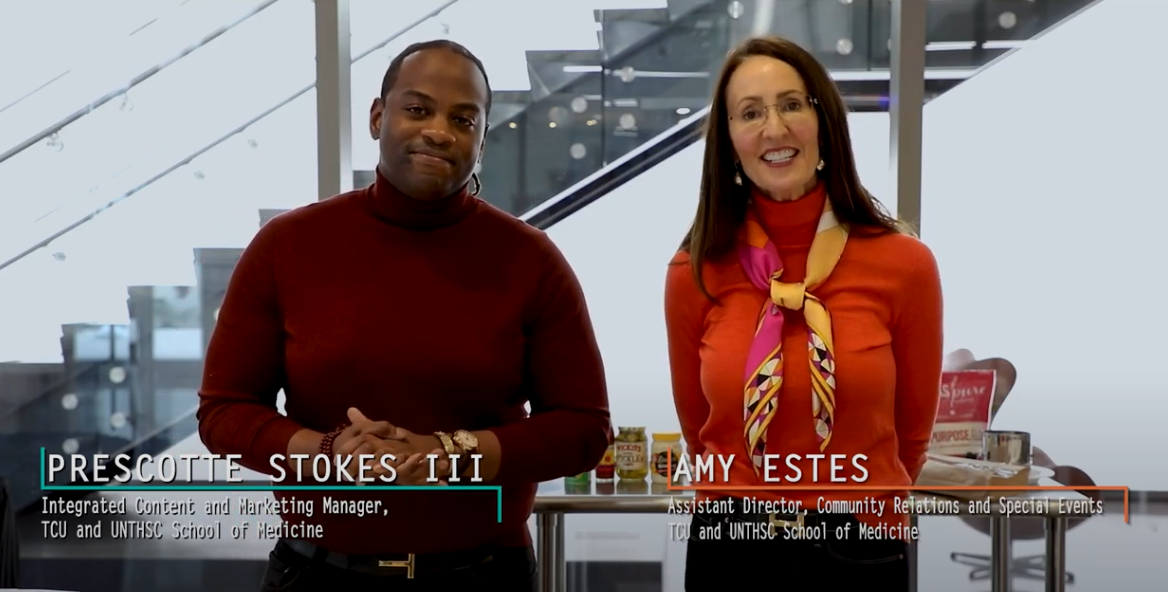
FORT WORTH — TCU and UNTHSC School of Medicine staff members provided food and beer pairing for employees on January 27, 2021. Hosted by Amy Estes, assistant director for community relations and special events, with special guest Amber Heck, Ph.D., associate professor, who prepared delicious and practical crockpot freezer meals and suggested beer pairings. VIEW .PDF OF RECIPES.
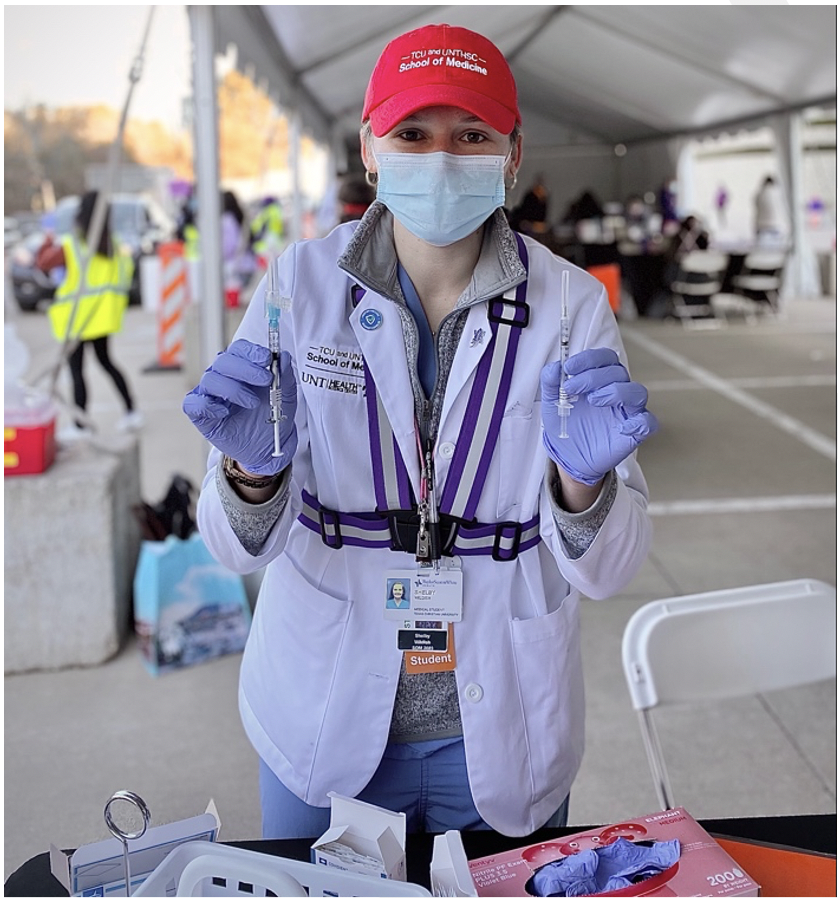
TCU’s Amon G. Carter Stadium parking lots will serve as the location for site. Staffing of the site will be a collaboration of Baylor Scott & White Health and TCU. Baylor Scott & White Health employees will administer vaccine initially, with plans for support from faculty and students of TCU’s Department of Nursing and TCU and UNTHSC School of Medicine underway.
“It’s important that the TCU community be part of the solution to this damaging pandemic. We are proud to partner with other community leaders to extend our work in support of the greater good,” said TCU Chancellor Victor J. Boschini, Jr. “This partnership with Baylor Scott & White Health and Tarrant County Public Health allows us to serve our Fort Worth and Tarrant County neighbors.”
Officials plan for the TCU site to be open Fridays, Saturdays and Sundays, beginning Saturday, Feb. 27, with 1,000 vaccines; you must have an appointment to be vaccinated. Officials expect to serve up to 2,500 residents a day at full capacity.
“The new drive-thru COVID-19 vaccination location will provide a safe and fast way for people to receive their immunization,” said Vinny Taneja, Tarrant County Public Health director. “Tarrant County Public Health and its partners have provided more than 135,000 vaccinations. Adding, Baylor Scott & White and TCU is a win for us all.”
Baylor Scott & White Health will notify patients 48 hours prior to their appointment time. All patients must have an appointment; walk-ups or drive-ups without an appointment will be turned away.
“This collaboration will allow more in our community to be vaccinated safely and quickly,” said Mike Sanborn, president of Baylor Scott & White All Saints Medical Center – Fort Worth. “We are excited to be involved in this effort, and we remain committed to educating our community – addressing questions and concerns so we may all become community advocates of the COVID-19 vaccination effort and help put an end to this pandemic.”
The site will serve those who are registered for the COVID-19 vaccine through Tarrant County Public Health and/or those who are registered through Baylor Scott & White Health. In accordance with state and federal guidance, distribution priority includes those at the highest risk of severe illness from COVID-19 – those who fall into Phase 1A and 1B.
Tarrant County has advised all residents to register for the vaccine to make distribution go more smoothly once the various priority groups are reached. In addition to registering for the vaccine through Tarrant County Public Health, all residents are invited to register through Baylor Scott & White Health’s MyBSWHealth website or app, regardless of whether or not they are a current patient.
“Amazing partners come together in challenging times to achieve great things. It’s so wonderful to see the Fort Worth community collaborate to meet some of our greatest needs,” said Stuart D. Flynn, MD, founding dean of the TCU and UNTHSC School of Medicine. “Our students are learning from, and will be participating in, one of the best examples of how a community rallies to help its own, a powerful example of servant leadership.”
Nursing faculty and students from TCU’s Harris College of Nursing & Health Sciences will also play an important role.
“TCU nursing students and faculty are skilled at administering vaccines. We’ve been waiting for this moment to be called on to help get COVID-19 vaccines in arms and look forward to serving our community,” said Suzy Lockwood, Ph.D., MSN, RN, OCN, FAAN, associate dean for nursing and nurse anesthesia and professor of nursing for the Harris College of Nursing & Health Sciences.
TCU Neighbors
Planning efforts by TCU include those from the TCU Department of Public Safety to manage traffic flow and outreach to area neighbors, supported by the city of Fort Worth and the Fort Worth Police Department.
“Vaccinations allow us to play offense – instead of defense – in the fight against COVID-19. Our talented staff and clinical professionals have worked diligently to make this a smooth process so we can help protect the wider community,” Chancellor Boschini said.
TCU has requested vaccine for all TCU employees and students but has no timeline for delivery. Visit TCU’s vaccine communication page and FAQ for the most up-to-date information.
About Baylor Scott & White Health
As the largest not-for-profit health system in the state of Texas, Baylor Scott & White Health promotes the health and well-being of every individual, family and community it serves. An integrated care delivery network, the system includes the Scott and White Health Plan, Baylor Scott & White Research Institute and Baylor Scott & White Quality Alliance. Through 51 hospitals and more than 1,100 access points including flagship academic medical centers in Dallas and Temple, the system offers the full continuum of care, from primary to award-winning specialty care, throughout Texas, and via virtual touchpoints. If its service area were a state, it would be the eighth largest, providing care to a population larger than that of the state of Georgia. Founded as a Christian ministry of healing, Baylor Scott & White is proud to honor its century-long legacy through its commitment to improving accessibility, affordability and the customer experience for all. For more information, visit BSWHealth.com
About the TCU and UNTHSC School of Medicine
The TCU and UNTHSC School of Medicine, Fort Worth’s M.D. school, opened with a class of 60 students in July 2019. TCU and UNTHSC joined together in July 2015 to form this new allopathic medical school. The School of Medicine’s focus on communication, a first-of-its-kind curriculum and the development of Empathetic Scholars™ uniquely positions the organization to radically transform medical education, improving care for future generations. To make this new school possible, the greater North Texas community stepped up to help, providing philanthropic support. The school’s current Founding Donors include Alcon, Amon G. Carter Foundation, Baylor Scott & White, The Burnett Foundation, Cook Children’s, Texas Health Resources, Mr. H. Paul Dorman, Mr. Arnold and Mrs. Harriette Gachman, Dr. John and Mrs. Priscilla Geesbreght, Anonymous, Sid W. Richardson Foundation, Rebecca and Jon Brumley, The Morris Foundation, Martha Sue Parr Trust, Tartaglino Richards Family Foundation, and Thomas M., Helen McKee, John P. Ryan Foundation and an anonymous donor. For more information, visit mdschool.tcu.edu
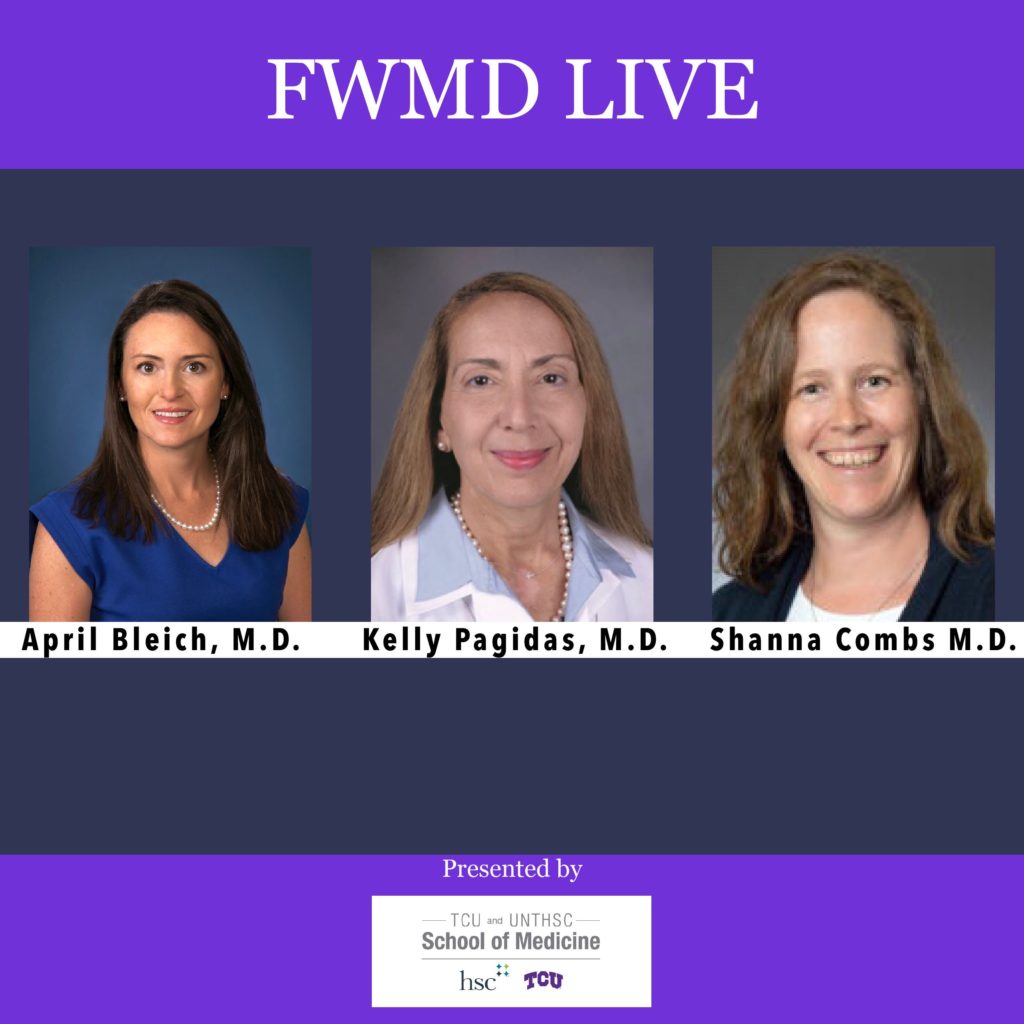
FORT WORTH – How are Tarrant County public health officials getting the word out about COVID-19 vaccinations to residents in communities who need it most? What measures have been put in place for the Spring 2021 semester to keep college students safe in classrooms and across campus? These questions and more were answered by experts during our FWMD LIVE chat on Thursday, January 28, 2021.
TCU Chancellor Victor J. Boschini Jr. along with Stuart D. Flynn, M.D., the Founding Dean of TCU and UNTHSC School of Medicine, Giridhar Akkaraju, Ph.D., a Professor and Department Chair at TCU’s College of Science & Engineering and Veerinder (Vinny) Taneja, MBBS, MPH, the Health Director of Tarrant County Public Health answered questions about COVID-19 vaccinations and measures being taken to keep college campuses safe during the pandemic.
You can watch the full discussion below.
Here are some helpful links from Tarrant County Public Health and TCU:
For information on Tarrant County COVID-19 vaccinations: com/covidvaccine
This is the link for Tarrant County COVID Vaccines: com/covidshot
FORT WORTH – Medical students from the TCU and UNTHSC School of Medicine gave aspiring medical students the chance to “Ask Me Anything” during FWMD LIVE on Friday, December 11.
School of Medicine second-year medical student, Sarah Lyon, and first-year medical students Antonio Igbokidi and Sam Sayed, answered questions about the challenges and opportunities that the COVID-19 pandemic has added to their medical education experience.
During the discussion they also shared information about their collaboration with the nonprofit Dayna’s Footprints and their Million-Step Challenge throughout December that aims to raise enough money to buy 120 pairs of shoes for schoolchildren in the Dallas-Fort Worth area.
You can watch the full discussion below.
Here is more information about Dayna’s Footprints and Million-Step Challenge:
“We have delivered about 99 percent of the items that we have gotten so far,” said Connor Rodriquez, a second-year medical student at the TCU and UNTHSC School of Medicine. “But there still is a great need and we’re going to accept those donations and distribute them when they come in.”
When the COVID-19 pandemic began to spread across the United States in early March, health care providers, hospitals and health systems were facing extraordinary shortages of personal protective equipment, or PPE, healthcare workers on the frontlines battling the virus. At one point, earlier on in the pandemic, some health care partners in the Fort Worth area reported having less than a 5-day supply of the critical PPE needed.
In late March, Rodriquez and his fellow classmate, second-year medical student Stephanie Schaumberg, began organizing what would become the FORT WORTH PPE Drive led by collective effort of 25 of the Fort Worth M.D. school medical students.
The medical students collected new and unused masks, gloves, and gowns to distribute to nearly two dozen Dallas-Fort Worth area community providers, clinics, and nursing homes.
“Being able to actually see some of our classmates and the enthusiasm that they brought into it,” Rodriquez said. “It made the experience even better.”
The students were able to gather 40,593 PPE items in total as of September 1, with the top three donated items being gloves, masks and face shields. The more than 30 PPE donors came from all over the Dallas-Fort Worth area, which included the United Way of Tarrant County, Fort Worth Hispanic Chamber of Commerce, Sodexo, Solatube, Kraton Corporation and Texas Christian University.
The medical students were also able to raise over $1,000 through their GoFundMe page to buy additional PPE items.
“When I’m on the frontline in a few years as a physician I would also want to have enough PPE,” Rodriguez said. “Hopefully we were able to help out quite a bit of people and that’s what’s really rewarding by doing something like this.”
If you still want to make a donation new and unused masks, gloves, and gowns you can reach out to the medical students via email at: MDPPE@tcu.edu
What quickly became evident, among health care and technology experts, was that combatting COVID-19 would require them to collaborate and accelerate their processes to find an equitable solution to defeating the virus. TCU and UNTHSC School of Medicine Founding Dean Stuart D. Flynn, M.D., opened up a discussion about artificial intelligence’s role in medicine by spotlighting global tech giant, IBM.
The company approached the pandemic with a mindset of getting certain functionalities into the hands of health care professionals as soon as possible, according to Sai Bezawada, client executive Texas, IBM Corporation.
“The thought was how do we take the technology assets we have with IBM Watson and IBM Cloud and how do we put this in the hands of our research community and our frontline heroes,” Bezawada said.
Bezawada, along with Steve Miff, president and CEO of PCCI Innovation, shared their perspectives on the role of artificial intelligence in the COVID-19 pandemic and the advancement of health care during the TCU and UNTHSC School of Medicine and TCU Health Care MBA Annual Health Care Forum presented by J Taylor on December 9.
The hour-long panel discussion was moderated by Dean Flynn and Daniel Pullin, J.D., dean of the TCU Neeley School of Business. This year, the event was held virtually via Zoom, but was still free and open to the public. More than 300 participants joined the virtual discussion in which Bezawada and Miff talked about how AI could help health care workers provide better care for patients.
“In Texas during the pandemic, we were able to accelerate how we solve these problems,” Bezawada said. “AI has helped us think big along with solving big problems.”
Helping solve big problems isn’t something new to a multinational tech juggernaut. For more than 100 years, IBM has offered solutions to a variety of businesses through their IBM Cloud, IBM Watson, advanced research and development labs, intelligent enterprise security solutions and service, IBM research with more than 3,000 researchers in 12 labs on six continents and offering the building blocks of next-gen information and technology infrastructure.
By March 2020, the COVID-19 pandemic had begun to prompt federal and local governments to enforce strict shelter-in-place orders in the U.S. and globally. It was at that time IBM realized they could move much faster than they had previously anticipated in aiding health care professionals.
“We had been focusing on being agile for the past 3 to 5 years at that point and being able to turn in things within a week or two,” Bezawada said. “But then you get into a situation where you need to help a neo-natal call center in South Florida in one day because they’ve gone from getting 100 calls to 10,000 calls. We’ve been impressed with the speed and how quickly we can move and mobilize nationally.
Interestingly enough, the technology to move faster and help large health care systems in Texas and beyond was already available, according to Bezawada.
“We’ve made some improvements for the pandemic but the technology was already there,” Bezawada said. “What changed was the creativity of the people dealing with the customers and the community and listening to them and getting them what they need.”
Early on in the pandemic the need for ventilators in hospitals across the U.S. was far lower than the number COVID-19 patients coming into emergency rooms. By late April the New England Journal of Medicineestimated that the number of ventilators needed to care for U.S. patients with COVID-19 ranged from several hundred thousand to as many as a million.
IBM had a team working with health care systems to help them understand how to get the best usage out of their ventilators given the shortage.
“Looking at the settings on it and how long you want to keep a patient on it and what are the optimal settings,” Bezawada said. “Those were the type of use cases we were looking at and how do we correlate that data and make sure we’re not missing something.”
The layers of collaboration between IBM and health care providers extended into helping them build trust and connections with new businesses who could develop personal protective equipment (PPE) at a faster rate. Another one of the pressing needs early on in the pandemic.
“We really got out of our comforting zone and started collaborating so the hospitals could get what they need,” Bezawada said.
It also gave them an opportunity to help researchers who were rushing to develop a COVID-19 vaccine get more relevant data without the red tape that is normally involved. IBM made a database of close to 3,000 drug molecules and nearly 10,000 genes from their genomics program available to researchers in need.
“Researchers could get in and do whatever computations they have to do,” Bezawada said. “There was a need to serve information in a simple way. We made that available to researchers so that they could ask simple questions and get answers and it proved to be very effective.”
The idea of collaboration between tech companies and health care systems prompted Dean Pullin to move the conversation in a direction of companies collaborating in North Texas and he added that PCCI Innovation was a great example of that.
Miff’s company, PCCI started as a department within Parkland Health and Hospital System in North Texas and then became an independent, not-for-profit organization in 2012 to not only serve the needs of Parkland, but to also pursue additional transformative initiatives that could have a broader impact.
Now, the company is a mission-driven organization with industry-leading expertise in the practical applications of advanced data science and social determinants of health. They are capable of providing innovative, actionable solutions that more effectively identify needs, prioritize services, empower health care providers and engage patients.
“Before the pandemic we were using AI and leveraging predictive models to help identify patients that were at risk for certain types of complications or adverse side effects to certain medications,” Miff said. “The other part of it is the population health side where AI has been used to identify rising risks in populations for things like asthma, pre-term birth or etcetera.”
PCCI was able to reach out to health care systems in North Texas in March and began helping them collect data from the community. They were able to go into different communities and begin collecting data on COVID-19 from individuals they could in turn share with health care systems to come up with more effective solutions.
“What COVID-19 has done is accelerated partnerships for creating better access to data,” Miff said. “It has infused the need to not only bring in data about the health but also about the community and data about the individuals and all of these other things that are important as we try to understand and manage the pandemic.”
But gathering health data was only the first step as the pandemic rapidly began to evolve. Big companies such as Google, Apple and others, like PCCI, embraced and understood how important it was to collaborate and develop new techniques around geo-mapping, visualization and new algorithms that could be helpful to health care providers battling COVID-19.
There were four areas of data that PCCI focused on to help health care systems, counties and cities. Those included data visualization, a proximity index, a vulnerability index and capacity planning and prediction forecast modeling.
“This was for Parkland and other health care systems so they could anticipate what the bed needs are and so they could track and understand the progression of the disease across the community,” Miff said. “But also do a version of that, that maintains the privacy of the community.”
However, those detailed sets of data have come with some hefty debate from the public about how it is being used and protected. The proximity information PCCI receives from other organizations is provided at a level is not identifying individuals, but shows a summary across communities.
“What we have tried to do is not get into picking a side but to tee up information in a way that both individuals, local municipality officials and physicians can use that information to enhance the decisions that they make,” Miff said. “Then make it accessible to individuals so they can see where they are in relation to COVID hotspots and how they progress over time. It gets away from the creepy part of looking at individuals and into the part where you can track communities and it becomes useful.”
Miff also added that when the information is presented to physicians it is much more granular and specific, meaning the data physicians see will not focus on the whole population, but will focus on individual patients.
With this new source of collaboration and creativity between tech companies and health care systems, will we be better prepared to respond when the next pandemic occurs?
“I think we have created things with new technology that have accelerated things and we will be able to use it in much more applicable ways beyond the COVID application,” Miff said.
FORT WORTH – TCU and UNTHSC School of Medicine Founding Dean Stuart D. Flynn, M.D., and John Silva, M.D., a research professor at The University of Texas at Arlington, discussed potential COVID-19 vaccines.
During the discussion they both shared information about why has the development of the vaccines been faster than usual, why do underserved populations have a higher mortality rate and what are the issues surrounding the vaccines availability and distribution to different groups of people over the next several months.
You can watch the full discussion below.
Here is a list of resources COVID-19 vaccine development:
FORT WORTH – Instilling hope and confidence in young children can come in many forms. But for some children being confident in their appearance, especially their shoes, helps boost their self-esteem more than one may think.
“Growing up our clothes and our shoes contributed to us not wanting to go to school and not doing well,” said Sam Sayed, a first-year medical student at the TCU and UNTHSC School of Medicine.
That idea is what led Sam and his brother Sharif, both Arlington natives, to launch a nonprofit in November 2018 called Dayna’s Footprints to give young schoolchildren the chance to walk into a shoe store and live out their sneaker dream.
“We felt like that was the kind of change we needed growing up to kind of level the playing field,” Sam said. “We thought we could do something to help instill confidence in young people.”
The nonprofit organization is named after the brothers’ late sister, Dayna Sayed, and is dedicated to changing the lives of underserved, young Texans through confidence-building, empowerment and fitness. Dayna Sayed, who was Sam and Sharif’s older sister, lost her life to gun violence in a drive-by shooting on March 8, 1997 when she was 16. At the time, Sam was 11 and Sharif was 9.
“She was very much like a mother figure to us because we lost our mother to asthma when I was 3 years old and Sharif wasn’t even 2 yet,” Sam said.
Before that tragic event, Dayna had gotten her first summer job. She saved up enough money to buy her younger brothers and other siblings brand new pairs of NIKE sneakers.
It was the very first pair of notable footwear any of them had received, according to Sam.
“But we can remember clearly what kind and I can remember what color mine were. It was almost one of her lasting impressions on us,” Sam said. “We like to say that giving these shoes away is kind of building an army of people walking in Dayna’s Footprints.”
From November 1 through January 1, the nonprofit raises money through their website that is used to give as many underserved children as possible their first taste of confidence through the gift of a high-quality pair of shoes.
“When we first started, our goal was so small,” Sam said. “We figured if we could get a few pairs of shoes for some local kids at Foster Elementary in Arlington that we attended when Dayna bought us those shoes that would be great.”
Little did they know the need for a basic necessity like a decent pair of sneakers was far greater than just a handful of students.
During a conversation with one of his former elementary school teachers Sam realized that getting a few pairs of shoes for only one or two students, who might live in a household with multiple siblings might send the wrong message to their siblings.
Following that conversation, Sam contemplated ways he could help raise more money.
The Sayed brothers have been life-long advocates of the importance of exercise as a part of daily wellness and well-being. Sam decided to leverage their following on social media to help spread the word about what they were doing for Foster Elementary.
They were able to raise exponentially more funds by creating a weightlifting challenge on social media to lift one million pounds of total weight volume during the entire month of November. Shortly after they began to post their results their friends and family, as well as local businesses and others, took notice and shared their support by donating and reposting their own daily weightlifting goals on social media.
“At first we thought we were in over our heads but it really lit a fire under us and we said we have to post every day.” Sam said. “We ended up raising about $3,000 for the kids at Foster Elementary.”
Now, with Sam being a medical student at the Fort Worth medical school, the students, faculty and staff have rallied around the Dayna’s Footprints initiative to help donate sneakers to even more students in Tarrant County.
Dayna’s Footprints formed a partnership with the Fort Worth medical school to expand the initiative to benefit the Como, Stop 6/Eastside, and Northside/Diamond Hill neighborhoods in Fort Worth. The medical school currently has 120 students divided into six different Learning Communities that work within those communities in Fort Worth.
This year, they will be striving for enough donations to buy 120 pairs of shoes for schoolchildren in those communities, along with participating in the One Million-Pound Weightlifting Challenge themselves.
“A lot of those kids come from the same background that I come from,” said Toni Igbokidi, a first-year medical student at TCU and UNTHSC School of Medicine. “The hopes that we all have to help with Dayna’s Footprints has been contagious among us. It gives us a chance to really put our best foot forward and help our community.”
The Sayed brothers will also continue to give to students at their former elementary school, Fosters Elementary in Arlington.
“I’m excited because I’m actually surrounded by a school of medicine that really wants us to succeed so we’re excited by this new challenge,” Sam said.
The Fort Worth medical school’s Learning Communities will work together to formulate and execute their own unique fundraising plans for their assigned communities using social media.
“I wanted to go to a medical school where we are in a position to help and where it’s almost our duty to help others,” said Mary Howerton, a first-year medical student at TCU and UNTHSC School of Medicine. “This is really just one way that this medical school is helping and putting an emphasis on us getting out into the community and figuring out their needs.”
The fundraising effort will also include a One Million-Steps Challenge on social media throughout the entire month of December. The Sayed brothers have posted workout plans to help anyone participating in the plan to reach the million-pound weightlifting goal in November and the million-step goal in December on the nonprofits’ website.
Everyone participating in the challenges on social media will be asked to use the hashtag #120for120 to document their progress in the Million-Pound Weightlifting Challenge and the One Million-Steps Challenge. Also, you can be a sponsor and have your company’s logo on the Dayna’s Footprints t-shirt that will be given to those who sign up for the One Million Steps Challenge.
In mid-January the Sayed brothers will gather all of the children from the communities they’ve supported and let them buy whichever pair of sneakers they would like from a local Foot Locker retailer.
“It’s not about what you have it’s about what you give and that’s what Dayna taught us,” Sam said.
How to Donate to Dayna’s Footprints
You can donate any amount to the Dayna’s Footprints Initiative at any time from November 1, 2020 through January 1, 2021.
If you’re interested in signing up for a sponsorship with Dayna’s Footprints during the One Million-Steps Challenge in December you can email: MDStudentAffairs@tcu.edu for more information.
How to Participate on Social Media
The One-Million Pound Weightlifting Challenge runs from November 1 through November 30 using the hashtag #120for120 on your social media posts. You can download the weightlifting plan and progress tracker using this link: https://bit.ly/36sFXm4
The One Million-Steps Challenge runs from December 1 through December 31 using the hashtag #120for120 on your social media posts. You can download the step plan and progress tracker using this link: https://bit.ly/38D5WKc