FORT WORTH, Texas – Medical students from the TCU and UNTHSC School of Medicine have started a Back to School Supplies Drive to collect and donate school supplies for children in the Fort Worth area.
The medical students have gathered school supply lists from different schools around Fort Worth and identified common school supplies on the lists. The medical students will distribute the supplies to community centers in the Como, Stop 6, Northside and Diamond Hill neighborhoods.
The Back to School Supplies Drive began July 27 and runs through August 28. Anyone wishing to make a donation can do so in two ways, in-person or virtually by using this link to get started. For virtual donations, residents can view an Amazon Wishlist to make their orders here: https://linktr.ee/fwmdback2school
For those wishing to buy their school supply donations in-person and drop off can use this link to download a printable PDF version of the school supply list. The items can be dropped off at the IREB at UNTHSC, 3430 Camp Bowie Blvd., Fort Worth, TX 76107. Look for the collection bins on the 1st Floor just inside the NW entry doors.
Also, you can tell your family and friends to participate in the Back to School Supplies Drive by making donations and sharing photos on social media using the hashtag #fwmdback2school.
If you have any questions you can reach out to the medical students via email at mdTHRIVE@tcu.edu
Drop-off: You can see and print a PDF list of supplies at https://linktr.ee/fwmdback2school Drop off supplies at our collection site from 7 a.m. to 5 p.m., Mon-Fri: IREB at UNTHSC, 3430 Camp Bowie Blvd., Fort Worth, TX 76107 Look for the collection bins will be on the 1st Floor just inside the NW entry doors.
FORT WORTH, Texas – The TCU and UNTHSC School of Medicine is a distributed model, partnering with several clinical partners. One of our community partners, JPS Health Network, was recently named as the best hospital in the United States.
The news was part of a new hospital evaluating system unveiled on July 7 by Washington Monthly Magazine. JPS ranked near the top of every category and out-scored some of the most prestigious healthcare organizations in America.
The magazine did a decade of studying, in conjunction with the Lown Institute, to come up with a new formula and ranking system designed to identify hospitals that not only offer the best high-end care, but also efficiently provide healthcare for at-need populations.
When the Fort Worth M.D. school opened up applications for the third class, the Office of Admissions & Enrollment Services received more than 1,700 submissions on the first day. That number is about three times higher than the first day of application submissions for their inaugural class of medical students in 2019 when they received more than 600 applications on the first day.
“It’s a testament to all the hard work we are doing collectively as a school of medicine. Our innovative curriculum makes us a unique program offering for individuals who desire to become physicians.” said Carlos Tapia, the Executive Director of Admissions & Enrollment Operations at the TCU and UNTHSC School of Medicine.
The medical students in the Class of 2024 are from 18 different states within the United States, with 38% of them from Texas. Fifty-Five percent are male and 45% are women. The new students come to the Fort Worth M.D. school from 45 different undergraduate higher education institutions.
“This class definitely has resiliency,” Tapia said. “We learned that we have a lot of folks that have made it their purpose to become a physician and attend medical school despite the COVID-19 pandemic. They are also dynamic in their personal hobbies. We have a surfer, we have artists and competitive athletes so they will fit in with the rest of our student body really well.”
The medical school’s unique private-public partnership between Texas Christian University and the University of North Texas Health Science Center will prepare students to be compassionate physicians, excellent caregivers and prepared to meet the challenges of the rapid advances in medicine.
The curriculum is designed to transform medical education. It does this in several ways by incorporating communications training throughout the entire curriculum, pairing students with patients and physicians from their first day in a Longitudinal Integrated Clerkship, world-class simulation and technology and encourage students to be life-long learners capable of critical inquiry and medical information literacy through their scholarly thesis and pursuit.
Among the new students there is one triple major, 36 undergraduate areas of study and eight areas of graduate studies. Eighty-eight percent of the class self-identifies with one or more of the three school-defined diversity domains, which is a 30% increase the first admission cycle.
“From the onset of our medical school, we challenged ourselves to recruit a diverse class of students that reflects the community they will serve,” Tapia said. “The increase in overall school of medicine diversity, speaks to the commitment we have to our Fort Worth community and beyond.”
Here’s more about the Class of 2024:
55% male, 45% female
Average age of students is 24.
100% have Bachelor’s Degrees from 45 higher education institutions.
20%, or 12 students have graduate degrees.
38% of the Class of 2024 is from Texas. The other states represented are: Arkansas, California, Colorado, Florida, Indiana, Illinois, Kentucky, Louisiana, Massachusetts, Minnesota, Missouri, North Carolina, New Mexico, Ohio, South Dakota, Tennessee, Texas and Utah.
Average MCAT Score: 509
Overall Average GPA: 3.67
88% of the class self-identifies with one or more of the three school-defined diversity domains:
Race/Ethnicity:24% of the class self-identifies as Black/African-American or Hispanic/Latino
20% of the class identifies with LGBTQ+ community
Socio-Economic:56% of the class represents the first-generation to attend college, attended community college, worked to support the family before the age of 18 or graduated from a rural-designated high school.
The medical students were welcomed into the Fort Worth M.D. School during Welcome Week with activities from July 6-10. The students began their first classes on July 13
About the TCU and UNTHSC School of Medicine
The TCU and UNTHSC School of Medicine, Fort Worth’s M.D. school, opened with a class of 60 students in July 2019. TCU and UNTHSC joined together in July 2015 to form this new allopathic medical school. The School of Medicine’s focus on communication, a first-of-its-kind curriculum and the development of Empathetic ScholarsTM uniquely positions the organization to radically transform medical education, improving care for future generations. To make this new school possible, the greater North Texas community stepped up to help, providing philanthropic support. The school’s current Founding Donors include Alcon, Amon G. Carter Foundation, Baylor Scott & White, Cook Children’s,Texas Health Resources, Mr. H. Paul Dorman, Mr. Arnold and Mrs. Harriette Gachman, Dr. John and Mrs. Priscilla Geesbreght, Anonymous, Sid W. Richardson Foundation, Rebecca and Jon Brumley, The Morris Foundation, Martha Sue Parr Trust, Tartaglino Richards Family Foundation, and Thomas M., Helen McKee, John P. Ryan Foundation and an anonymous donor.
Prescotte Stokes III is the Integrated Content and Marketing Manager. You can reach him at p.stokes@tcu.edu
Second-year medical students, Sujata Ojha and Ali Mahfuz, penned two separate essays about how they have adjusted to their medical school experience, while also juggling family responsibilities at home. The essays were a part of the HMSR’s Student Voices of COVID-19 in which medical students from around the country could submit essays about their personal experiences during the pandemic.
“Our goal with Student Voices of COVID-19 is to collect reflections, experiences, and commentary from graduate students in the health care field during this extraordinary time,” the HMSR’s editorial board wrote on their website.
Mahfuz, a native of New York City, reflected on his first few months in quarantine with his parents who are elderly and immunocompromised.
“I know, in the back of my mind, that if my dad catches the virus, he will not survive. He is still fighting lung cancer and receiving regular treatment. Fortunately, my medical school shifted temporarily to a virtual modality, allowing me the opportunity to substantially decrease their exposure to this imminent threat. Without me, there is no one else there to pick up groceries, medications, daily necessities, laundry, and so much more,” Mahfuz wrote in the Harvard Medical Student Review.
Meanwhile in Texas, Ojha reflected on the sentiment she saw from her friends and former high school classmates on social media. She wrote that they seemed to feel more threatened by the U.S. government than the imminent threat of COVID-19.
“I could not fathom how tensions were rising in my suburban Texas neighborhood. On May 1st, Texas Gov. Abbott officially opened the state. This meant my mother would have to return back to work at the grocery store. She would be forced to interact with thousands of customers. Knowing how exposed she would be, I felt it was almost inevitable for her to contract the virus. How could my heart not ache for all the people who are about to suffer,” Ojha wrote in the Harvard Medical Student Review.
FORT WORTH – A fully virtual Welcome Week was not what the 60 new medical students at the TCU and UNTHSC School of Medicine expected when they envisioned their first day of medical school. However, the excitement was still there for all of the students.
“Just being immersed in the community and I finally get to see how the TCU and UNTHSC School of Medicine the family really is,” Antonio Igbokidi, a first-year medical student at the TCU and UNTHSC School of Medicine said. “It was everything I could’ve imagined.”
The students made unprecedented history as some of the first medical students across the country to begin medical school in a completely virtual environment when orientation began on Monday, July 6. Welcome Week is an exciting program designed to introduce students to the people, places, programs and more at the Fort Worth medical school. The students will begin their academic year on July 13.
“We’re excited to welcome a new generation of physicians that have chosen medicine even under the extraordinary circumstances the COVID-19 pandemic has presented. Medical school has always been challenging and now more than ever the role of becoming a physician will be to understand how technology can assist you in treating and communicating with patients effectively,” said Stuart D. Flynn, M.D., founding dean of the TCU and UNTHSC School of Medicine.
On July 6, the students attended the Zoom conference call at 8:30 a.m. and the session began with a video from the inaugural class of medical students welcoming them with playful messages of encouragement about beginning their journey into medicine.
After a brief applause from the new medical students, they were greeted by all of the members of the Office of Admissions and Outreach team.
“Congratulations to all of you,” said Carlos Tapia, executive director of Admissions and Enrollment Operations at TCU and UNTHSC School of Medicine. “This is the finish line from application to pre-med to now.”
For the next hour and a half, the students began introducing themselves and showing off an item during the session. The introductions were dynamic and wide-ranging in their interests and hobbies from skydiving, to woodworking, music, cooking, candles, art and collegiate athletics.
“I was surprised by a lot of the similarities and the amount of collegiate athletes,” said Danielle Moore, a first-year medical student. “It was so interesting to see all these great accomplishments that everyone had. It’s exciting to be in this group.”
Giving the students a space to share things about themselves highlighted the diversity among the group, Igbokidi added.
“We really got to see the personality of all of our classmates as well as the diversity of our classmates,” Igbokidi said. “But somehow someway we all came to this spot. It was just a very humbling experience.”
The new group of students represented more than half of the states around the United States. The students closed out the morning session with a private conversation with Dean Flynn to begin the culture of student-centered feedback and open dialogue.
Later, they got their first opportunity to see what their week-to-week workflow would be like as medical students during the Academic Overview, Assessment and Evaluation session. The students were joined by Stephen Scott, M.D., M.P.H., the senior associate dean for educational affairs; JoAnna Leuck, M.D., the assistant dean for curriculum; and Marcel Kerr, Ph.D., the assistant dean for assessment and quality improvement.
The students were given an in-depth overview of the academic calendar, milestones and educational program objectives for Phase I of the curriculum.
“We know that learning doesn’t stop even after medical school and we want to make sure that we are reinforcing that. It’s about developing these core values.” Dr. Scott said. “We’re doing this in a way that’s efficient and when you’re at someone’s bedside you’ll remember it. It’s sticky and stays with you.”
The goal of the session was to give students an understanding of how and when their learning would be assessed; their role in giving and receiving feedback for courses and faculty; and comprehension of the medical and behavioral competencies.
Although it was a lot of information to absorb, the feeling of being a medical student for the first time was exciting for MS1 Sam Sayed.
“It’s exciting. The fear of the unknown wasn’t there it was more the happiness of the unknown,” Sayed said.
The students also learned how to access the various learning management systems where they will access academic materials, resources and more. During a Q &A session, the students also got some advice from Dr. Leuck, who also is an Emergency Medicine physician at Texas Health, about working on the front lines during the COVID-19 pandemic.
“In these darkest times and not knowing what’s coming next, it’s my training that helps me,” Dr. Leuck said. “We want to provide this to you so when you’re practicing you have something to hold on to.”
It was moments of insight and golden nuggets of dialogue that reaffirmed Igbokidi’s choice to study medicine and choose the Fort Worth M.D. School.
“Now more than ever it is important to have empathetic physicians who understand the magnitude of the times that we’re living in,” Igbokidi said. “And physicians who are intentional about serving not just the greater population but marginalized and underrepresented communities who desperately need that help. I think the TCU and UNTHSC School of Medicine does a good job in preparing students to be able to champion that role that will be necessary in the days to come.”
On Tuesday, the Zoom meetings continued with an interactive session with Danika Franks, M.D., the assistant dean of Student Affairs. The session provided discovery and an overview of the student handbook, safety, and the Professional Resource Officer. The students also spent time reviewing the specific policies at the medical school.
On Wednesday, the students spent time, virtually, with the team from the Office of Diversity and Inclusion and participated in MED Safe Zone training.
“The School of Medicine is committed to the precept that diversity and educational excellence go hand-in-hand. We believe that diversity and inclusion are key drivers of institutional excellence. Inclusive Excellence is linked to our pursuit of excellence in our research, clinical and educational missions to meet the needs of the students, faculty, residents, staff and the communities we serve,” said Lisa McBride, Ph.D., the assistant dean for Diversity and Inclusion at the TCU and UNTHSC School of Medicine.
The virtual session intended to build confidence in caring for patients, mentoring and communicating with colleagues and allies from the LGBTQ+ community, while fostering reflection on topics such as inclusion, discrimination and heteronormative privilege.
The support from the Office of Diversity and Inclusion team is one of the biggest reasons first-year medical student Lauren Moore chose this medical school.
“I am a part of the LGBTQ community and seeing that on the secondary (application) when I was applying to the school, I felt seen,” Moore said. “When I came to the interview, I was impressed by how focused the school is on diversity and inclusion and I knew I would be comfortable here.”
The MED Safe Zone training was one of the most impactful sessions for MS1 Ilana Zago.
“It was really incredible to not only get the education around LGBTQIA+ community but also actionable steps on how we can actually be an ally for that community.” Zago said. “I walked away with strategies that I wanted to take away with me as a future physician and incorporate into my practice.”
On Thursday, the students closed the week with the Office of Student Affairs revealing the students’ Physician Development Coaches and Learning Communities.
The 2020 SOM Learning Communities Draft did not disappoint as it began with an action-packed, short film showing the PDCs considering their newest draft picks. During the FB Live, the Fort Worth M.D. School enlisted an announcer to introduce each student to their new team and was even the featured on the local news in the Dallas-Fort Worth area.
While the theatrics were appreciated by the new students, first-year medical student Kyle Simon, likened the role of the PDCs to the support he received during his time in the U.S. Military.
“One of the unique aspects of military service is once you join you always have a mentor to help guide you through,” Simon said. “When I learned about the Physician Development Coaches and that whole model, I felt that I was coming into something that I was familiar with. I also felt like this would be the right school to help develop my skills and my ability to relate to patients. Also, the opportunity to bounce ideas and bounce challenges off of somebody who has been there in the past.”
The public can be a part of the campaign through July 10 all from the comfort of their own home.
“Yes you can save a life from your couch,” Edmundo Esparza, a second-year-medical student at the TCU and UNTHSC School of Medicine said. “If you follow the instructions we’ve listed, you can have a swap kit mailed directly to your house today for free.
Be The Match, is a national organization that facilitates both bone marrow and umbilical cord transplants. Bone marrow transplants can save the lives of patients with lymphoma, leukemia and other genetic disorders.
There are 3 basic guidelines the public needs to follow for joining Be the Match: • Must be 18-44 years of age • Be in general good health • Be willing and committed to donate to any patient in need
You can join the campaign by visiting join.bethematch.org/fwmd or send a text message to 61474. Once you’re on the website you fill out your information and have a complete kit mailed to your home address. Once you receive the kit you can take a swab inside your mouth, place the swab back into the kit and mail it back.
“Signing up for the registry today is the first step that you can take to actually saving someone’s life,” Esparza said.You can also help the spread the word about student bone marrow drive by posting a picture or video on social media of your donation using #fwmdbethecure.
FORT WORTH — TCU and UNTHSC School of Medicine staff members provided food and cocktail recipes for employees on June 23, 2020. Hosted by Amy Estes, assistant director for community relations and special events, with special guests Nicholas Medina, assistant director records and registrations, and Chris Gilbody, director for financial education and scholarship, Cookin’ with Friends featured recipes for slow cooker chicken tacos, Spanish rice and frozen watermelon margarita.
Here are the recipes:
Slow Cooker Chicken Tacos
INGREDIENTS
1 1/4 lbs boneless skinless chicken breasts
2 tablespoons taco seasoning
1 16 ounce jar salsa
1/4 cup chopped cilantro leaves
8 flour tortillas
Optional:
1 cup pico de gallo homemade or store bought
1 cup guacamole
1/2 cup sour cream
INSTRUCTIONS
Place the chicken breasts in a slow cooker and sprinkle the taco seasoning over the chicken. Pour the jar of salsa on top.
Cover the slow cooker. Cook at HIGH heat for 3-4 hours or LOW heat for 6-8 hours. Shred the chicken with two forks and stir in the cilantro.
Divide the chicken between the tortillas and top with pico de gallo, guacamole and sour cream. Serve immediately.
Spanish Rice
INGREDIENTS
1 c raw regular long grain white rice
1/2 can(s) small 8 oz can tomato sauce
1/2 tsp ground cumin
1 tsp garlic salt
1/2 tsp ground oregano
2 c water
1/8 c chopped fine onion
1/8 c cooking oil doesn’t matter what kind
INSTRUCTIONS
You want to make rice in a heavy bottomed pan and have a tight fitting glass lid. Place cooking oil in pan with raw rice, use a medium heat to brown the rice, then add the onion making sure all rice/onion is coated with oil. When rice has turned white you add the 1/2 can of tomato sauce, it should be sizzling by this time.
When the rice and tomato sauce are sizzling, you add the 2 cups of water and all the spices, stirring until well mixed. When rice mixture is bubbling you lower the heat to simmer, covering with glass lid. cook on low heat for 15 minutes. DO NOT LIFT LID!!!
When the 15 minutes are completed, turn off heat and let sit for 5 minutes. Remove lid and use spatula to turn rice from bottom to top. Rice is done and ready to eat!
As you can see the rice should be dry…not sticky(too much water) or gummy(someone lifted the lid) bright red(too much tomato sauce)or almost white(too little tomato sauce)there is also no brown onions or brown rice(browned too long)
Frozen Watermelon Margarita
3 cups of frozen watermelon
2/3’s cup of tequila
1/3 cup of orange liqueur
1 – 2 full squeezed limes
Blend it all together!
Traditional is the same minus the watermelon
Shaken is a shaker full of ice – 3 cups of blended watermelon same alcohol and lime content/strain into glass (3.99 at WalMart J).
FORT WORTH (June 18, 2020) – School of Medicine faculty members Lisa McBride, Ph.D., assistant dean for Diversity and Inclusion, and Evonne Kaplan-Liss, M.D., M.P.H., the assistant dean for Patient Communication and Narrative Reflection, along with special guest Commissioner Roy Charles Brooks who represents Tarrant County District 1 discussed the history of Juneteenth and how you can be an ally for African-Americans and other people of color on June 18.
We were also joined by our first-year medical students, Charna Kinard and Shanice Cox. Both students read poems that were written for Juneteenth and also nationwide protests in aftermath of the death of George Floyd.
Listed below are books and additional resources about Juneteenth.
FORT WORTH (June 10, 2020) – School of Medicine faculty members Amani Terrell, M.D., a pediatrician and associate professor, and Debra Atkisson, M.D., a psychiatrist and associate professor, along with special guest Odette Tomlinson, LPC-S, TFT-dx, the clinical director at The Parenting Center in Fort Worth discussed ways to talk about racism with your children on June 10.
This discussion comes on the heels of nationwide protests after the death of George Floyd that has led to a global discussion about racism and its effects on society. The panelists also talked about techniques parents can use to explain what racism is, what resources are available to parents and how racism affects pediatric care.
Listed below are resources for parents recommended by our experts:
FORT WORTH, Texas – Researchers have found a way to enable blind mice to be able to detect light by reprogramming skin cells into eye cells.
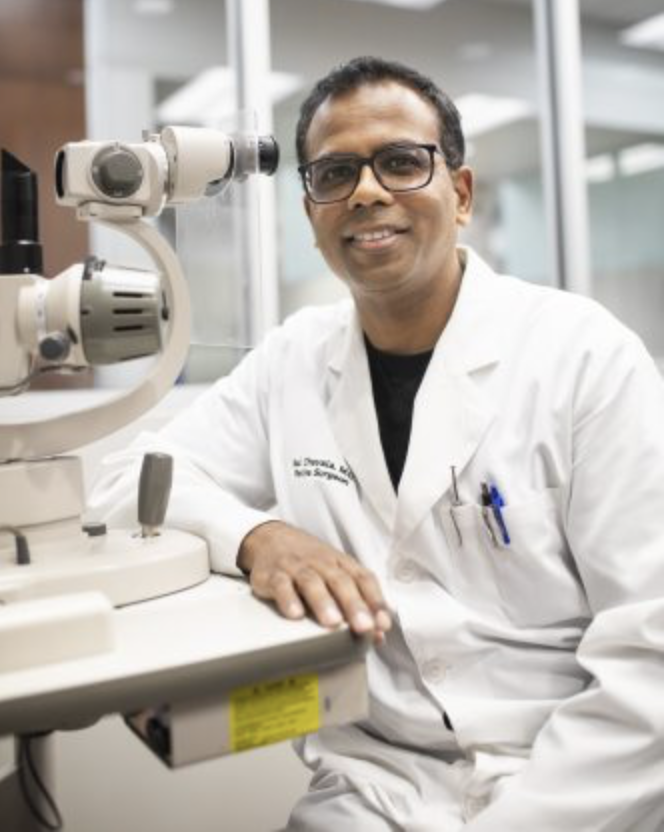
The study’s lead investigator, in the newly published study in Nature, is Sai Chavala, M.D., a professor at the TCU and UNTHSC School of Medicine in Fort Worth.
“I am thrilled to be a part a team of extremely talented and dedicated researchers. Our field of medicine (Ophthalmology) is a bit underrepresented in scientific research, and there are few studies related to vision that are published in Nature magazine every year. To have one of these come from our research lab is a true honor.”
In the report, lead author Dr. Chavala, who is also the CEO and president of CIRC Therapeutics and the Center for Retina Innovation as well as the director of retina services at KE Eye Centers of Texas, laid out this novel approach to retinal regeneration that skirts the need for stem cells. The study was funded by the National Eye Institute (NEI) and the research was conducted at the North Texas Eye Research Institute at the University of North Texas Health Science Center at Fort Worth (HSC). The Health Science Center owns the intellectual property and has licensed rights for commercial development to CIRC Therapeutics.
“The excitement with stem cells is that they can form essentially any cell in the body,” Dr. Chavala said. “But the problem from a clinical standpoint is that they can become any cell in the body by growing rapidly. So how do you know that when you put these cells into the retina (eye) that you don’t accidentally inject a stem cell that can form a tumor?”
The technique the team discovered directly reprograms skin cells into light-sensing rod photoreceptors without a stem cell intermediary step, that can take six months or longer before cells or tissues are ready for transplantation. In comparison, the researchers’ lab-made rods only took 10 days to become ready for transplantation. It enabled blind mice to detect light after the cells were transplanted into the animal’s eye. Dr. Chavala and his team also demonstrated that they can reprogram human skin cells into retinal cells.
By producing retina-like cells, the study shows that there are new and faster approaches to developing therapies for patients with the most common form of age-related macular degeneration and other retinal disorders caused by the loss of photoreceptors.
“Our technique goes directly from skin cell to photoreceptor (eye cell) without the need for stem cells in between,” Dr. Chavala said. “The idea is that one day we might be able to offer a personalized treatment for macular degeneration by surgically transplanting one’s own engineered skin cells into the retina to serve as photoreceptor-like cells and hopefully restore vision.”
The breakthrough is important because currently, researchers have only been able to restore vision in patients with wet (neovascular) macular degeneration. Wet macular degeneration is characterized by blood vessels that grow under the retina and leak, which is rare and typically happens suddenly.
However, the more common form of vision loss is dry macular degeneration, which happens over the course of years. Dry macular degeneration is common among people 50 and older and causes blurred or reduced central vision due to thinning of the macula, which is the part of the retina responsible for clear vision in your direct line of sight.“For that form (dry) of macular degeneration there is no therapy. There is no treatment,” Dr. Chavala said. “It’s frustrating for me because patients come to the clinic looking for hope and we’ve got nothing to offer. You’ve got people who have worked 30-40 years and are ready to enjoy retirement and then all of a sudden you get dry macular degeneration and you can’t see. I was inspired to become a physician-scientist to try to solve this problem.”
As a faculty member, Dr. Chavala’s scientific breakthrough is also meaningful to the medical students he teaches at the TCU and UNTHSC School of Medicine, who are exposed to the interface of research and medicine.
“Dr. Chavala’s work represents a significant advancement in the worldwide challenge to address retinal disease and blindness,” said Stuart Flynn, M.D., the Founding Dean of the TCU and UNTHSC School of Medicine. “This work is a wonderful model for our students as they learn and experience the robust interface between the science and art of medicine, always with the focus on the patient”
And for patients regularly visiting Dr. Chavala’s clinic in North Texas, like Keller resident Roy Ryan, 88, finding a cure for dry macular degeneration would mean a lot for him and countless others.
“We’re hopeful that the cure is coming soon and if not for me for future generations to come,” Ryan said.
The next step for Dr. Chavala and his team of researchers will be working toward Federal Drug Administration approval, which is anticipated to be a 2 to 3-year process if adequate funding can be obtained, before the eye cell treatment can be studied in a clinical trial. Further research is needed to optimize the protocol to increase the rate of transplanted photoreceptors becoming functional. Dr. Chavala and his team have made strides to develop this technology to benefit patients with glaucoma.
“Vision loss is all about quality of life and that’s extremely important.” Dr. Chavala said. “I want my patients and the public to know that there is hope in sight.”
Moving forward, HSC will continue to support Dr. Chavala’s startup company and his efforts to seek further funding and development toward commercialization.
“We have world class research going on in Fort Worth at the Health Science Center,” said Claude Longoria, HSC Director of Technology Commercialization. “Our objective is to identify promising technology and help advance innovative technologies to benefit patients.”
Prescotte Stokes III is the Integrated Content and Marketing Manager. You can reach him at p.stokes@tcu.edu