The initiative is made possible by the endowment from the Fort Worth-based HELP Center for LGBT Health & Wellness, aimed at supporting original research that addresses critical health and wellness issues within the LGBTQ+ community.
Professor Cox submitted a research proposal entitled, “Existential Isolation as a Risk Factor for Depression and Suicide Ideation in Lesbian, Gay, and Bi-Sexual (LGB) Young Adults.”
“The Burnett School of Medicine is pleased to support this innovative and important research,” said Jennifer Allie, Ph.D., MPA, Vice Dean for Faculty and Graduate Programs at the Burnett School of Medicine.
Research projects that focus on issues within the LGBTQ+ population, such as social determinants of health care disparities, reproductive and sexual health disparities, facilitating increased access to health care services, mental health access and care and enhancing cultural competence, are priority consideration for funding.
As the lead principal investigator of the research grant, Professor Cox will be listed with the Burnett School of Medicine at TCU as the 2025 HELP Faculty Fellow for the duration of the research project. The research project period for Professor Cox will be from June 1, 2025, through May 31, 2026.
The LGBT Health grant provides up to three awards of a minimum of $15,000 each forthe 2025 funding cycle. Funding is typically awarded for one year with the possibility of renewal based on project progress and impact.
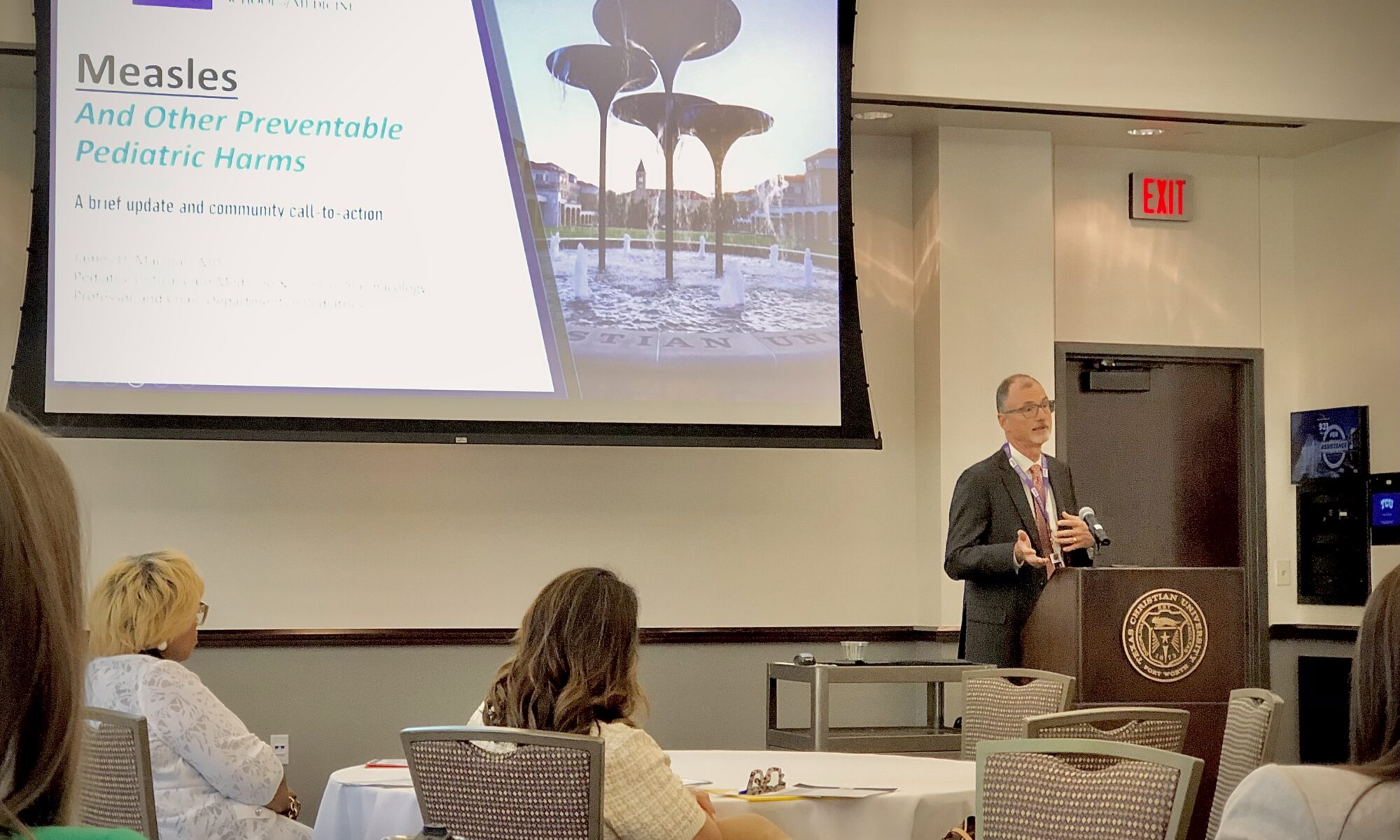
FORT WORTH – Leaders from major health care systems and community organizations in Fort Worth discussed how to improve health outcomes for children at first annual Fort Worth Health & Wellness Symposium held at Texas Christian University.
“Adults drive the agenda for the most vulnerable people in our population and that’s children,” said James D. Marshall, M.D., Chair of Pediatrics at the Anne Burnett Marion School of Medicine at Texas Christian University, who was the event’s keynote speaker. “What we can do as parents in our community is listen to people in the health care community and follow directives from professionals who love taking care of children and can apply technology and medicine to make them healthier.”
The free, public event was presented by the TCU AddRan College of Liberal Arts, The Renaissance House of Terrel Heights, and Cigna Health Care at TCU’s Dee J. Kelly Alumni & Visitors Center.
James Byrd, M.D., Tarrant County Public Health Director, shared insight into the spread of measles in North Texas. The vaccination rate for measles in Tarrant County among 7th graders is 97% and 91.5% among kindergarteners, according to data from Tarrant County Public Health.
It is recommended that most children receive their first measles vaccination shot at 1-year-old and their second vaccination between ages 4 and 5, Dr. Byrd told the crowd.
“Over the last five to six years, we’ve seen a declining rate of vaccinations and that represents the anti-vaccination thought and reality that we are now dealing with the measles outbreak in West Texas,” Dr. Byrd said.
Over the past five years Tarrant County Public Health has helped vaccinate more than 40,000 children at their annual back-to-school ‘Shot Rush’ clinic event, which comes out to about 8,000 kids vaccinated each year. In the wake of the latest measles outbreak, they’ve partnered with Cook Children’s, hoping to vaccinate at least 10,000 children before the 2025-2026 school year begins.
“We’re so grateful to partner with Cook Children’s and they’re going to help us advertise well and open some Saturday clinics,” Dr. Byrd said.
USING A HOLISTIC APPROACH TO HEALTH CARE
The four-hour health and wellness event also focused on providing better health care by using a holistic approach.
Tricia Elliott, M.D., Professor in the Department of Family Medicine at Burnett School of Medicine at TCU, and Demequa Moore, M.D., Associate Adjunct Professor at Burnett School of Medicine at TCU, were part of a panel discussion called “Redefining Medical Education: Preparing Doctors For Holistic Health Care”.
They both talked about the power of preparing future physicians with the tools to not only treat their patients’ illnesses but also understand their personal stories.
“It’s not just about medications because we’ll get to all that,” Dr. Elliott said. “Their story affects how I approach patients in terms of care.”
The Empathetic Scholar® curriculum at Burnett School of Medicine has a unique component called Preparation For Practice (P4P). It is a novel course that goes beyond a traditional medical education, providing students with practical tools and information to solve real-world problems and adapt to radical changes in their careers.
Students get the opportunity to focus on things like public health, advocacy, health care delivery, social determinants of health and more.
When medical students meet Dr. Moore during their Longitudinal Integrated Clerkship (LIC) clinical rotations, she focuses on helping them understand the importance of social determinants of health.
“I think the biggest things that help are really reorienting their purpose of what they do and really get them out into the community,” Dr. Moore said. “I always want them to remember you serve the community, and in turn, the community gives to you.”
“My grandfather passed away from a heart attack. My dad spoke about how the doctor took time to sit down and talk to him about what was going on and about a peewee baseball league, which they played on 40 years earlier. It meant so much to my dad because of the human connection. It made me think that I could make a big difference in the lives of others. That doctor, by the way, was Dr. (Terence) McCarthy.” Dr. McCarthy is the John M. Geesbreght M.D., M.S., FACEP, Chair of Emergency Medicine for the Burnett School of Medicine at TCU.
Why did you choose the Burnett School of Medicine at TCU?
“Getting that early clinical experience was important to me and beneficial to learning. I felt it was great to get that in the first two years and get that meaningful experience.”
What’s one thing your classmates don’t know about you?
“I took some floral design classes and got good at making floral arrangements. It was fun.”
What’s next for you in your medical journey?
“I am going to do some away rotations in Otolaryngology, head and neck surgery. I’m going to the University of Kansas, University of Kentucky, Alabama-Birmingham, and UT Southwestern and I’m beyond excited. I’m looking forward to seeing how other programs operate and showing how Burnett School of Medicine at TCU is training our students.”
Having the research summit at Arnold Hall “was amazing,” said Michael Bernas, MS, Associate Professor & Director of Scholarly Pursuit & Thesis (SPT) Course at Burnett School of Medicine. “It allowed all the faculty and staff that are on site to come visit.”
Sana Chowdhry, ’25 M.D, was one of the students selected to present her SPT research project titled, “Attitudes Toward Cadaver Dissection.” Her research looked at new ways of cadaver training for medical students.
“There have been ethical concerns around where bodies are coming from,” Dr. Chowdhry said. “In terms of alternatives to cadaver dissection, there are different modalities that you can use now like the Microsoft HoloLens® and HoloAnatomy curriculum that we use here. The research question here is: ‘Is cadaver dissection still necessary?’ as studies have shown that new modalities are just as effective.”
Professor Bernas served as one of Dr. Chowdhry’s faculty mentors for her SPT research project. Her research question gave her an opportunity to learn about science alongside her medical training, he said.
“She struggled to learn all the challenges of doing research,” Bernas said. “She was very lucky to bring in another collaborator Dr. Eli Shupe who is an expert in philosophy and moral injuries to really help refine the research questions.”
When they arrive at Burnett School of Medicine at TCU as first-year medical students, they begin working on their four-year SPT research projects. While some projects change over time, students are encouraged to choose research topics they are passionate about regardless of which medical specialty they want to pursue. However, sometimes their passion in research and medical specialty line up.
Kevin Chao, ’25 M.D., is an Emergency Medicine resident at Vanderbilt University Medical Center. His SPT research project looked at the management of supra-ventricular tachycardia by Adenosine, which has serious side effects for patients that end up in the emergency room.
Dr. Chao looked at alternative drugs that could be less harmful to patients.
“We were looking at alternatives to see if we could dampen those side effects and make the patient experience a little more comfortable but still get that efficacy you need to treat that arrhythmia,” Dr. Chao said.
This type of hyper-focused research and understanding of science will benefit Dr. Chao as he begins residency, Professor Bernas said.
Here are the Scholarly Pursuit & Thesis (SPT) research projects featured at this year’s research summit:
Jonathan Balcazar, ’25 M.D.
SPT Mentor: Xiaosong Meng, M.D., Ph.D.
Research Project: MRI-Guided Transurethral Ultrasound Ablation (TULSA) of Localized Prostate Cancer: Single Institution Experience of Treatment Efficacy and Impact on Urinary and Sexual Function
Griffth Bryant, ’25 M.D.
SPT Mentor: Michael Bernas, MS; and Mary Beth Mercatoris
Research Project: Bridging Education and Examination: How Medical Curricula Impact Step 2 CK Performance
Kevin Chao, ’25 M.D.
SPT Mentor: Eric H. Chou, M.D.
Research Project: Management of Supraventricular Tachycardia by Adenosine Versus Diltiazem and Its Subsequent Atrial Fibrillation and Atrial Flutter Conversion Outcomes in the Emergency Department
Sana Chowdhry, ’25 M.D.
SPT Mentor: Michael Bernas, MS; and Eli Shupe, MA, Ph.D.
Research Project: Attitudes Towards Cadaver Dissection
Hanna Cristina Makk, ’25 M.D.
SPT Mentor: Stuart Pickell, M.D.
Research Project: Predicting Predicaments; What the experience of Pediatric Ethics departments can tell us about predicting ethics consults based on patient characteristics
Haley Schluterman, ’25 M.D.
SPT Mentor: Gregory Kearns, Ph.D., PharmD.
Research Project: Validation of the TASTY Scale, a Novel Tool to Assess Medication Palatability in Young Children
“My mom was going through abdominal pains that were being undiagnosed. She was one of those cases that kept getting slipped through the cracks. Once she was diagnosed, I was able to interact with various physicians, and they were helpful. It sparked my interest in medicine and how I can get into the medical field and be a physician like them and being able to help others like my mom.”
Why did you choose the Burnett School of Medicine at TCU?
“I picked Burnett School of Medicine at TCU for the focus on integrating clinical practice earlier on. Having the ability to get a head start on being introduced into hospitals and outpatient clinics provides us with early on hands-on experiences.”
What’s one thing your classmates don’t know about you?
“I missed making it on the Jamaican Olympic team by one spot. Despite not making the team, I feel like that was still an accomplishment considering all the other things I had going on in my life.”
What’s next for you in your medical journey?
“I would love to match into a surgical residency. As of right now I am not sure about which specialty, but I am looking at trauma, vascular or orthopedic.”
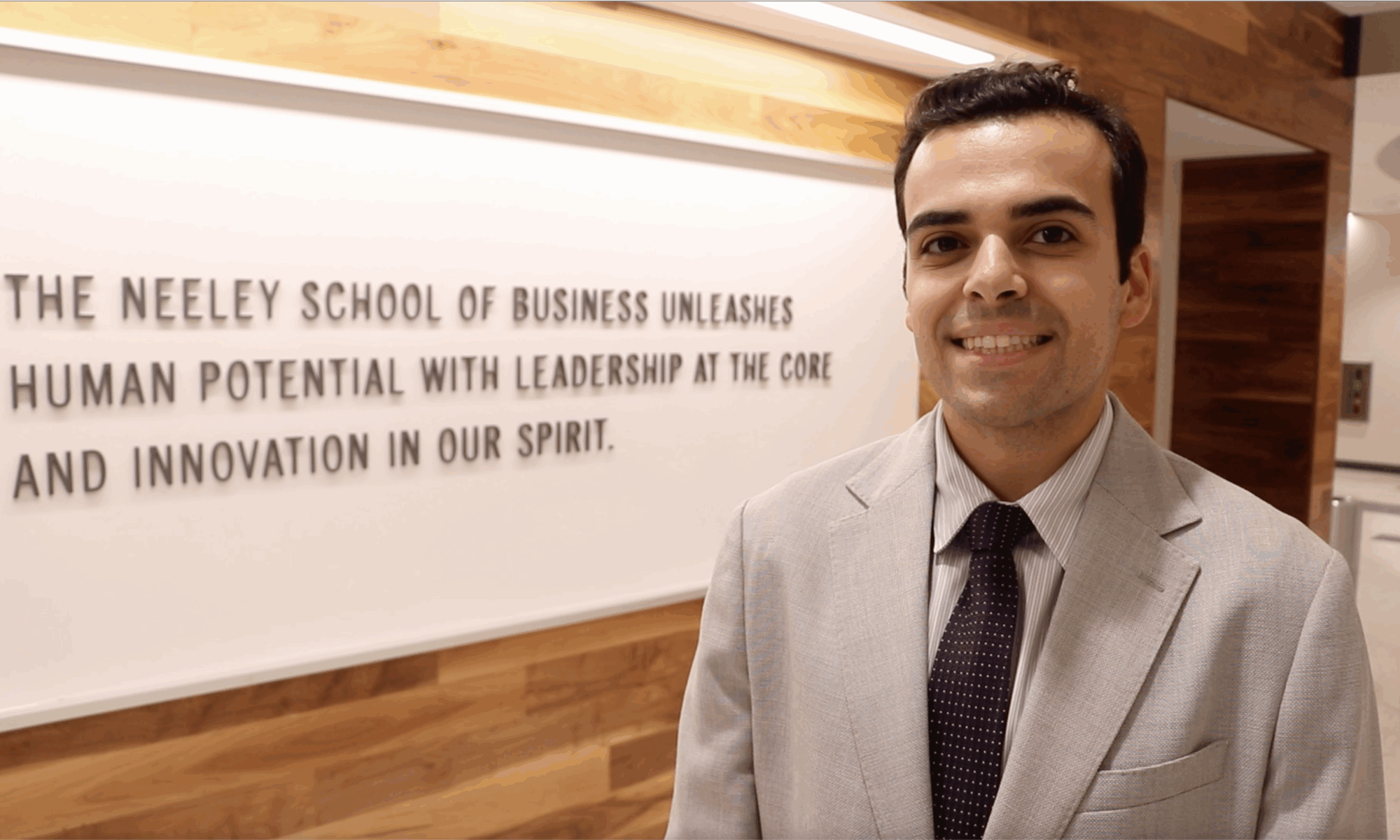
His final class project on a consulting team gave him firsthand insight on how research and data analytics could help patients at Fort Worth’s Mercy Clinic.
“I wasn’t just consulting as an outsider; I understood the barriers patients face,” Dr. Vieira said. “We aimed to make Mercy Clinic’s invisible patients visible.”
For medical students who want business training, the Neeley School of Business health policy and management certificate can be a viable option while tackling the Anne Burnett Marion School of Medicine at Texas Christian University’s innovative curriculum. Classes are held online in the evenings to make it easier for students who may be juggling other academic demands. TCU will offer a joint five-year MD/MBA degree this fall.
“It’s totally worth it,” said Dr. Vieira, who is beginning a two-year pediatric residency at Stanford University’s Lucile Packard Children’s Hospital and hopes to become a health care administrator.
As a longtime Mercy Clinic volunteer, the consulting project allowed Dr. Vieira to give back to the Fort Worth community.
“Hopefully, with the start of this consulting project, the relationship could expand,” he said.
“I cut my eye when I fell, and I had to get stitches at the hospital. During the process of getting my stitches I was just intrigued by what I saw there. They had models of organs and diagrams with different systems of the body. I was maybe 6 or 7 and it was really interesting to see what was on the inside of my body and it intrigued me.”
Why did you choose the Burnett School of Medicine at TCU?
“Burnett School of Medicine at TCU’s vision is different. They really seek to create Empathetic Scholars®. We are training physicians, not just to be knowledgeable, but to treat people like people.”
What’s one thing your classmates don’t know about you?
“When I was at boarding school, I was a Health Prefect. If there were any health issues on the boys side of the school, I was the point of contact to give the first aid required and contact a nurse or doctor. It was such a fulfilling experience.”
What’s next for you in your medical journey?
“I look forward to attaining a career as a surgeon who treats patients first and medical conditions second.”
“I’ve been in the shoes of the families that we see at the bedside begging for more time with their loved ones. I remember when I was little, I just put all my trust in the physicians and team, and I wanted to be that person for other people.”
Why did you choose the Burnett School of Medicine at TCU?
“I chose the Burnett School of Medicine at TCU because during the interview I was able to be myself. When they accepted me, I had so much support. I loved getting in clinics early and having the same patients for three years. Everything about the school drew me to it.”
What’s one thing your classmates don’t know about you?
“I have perfect pitch. So basically, any sort of note, I can tell you what note it is. If I hadn’t gone to medical school, I probably would have went to Broadway and tried to make it.”
What’s next for you in your medical journey?
“I’m eager for this next step as we get into the weeds of your specialty. I will be applying Internal Medicine. My dream has always been to be a professor. So, I want to teach and help people and help students. That’s ultimately where I want to end up.”
Why do you want to be a doctor? “I was really tossing around the idea of doing a Ph.D. program or pursuing an M.D. and going to medical school. My grandmother actually got into medical school in 1971, and she turned it down to have a family. After having conversations with her and my family I found the confidence to do it, not just for me but for them as well and it motivates me.”
Why did you choose the Burnett School of Medicine at TCU? “Right away, I was really excited about it. The small class size and the accelerated curriculum, all those things were obvious to me. But once I went to Second Look Weekend, I got the feel and culture for the school itself, and I was just blown away. Everyone knew my name which mattered a lot to me. It’s really a culture of collaboration and respect which I think is important in a medical school.”
What’s one thing your classmates don’t know about you? “I played the oboe all while growing up. It’s a combination of a flute and clarinet. So, I was in orchestra, and I played in Europe with one of the orchestras I was in. I played in college and one of my friends made this big piece on Spotify and I was in a recording studio, so you can listen to me playing the Oboe in Spotify.”
What’s next for you in your medical journey? “We are spending time with patients and that’s going to be amazing for us and I’m excited. Then we’ll figure out what we want to do, using the electives to figure exactly what doctors we want to be, so I’m super excited about that.”
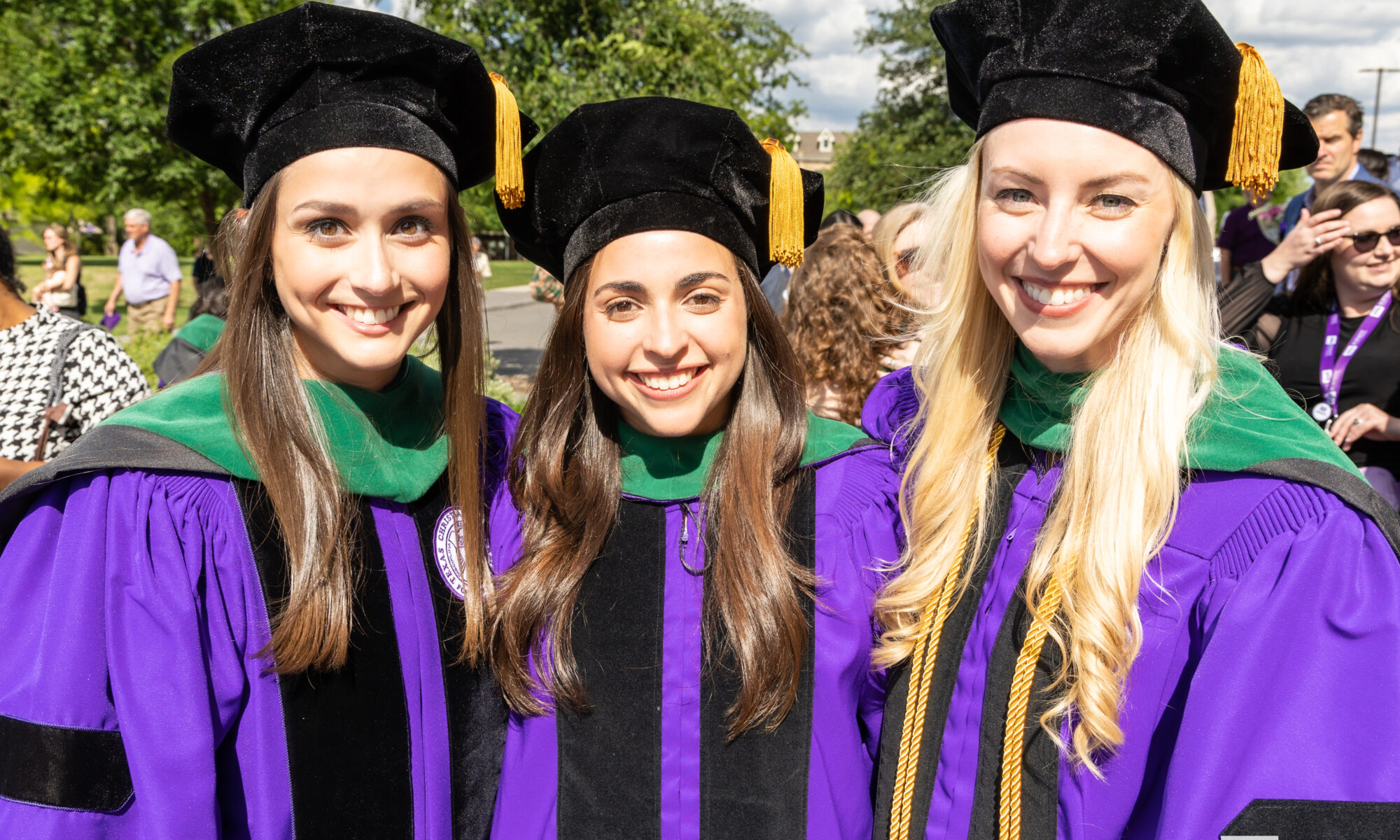
The Class of 2025 had a 100% residency match and will begin their medical careers at revered health care systems such as Johns Hopkins Medicine, Vanderbilt University Medical Center, Stanford Health, and the Mayo Clinic.
The medical students took the traditional Hippocratic Oath at TCU’s Van Cliburn Hall at Megan and Victor Boschini Music Center on Friday, May 9 during the Hooding Ceremony, signifying the successful completion of the M.D. degree program.
“We have worked with these newly minted physicians for four years to instill medical knowledge, empathy, and compassion,” said Stuart D. Flynn, M.D., Founding Dean of Burnett School of Medicine at TCU. “We are proud of them, and they are prepared for this challenge. I am hopeful that their future patients will be fortunate to have them as their physician.”
The keynote speaker was J. Mack Slaughter Jr., M.D., an Emergency Medicine physician at Texas Health Resources and founder of Music Meets Medicine, a nonprofit organization. He has also gained popularity on social media as a MedFluencer that has amassed more than one million followers on platforms like Facebook, Instagram, and Tik-Tok.
Prior to becoming a physician, Dr. Slaughter had a career as a musician, touring with Beyonce’s former group, Destiny’s Child, and opened for Jessica Simpson and Bon Jovi. He also pursued acting before attending medical school.
“Medicine is a calling for some people that represents empathy, compassion, and healing,” Dr. Slaughter said. “I want you all to carry that empathy and caring nature with you into each hospital room you walk into and meet with patients. You will be there to help them, but they will also be able to help you become a better physician.”
The day capped off with the medical graduates participating in TCU’s Commencement for graduate degree programs with acclaimed filmmaker Taylor Sheridan who received an honorary degree.
COMMENCEMENT 2025: STUDENT SPOTLIGHTS
Isabella Amado, M.D.
Hometown: Panama City, Panama
Program: Virginia University School of Medicine
Specialty: Orthopaedic Surgery
Most people would say getting into medical school and graduating to become a doctor is beating the odds twice. However, this is the third time Isabella Amado, M.D., has beat the odds doing something most people dream of doing.
“At one point, I didn’t think I was going to make it because it is very difficult,” Dr. Amado said. “To see that I accomplished what little girls’ dream of is still surreal.”
That once in a lifetime experience planted the seed for her next career as a physician. As an undergraduate student athlete at Boise State University, she experienced her own setbacks with injuries on her road to becoming an Olympian.
“Through gymnastics, I worked with orthopaedic surgeons and that was my big exposure,” Dr. Amado said. “They loved what they did so that drew me to that field.”
Once she became a medical student, she explored other medical specialties through the Burnett School of Medicine at TCU’s Longitudinal Integrated Clerkship (LIC). LIC partners medical students with physicians from their first day in medical school.
“By my second year, I decided I was pretty committed because I had seen other specialties and nothing really was as fun as orthopaedics,” Dr. Amado said.
Orthopaedics is a wide-ranging medical and surgical specialty focused on the prevention, diagnosis, and treatment of diseases and injuries of the musculoskeletal system. Orthopaedic surgeons can treat injuries such as foot and ankle, hand surgery, shoulder and elbow, spine, trauma and fractures, musculoskeletal oncology, and physical rehabilitation.
Aside from fun, Amado added the problem-solving aspect of orthopaedics as something that attracted her to the medical specialty.
“I like that type of thinking where there’s a problem and you know how to fix it you just need to align the bones back together,” Dr. Amado said. “It’s not always like that, but I like that kind of mentality.”
However, there is another side of orthopaedics when sports medicine is involved that requires empathy. Medical students at the Burnett School of Medicine are taught communication skills through the Physician Communication curriculum that spans across their four years of study.
Amado dealt with her own injuries as a gymnast and had moments when she felt like her Olympic dreams wouldn’t happen. She wants to be the type of physician that can relate to injured athletes in their darkest moments.
“It’s a nice complement to have that skill going into orthpaedics,” Dr. Amado said.
Alexandra Richards, M.D.
Hometown: Healdsburg, California
Program: UCLA Health
Specialty: Orthopaedic Surgery
Finding your calling in life can happen as you get older and gain more life experience. However, it can also happen at the age of 7 on a small farm in Northern California, according to Alexandra Richards, M.D.
“I had my goat break his leg and my little hometown orthopaedic surgeon teamed up with my small hometown veterinarian and they let me scrub in for the surgery to fix my goat’s leg,” Dr. Richards said. “I was like: ‘This is the coolest thing I’ve ever seen in my life.’”
From that moment, Dr. Richards set her sights on becoming a surgeon.
“The reason I love orthopaedics is that you’re getting people back to their life,” Dr. Richards said.
Her path to orthopaedic surgery began in nursing. She completed her undergraduate degree at Cornell University and later received her Doctor of Nursing from Duke University School of Nursing.
She admired the care that nurses gave to her family members growing up in Healdsburg, California. Even though nurses and physicians take two different educational paths into health care they work together, Dr. Richards added.
“I realized they were really the hands taking care of patients so for me going into nursing was a choice,” Dr. Richards said. “I had the option of medical school earlier and nursing was an important pivot because I stood by the philosophy of nursing.”
She spent several years assisting in neuroscience research and built her herself into a strong medical school candidate. Her pivot from nursing into medicine was fueled by her desire to do something surgical.
“That belongs to the field of medicine so becoming a surgeon is something you only train for in the philosophy of medicine,” Dr. Richards said. “I think nursing is beautiful, but I also think being able to exhaust every option for your patient surgically is really special.”
Now, she will head to UCLA Health Orthopaedic Surgery for residency as an Empathetic Scholar® from the Burnett School of Medicine carrying an innovative mindset.
“There’s a lot of ways I want to take what I learned here and be innovative,” Dr. Richards said. “I want to rebuild limbs someday, which I think will be an interesting intersection of the neurosciences and orthopaedic surgery.”
The seeds for Lauren Holladay, M.D., to become an orthopaedic surgeon were planted long before she was born.
In the 1970s, her grandfather was diagnosed with ankylosing spondylitis (AS), which is a chronic inflammatory arthritis that primarily affects the spine and pelvis, according to the National Institutes of Health. He was one of the people to have modern day hip replacement surgery in the United States that had been approved by the Federal Drug Administration (FDA) in 1969.
“That was actually my family’s first time coming to the United States,” Dr. Holladay. “So that seed was planted that my mom had to travel to the United States for my grandfather to have his hip replacement surgery and that planted her seed to come back. It’s like a full circle moment.”
Dr. Holladay’s family eventually immigrated to the U.S. from Panama. She was born in Richmond, Texas, and as a child her grandfather would often share stories about his experience with hip replacement surgery and how it improved his quality of life.
“I always saw my grandfather having these great strides of the future of medicine,” Dr. Holladay said. “He’s 95 and still walking on that 1970-something hip, which is insane.”
Her path to being an orthopaedic surgeon started after getting her undergraduate degree from Texas A&M University. Her first health care job was in Bryant, Texas, as an emergency room medical scribe at St. Joseph Health Regional Hospital.
She enrolled at University of Incarnate Word in San Antonio and completed her master’s degree in biomedical science before becoming a medical scribe at an orthopaedic clinic in Austin, Texas. That’s when she learned how orthopaedics also correlated to her other passion, which is nutrition.
“I find so much joy in the quality-of-life aspect of medicine and with orthopaedics and nutrition I loved seeing patients gain that joy for themselves,” Dr. Holladay said.
Once she became a medical student at the Burnett School of Medicine, she was laser focused on going into orthopaedic surgery but also started a culinary medicine student interest group.
“Both things represent not just being a physician but also to help people find a fix and get their quality of life back,” Dr. Holladay said.
Now, she plans to spend time learning and researching ways to improve the quality of life for her future patients at UT Health San Antonio.
“There’s going to be people who break things no matter what but my whole goal is to help people not have to go to the hospital,” Dr. Holladay said. “I want my patients to feel reassured that if they fall, they’re OK.”
The Burnett School of Medicine opened in July 2019 with its inaugural class of medical students. The medical school’s unique curriculum with a focus on communication and the development of Empathetic Scholars® has uniquely positioned the school to radically transform medical education and improve healthcare for generations.