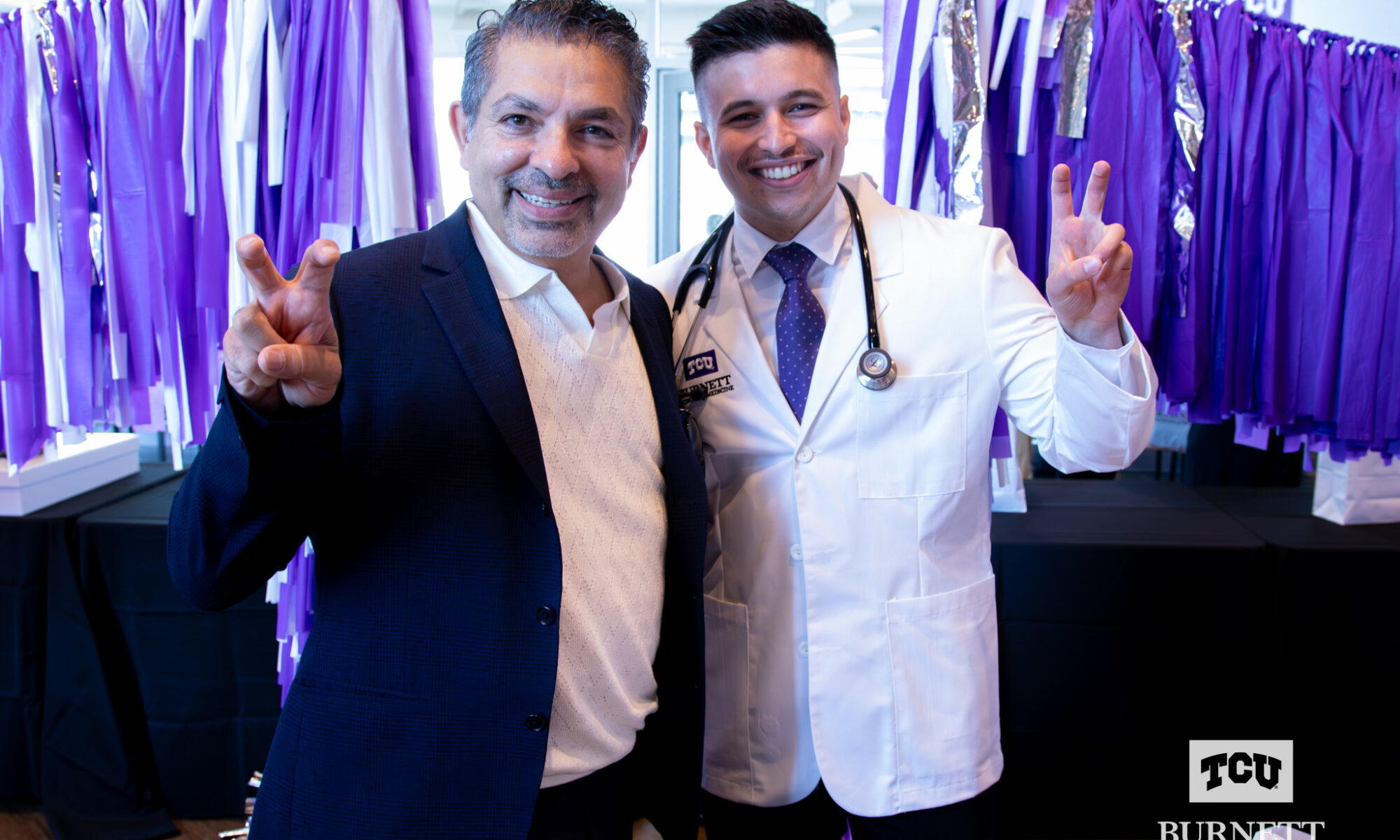
“Throughout my youth, I was exposed to medicine because my dad is a Gastroenterologist, and my grandfather was a Cardiothoracic Surgeon. It really inspired me to want to help others. I did some volunteer work globally and saw poverty for the first time, I made a promise to myself that I would do more global health work and help make a difference for those who need it.”
Why did you choose the Burnett School of Medicine at TCU?
“I really like the fact that we get early hands-on experience in the clinics. When we apply for residency, we’ll have so much more experience dealing with patients and providers and understanding what a clinic is like. I just can’t say enough about the quality of teaching that goes on here at the Burnett School of Medicine at TCU. I feel grateful to learn here and learn from experts in their field.”
What’s one thing your classmates don’t know about you?
“I’ve always enjoyed pushing myself physically and mentally. I got into running and I’ve done half marathons and even ran in the L.A. marathon. It was really fun, and I hope to run more marathons in the future.”
What’s next for you in your medical journey?
“After medical school, I hope to pursue a career in Orthopedic Surgery. Right now, I’m making connections with mentors and getting involved with research. I also want to carry on with global medicine. That means advocacy work, volunteering and going abroad and helping those who are in need.”
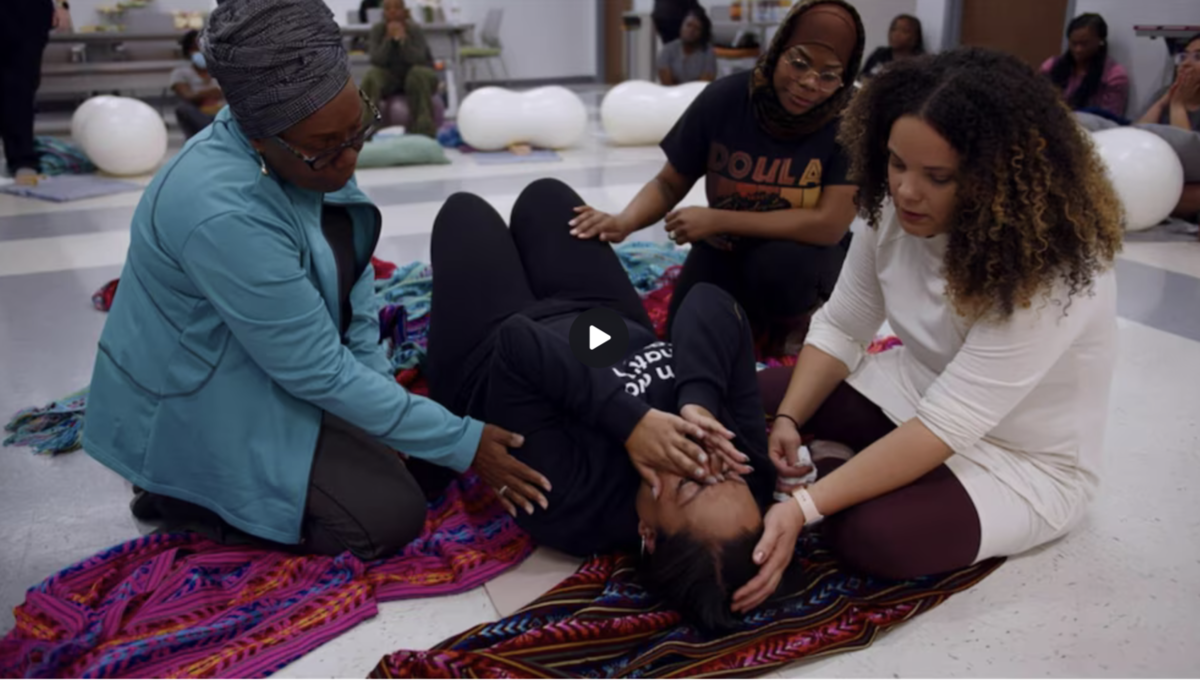
“The first thing that I can think of that planted the seed in my head to be a doctor was finding out that my mom struggled with fertility. She had endometriosis. As I got older, my mom shared with me about how alone she felt in her diagnosis. Just knowing how she was feeling throughout that, it made me want to do better for other people who are receiving these hard diagnoses and having to make these big life changes.”
Why did you choose the Burnett School of Medicine at TCU?
“This school has a very innovative curriculum, and they really emphasize physician communication. We also learn how to be an Empathetic Scholar® and go beyond just practicing medicine to connect with people. That along with the curriculum really drew me.”
What’s one thing your classmates don’t know about you?
“I do Muay Thai kickboxing weekly and it’s a really good way to destress from medical school. I feel like it’s helped me a lot when dealing with clinics. There are a lot of skills there that I feel like have transferred over to medical school.”
What’s next for you in your medical journey?
“It’s exciting to be in rotations that are more align with your specific interest. I am very interested in Gastroenterology, so I’ll also be applying Internal Medicine for residency and I’m hoping to stay within DFW. My hope is to one day be a Gastroenterologist.”
“TAAHP conference is absolutely critical,” said Matt Chumchal, Ph.D., Director of Pre-Health Professions Institute at TCU. “It brings together pre-health advisors from around the state, and it brings together our professional school colleagues. We can learn what they are looking for as we advise future health care leaders of tomorrow.”
“Every year, a medical school in Texas hosts this event,” said Kevin Kidder, Ph.D., Assistant Dean of Admissions for Burnett School of Medicine at TCU. “They got a chance to see the facilities and learn about the curriculum. This is a good opportunity for advisors to get the word out about how awesome we are at the Burnett School of Medicine and send their students our way.”
FORT WORTH – The Class of 2025 at the Anne Burnett Marion School of Medicine at Texas Christian University had a 100% match rate and matched into some of the top medical residency programs in the United States.
The Empathetic Scholars® and future physicians will start the next chapter of their careers as resident physicians with esteemed health care systems such as Johns Hopkins Medicine, Vanderbilt University Medical Center, Stanford Health, and the Mayo Clinic.
“These medical students chose our medical school because they saw the importance of being a physician with deep medical knowledge but also having compassion, empathy, and putting the patient at the center of everything they do,” said Stuart D. Flynn, M.D., the Founding Dean of Burnett School of Medicine at TCU.
The Burnett School of Medicine at TCU has created memorable Match Day celebrations for their students and this year’s baseball-themed event kept that tradition going. The medical students learned their match at TCU’s Charlie and Marie Lupton Baseball Stadium at Williams-Reilly Field on Friday, March 21.
“This moment is something they can be proud of and see themselves as trailblazers,” Dean Flynn said. “These are future physicians that will make all of us proud and they will continue to build upon the knowledge that we’ve given them.”
The Class of 2025 will be entering 13 residency programs in Texas, including in North Texas at Texas Health Resources Fort Worth, JPS Health Network, and UT Southwestern in Dallas. Across the rest of Texas, Burnett School of Medicine students will be at residencies in San Antonio, Austin, Houston, and El Paso.
Every year, fourth-year medical students across the country find out where they will begin their careers as physicians within the specialty of their choice at the same time. The National Resident Matching Program (NRMP) releases results to applicants seeking residency and fellowship training positions in the United States at 11 a.m. CST on the third Friday of March each year.
The NRMP conducts the match using a computerized mathematical algorithm to align the preferences of applicants with the preferences of U.S. residency programs seeking new trainees. Residency training for most graduates will begin in June or July.
Burnett School of Medicine graduates have continued to defy the odds when it comes to landing coveted residency slots in competitive medical specialties. Some of the most notable medical specialties students accepted into were dermatology, ophthalmology, neurosurgery, orthopedics, urology, and ear, nose & throat (ENT).
Match Day was a day of validation for Jonathan Balcazar, MS-4 at Burnett School of Medicine at TCU, who matched in Urology at UC Irvine Medical Center in Orange, California.
“Urology is very hard to match and I’m thankful that I did have the resources to match because of TCU,” Balcazar said.
Mireya Rahman, MS-4 at Burnett School of Medicine, captured one of only two military residency spots for neurosurgery at Baylor College of Medicine in Houston.
“There was a lot of pressure,” Rahman said. “I had a really good mentor during my Longitudinal Integrated Clerkship (LIC) experience. I’m thankful for the way TCU structured our electives, which gave us an opportunity to see things that we wouldn’t have seen otherwise.”
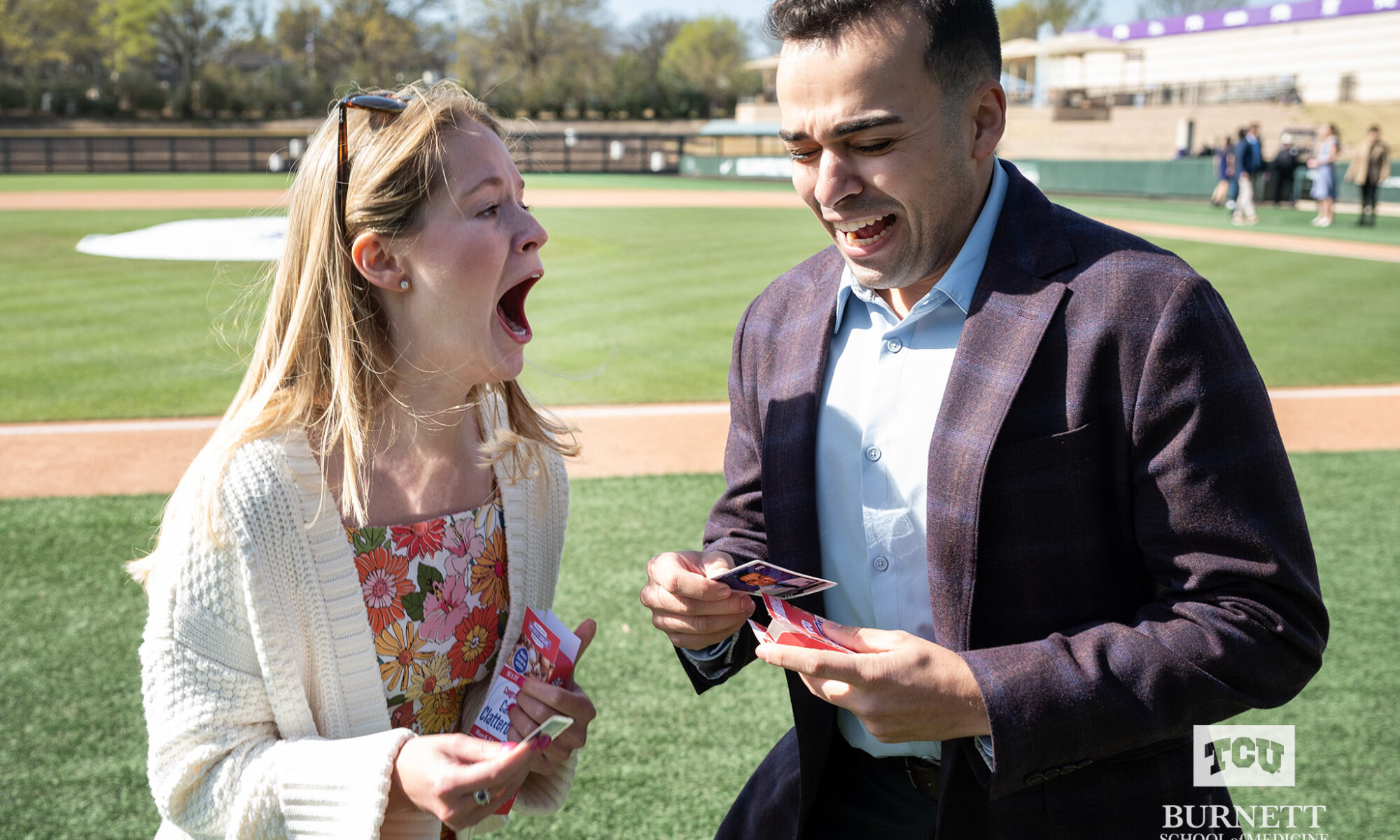
At the baseball-themed Match Day celebration, students received custom Cracker Jack boxes with their names printed on them in place of the traditional white envelopes. When students opened their boxes, they found caramel popcorn with a personalized baseball card that displayed their name, photo and residency match. Each student also received a personalized baseball bat and ball as keepsakes.
The Match Day celebration was a fitting ending to her time in medical school, Alejandra Gutierrez, MS-4 at Burnett School of Medicine at TCU, added.
She has a dermatology residency at San Antonio Uniformed Services Health Education Consortium (SAUSHEC) Dermatology Residency Program, Brooke Army Medical Center (BAMC).
“My journey has been surreal,” Gutierrez said. “I’m glad for my experience here and incredibly grateful for it.”
Burnett School of Medicine at TCU Dean Stuart D. Flynn, M.D., was featured in an ABC News story discussing the medical school’s role in finding solutions to end infant mortality. Watch the national broadcast here.
CBS 11 launched a series on Tarrant County’s infant mortality rates. Featured in the series called “Survival of the Smallest” from the Anne Burnett Marion School of Medicine at Texas Christian University are Founding Dean Stuart D. Flynn, M.D.; April Bleich, M.D., Chair of OB-GYN ; David Riley, M.D., Associate Professor; Terri Weinman, D.O.; Lucy Eletel, MS3, and Amber Broderick, MS3. Here are links to the entire series:
Founding Dean Stuart D. Flynn, M.D., addresses the issue of high infant mortality rates in Tarrant County. Click here.
Burnett School of Medicine at TCU students Lucy Eletel, MS3, and Amber Broderick, MS3, work to find a solution with their research projects with guidance from faculty members April Bleich, M.D., Chair of OB-GYN at Burnett School of Medicine at TCU and David Riley, M.D., Associate Professor at Burnett School of Medicine at TCU. Click here.
Terri Weinman, D.O., Assistant Professor at Burnett School Medicine at TCU, helps parents facing infant loss. Click here.
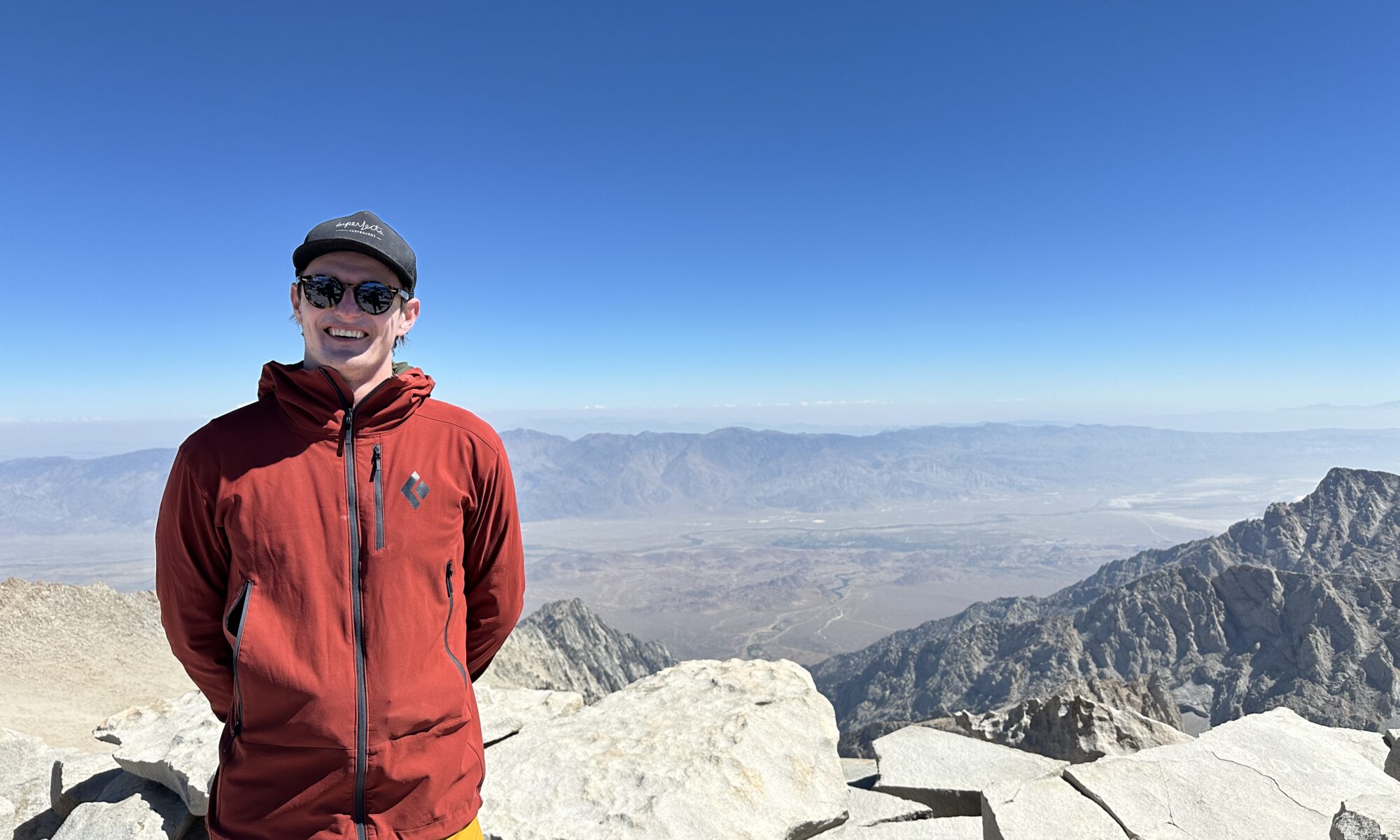
“I’ve had my fair share of concussions and broken bones,” Naworksi said. “Most of the broken bones were from snowboarding.”
Naworksi’s love for the outdoors and extreme sports has played a huge role in him wanting to become an emergency medicine physician.
“It’s fast paced. You’re always on and you have to know a little bit of everything,” Naworksi said . “That’s what attracted me to it especially if something were to happen in public or my family has a question.”
Last Summer, Naworksi did several away rotations in preparation for Match Day 2025 at Kern Medical Center (Bakersfield, CA), University of Southern California Keck Medicine of USC, and Mammoth Hospital (Mammoth Lakes, CA).
Each year, fourth-year medical students in the United States complete their away rotations and the interviewing cycle for Graduate Medical Education (GME)/residency positions. Those four-week auditions during away rotations carry a huge weight as they interview for residency slots at hospitals or health care centers.
Away rotations are not required to apply to a residency program, but they can give medical students a chance to distinguish themselves from others and leave a lasting impression on residency directors.
“Going into it, you really wish you could have a crystal ball,” Naworksi said. “I think the biggest thing is being genuine and showing up and being ready to work.”
Even without a crystal ball, Naworksi was equipped with much more clinical exposure than most medical students thanks to the Burnett School of Medicine at TCU’s Longitudinal Integrated Clerkship (LIC) curriculum. It pairs each student with a physician from the outset of their education and they get to see patients over a longer period.
“We got a lot of early exposure that I didn’t see in other curriculums so that attracted me from the beginning. It kind of kept you on top of everything,” Naworksi said. “You always have that strong base because you’re always having to work with everything.”
At Kern Medical Center, he worked with a lot of trauma cases. Being able to jump in and help when the residents were overwhelmed was something he received praise for from attending physicians, Naworski added.
He would be asked: “Hey, could you clean out this wound? or Could you do this laceration repair?”
Naworksi also had an away rotation in orthopedics at Mammoth Hospital in Mammoth Lakes, California. It was a different pace than working in the emergency department. In the emergency department, he would work 8- to 12-hour shifts, but in orthopedics some days could be four hours in the clinic while other days with surgery shifts could last from 12 hours to 15 hours.
For now, his time will be focused on finishing up his clinical elective courses and waiting patiently until Match Day arrives.
“Right now, the dream of becoming a physician is happening but that’s the next concrete step and I’m going to be an emergency medicine resident somewhere,” Naworski said.
FORT WORTH – Providing team-based health care is a lot like assembling a championship level football team.
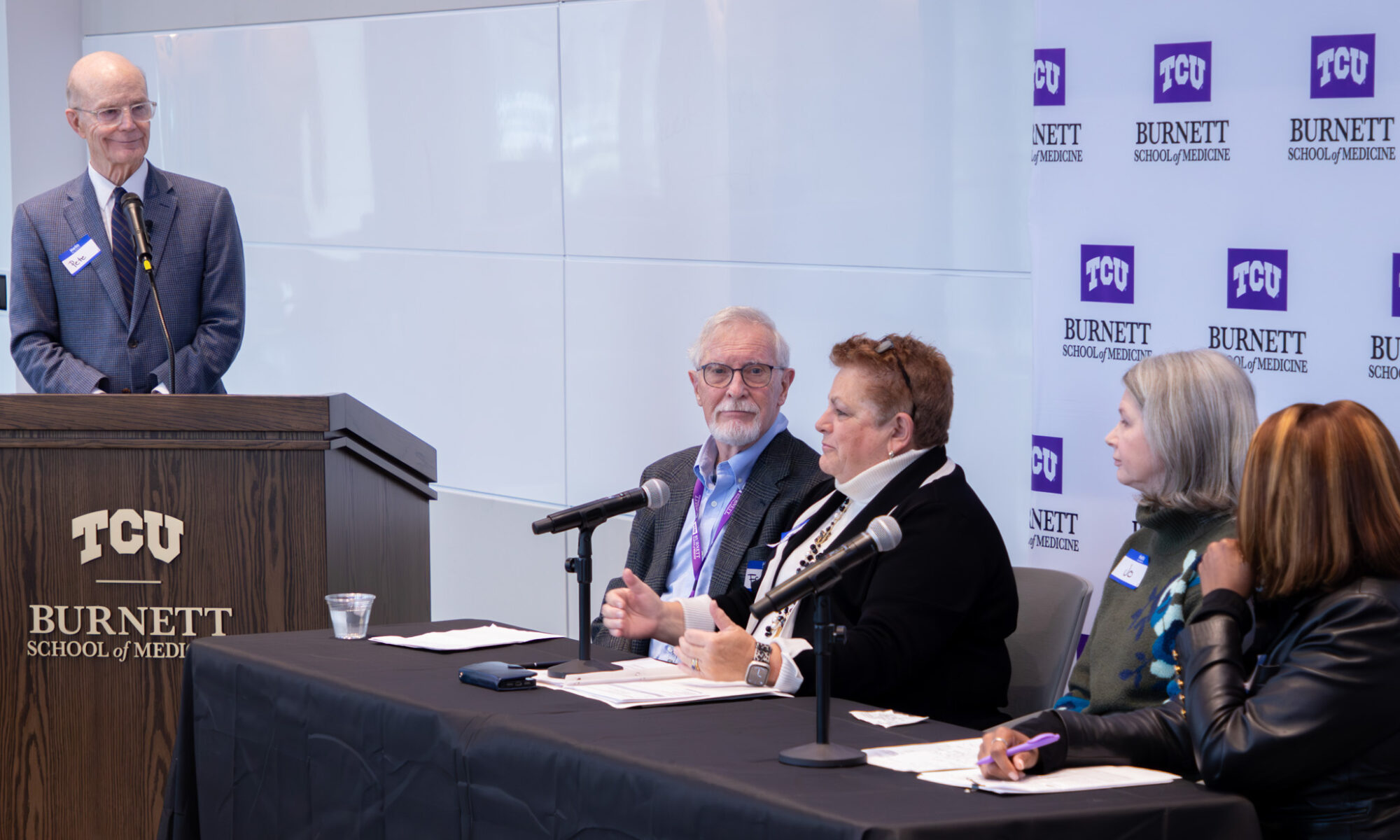
That was the message Nancy Dickey, M.D., Professor and Past President of Texas A&M Health Science Center and Past President of the American Medical Association, gave to nearly 100 health care providers during the2025 Healthcare in a Civil Society Conference.
“If you can’t find a team that fields all of the positions, all of the things that need to be done, then you’re not going to win championships,” Dr. Dickey said.
Dr. Dickey, the keynote speaker and a panelist at the conference, said having primary care physicians, nurse practitioners, physician assistants and other staff members working together would provide the best care for patients.
“You can’t have a team of only quarterbacks,” Dr. Dickey said. “We need to find a way for this concept of teams to work so the patient is getting the care that they need at the time that they need it from the person most able to provide that care.”
Health care providers from across North Texas and beyond gathered at the Anne Burnett Marion School of Medicine at Texas Christian University to discuss ways that providers could improve primary care for patients during the annual conference, which was sponsored by the Tarrant County Medical Society, Burnett School of Medicine at TCU, Cook Children’s, JPS Health Network, and the University of North Texas Health Science Center at Fort Worth.
The conference seeks to engage leaders of varying perspectives in a civil conversation that focuses on the health care issues that are important and devoid of rhetoric that often undermines these conversations. The 2025 program explored the future of primary care by analyzing current trends to anticipate what the future workforce and care delivery models would look like.
“We were so honored to host this event,” said Stuart D. Flynn, M.D., Founding Dean of Burnett School of Medicine at TCU. “We love showing off our beautiful medical education building and I love the topic that we’ve all come together to discuss.”
The narrative about primary care being overwhelming contributes to the shortage of medical students choosing the specialty, according to Frank Lonergan, M.D., MSW, Medical Director, Tarrant County Jail Diversion Program and Assistant Professor at Burnett School of Medicine at TCU.
“It gives the students the message of ‘well, I respect them, but boy I don’t think I want to do it,’ ” Dr. Lonergan said.
Dr. Lonergan was a panelist during the conference alongside Dr. Dickey; Tracy Hicks, DNP, MBA, President-elect of the Texas Nurse Practitioners; and Jo Tilley, DNP, Director of Nursing Practice for Cook Children’s Medical Center. The discussion was moderated by Pete Geren, who is president and CEO of the Sid W. Richardson Foundation and was Congressman for the 12th District of Texas from 1989-1997.
The future of team-based care will rely on current medical students going into primary care and putting an emphasis on team intelligence versus personal intelligence, according to Dr. Lonergan.
“By the time that they are in practice, a lot of these separations between the nurse practitioners, physician assistants, MDs and DOs are going to disappear,” Dr. Lonergan said. “I think everybody out in the community really sees them as being equal. The students have interacted with both so I think the same thing is going to happen over the next 10 years.”
Another pertinent issue is leveraging technological and operational innovations to improve the health of communities.
“I’ve noticed that students have different projects on social media platforms so they’re already jumping ahead and I think that’s great because with the literacy issues and just people’s attention the more you can move it to the audio visual the better,” Dr. Lonergan said.
Having faculty members at medical schools encourage students to explore primary care and show them the opportunities to be dynamic is important.
For example, the family medicine residency program at JPS Health Network equips residents with skills to perform ultrasounds, baby delivery, and intensive care unit (ICU) skills, Dr. Lonergan added.
“But the reality is a fair amount of them will go into a practice where they utilize none of those skills,” Dr. Lonergan said. “That’s the big miss and we need to somehow broaden primary care to the way that it was.”
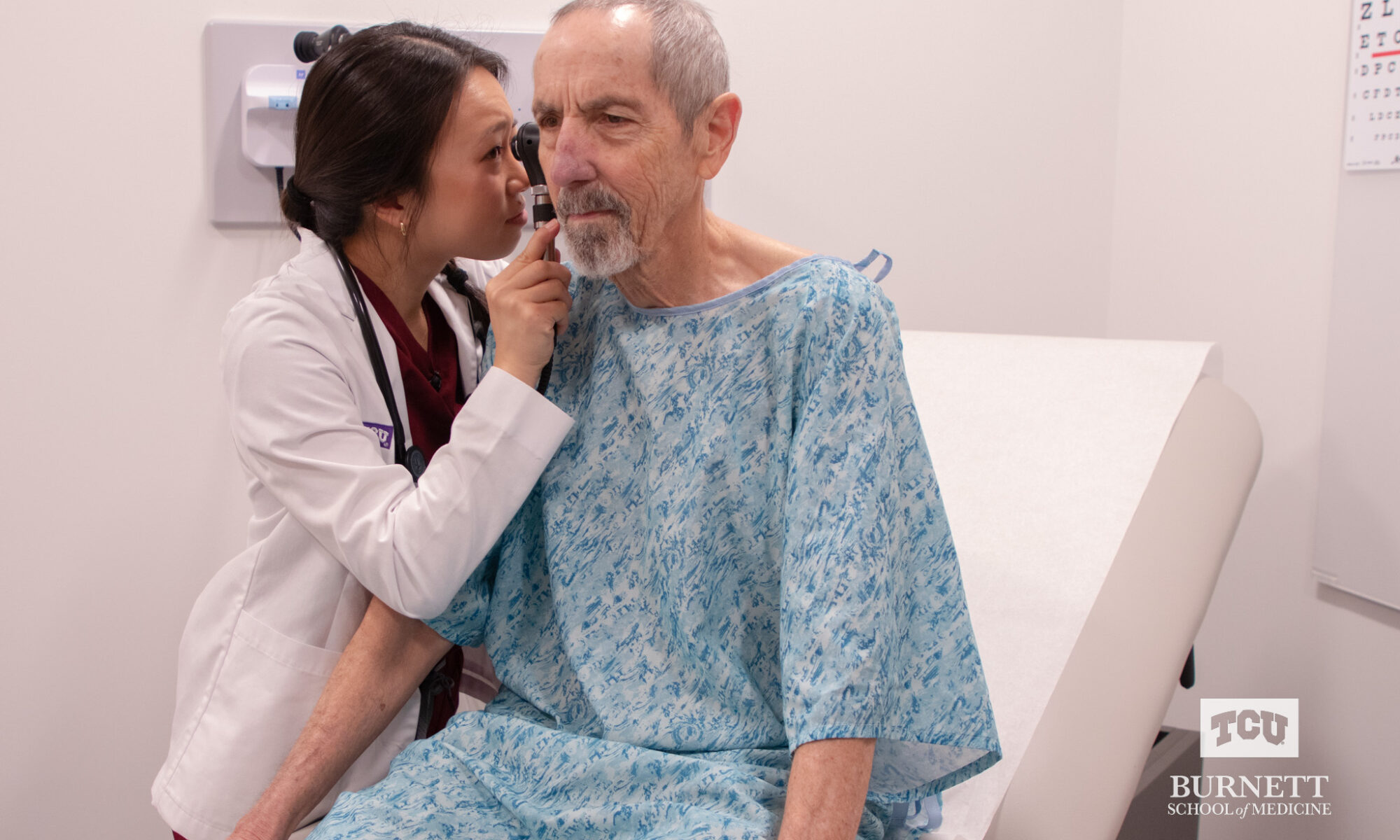
Students are taught how to interact with patients, ask questions to get medical information, and how to do physical exams.
“I think it’s one of the most important things,” said Sandra Esparza, M.D., Assistant Dean of Clinical Curriculum. “You have to have the medical knowledge, but you also have to know how to treat patients. It’s an important part of being a physician.”
With close supervision, students learn these skills by working with Standardized Patients (SP), who are trained to portray what could happen during a real patient visit. Students are then given immediate feedback on their performance.
“It’s one of the reasons why I chose Burnett School of Medicine at TCU,” said Thien An Nguyen, MS-2. “I love the thought of learning in clinic rather than just a book. Burnett School of Medicine emphasizes being an Empathetic Scholar® and I feel we learn that when we are in clinic.”
As health care and medical education continue to evolve, this program enhances the ability of physicians, nurses and allied health professionals to deliver high-quality instruction, develop engaging curricula and assess student learning effectively.
“Health care professionals play a critical role in shaping the next generation of practitioners, and this certificate strengthens their ability to teach with confidence and impact,” said Frank Hernandez, dean of the College of Education at TCU.
With a growing emphasis on interdisciplinary health care education, competency-based assessments and evidence-based teaching methods, this certificate is designed to prepare the next generation of academic leaders in medicine and health sciences.
Designed for Health Care Professionals and Academic Faculty The program is designed to be flexible and fully online, making it accessible for working professionals balancing clinical, teaching and administrative responsibilities.
The 9-credit hour certificate focuses on key areas of health professions education, including:
Science of Adult Learning – Understanding cognitive and non-cognitive factors that shape how health care professionals learn.
Curriculum and Instruction in Health Professions – Developing and delivering effective, research-based educational experiences.
Assessment and Accreditation – Ensuring program quality, student success and compliance with accreditation standards.
TCU is committed to moving medical education forward. “We are committed to training the next generation of leaders in academic medicine with skills that will prepare them for the challenges of health care education and the ability to mentor students to provide the highest level of patient care,” said Burnett School of Medicine Dean Stuart D. Flynn, M.D. “Partnering with the College of Education provides the experience and skills necessary to advance pedagogical skills and advances student learning outcomes.”
Graduates of the program will be equipped to lead training programs, improve health care curriculum and enhance medical education across academic and clinical settings.
Applications are now open. Whether you’re a clinician transitioning into teaching, a faculty member expanding your expertise or an educator looking to improve student learning outcomes, this program provides the knowledge, tools and flexibility to help you excel in health professions education.
Learn more about the program and admissions online.