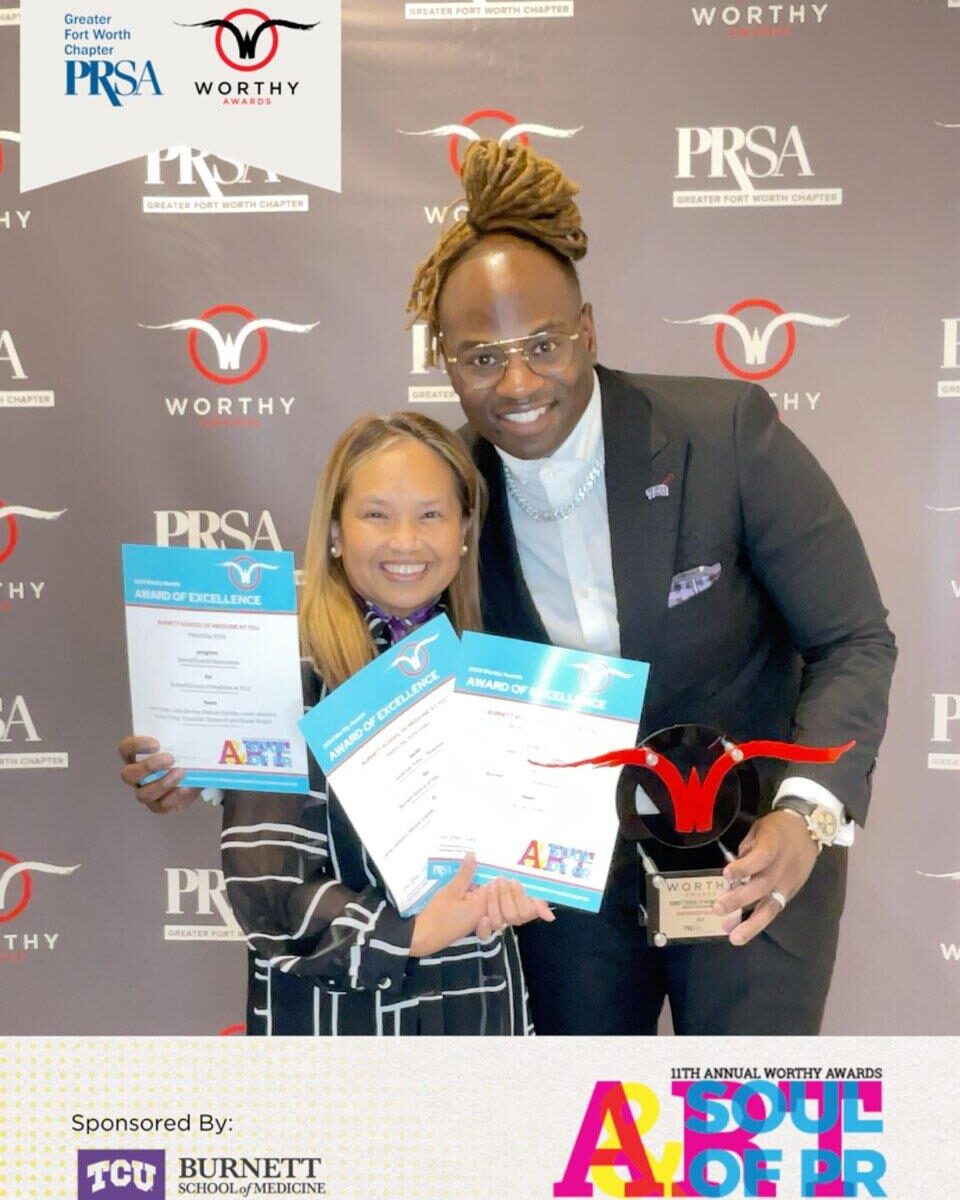
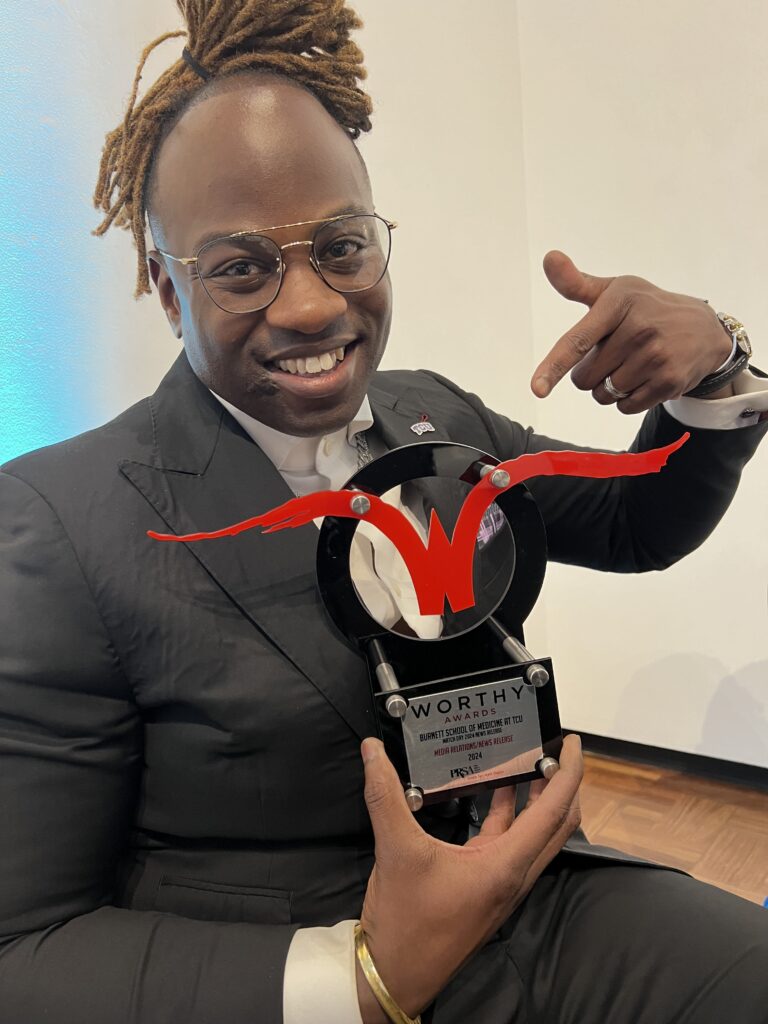
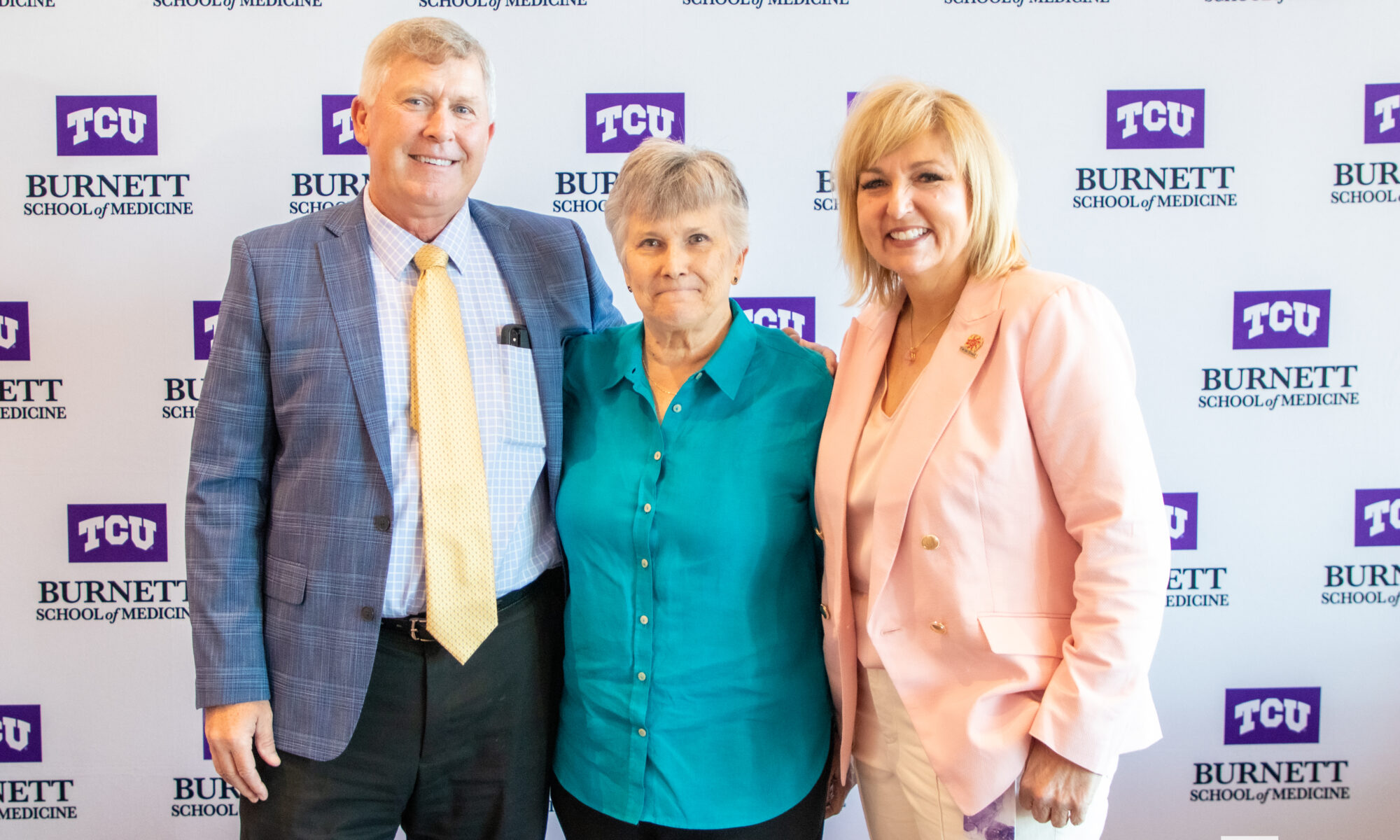
Led by Judy Bernas, Senior Associate Dean and Senior Officer for Communication and Strategy, the communications team was honored by the Greater Fort Worth Public Relations Society of America (GFW PRSA) with four awards at the 2024 Worthy Awards on November 8, 2024. The awards recognized the following strategic communication programs and tactics:
Prescotte Stokes III
Burnett School of Medicine at TCU’s 2024 Match Day News Release: Prescotte Stokes III. The tactic received a Worthy Award, the top honor.
Burnett School of Medicine at TCU’s 2024 Match Day: Judy Bernas, Amy Estes, Maricar Estrella, Lewis Jackson, Gorland Mar, Prescotte Stokes III and Nicole Wright. The program received an Award of Excellence.
Burnett School of Medicine at TCU’s 2024 Match Day Video: Lewis Jackson, Prescotte Stokes III, Nicole Wright and Maricar Estrella. The video received an Award of Excellence.
Burnett School of Medicine at TCU’s On the Move Newsletter: Maricar Estrella. The newsletter received an Award of Excellence.
Burnett School of Medicine at TCU’s Inaugural Match Day: Judy Bernas, Amy Estes, Maricar Estrella, Gorland Mar, Prescotte Stokes III and Nicole Wright.
The inaugural Match Day event was previously named a GFW PRSA Worthy Award winner and Best of Show Finalist in 2023. The event also received an Association of American Medical Colleges (AAMC) Bronze Award for Excellence at the 2024 GIA Awards.
Burnett School of Medicine at TCU’s ON-SITE Video Series: Prescotte Stokes III, Judy Bernas and Maricar Estrella.
The video series previously received a GFW PRSA Worthy Award in 2023 and an AAMC Silver Award for Excellence at the 2024 GIA Awards.
All medical students must complete a four-year Scholarly Pursuit and Thesis (SPT) research project before graduation, which allows students to cultivate projects they are passionate about, according to Angel Sheu, MS-2, at Burnett School of Medicine at TCU.
“I think it’s one of the greatest things about this curriculum because we get to have an impact right away,” Sheu said.
“If the students choose a project that they’re passionate about and really want to do, that’s going to be with them all four years and possibly beyond school,” Bernas said.
There are a few requirements for their research. The project must have a researchable question, and they must develop methods to investigate the research question. This allows students to focus on the key details of their project.
Bernas said at the beginning of each project, students are asked “What are your potential results? What do you hope to find and more importantly, what do you think that would mean?”
As first-year medical students, the goal is to push them to explore their curiosity.
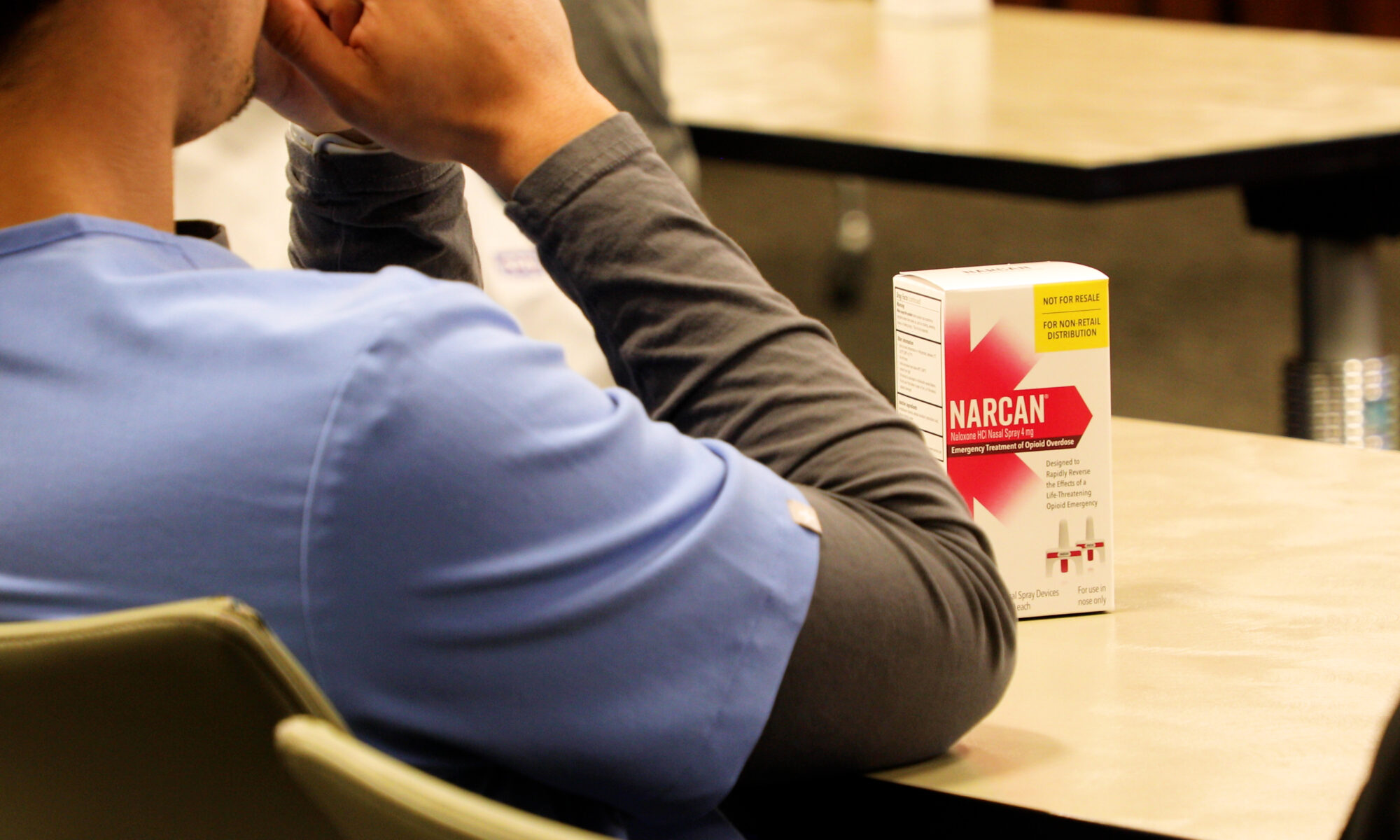
Sheu had her curiosity piqued a few weeks into medical school when she met Callie Crow, a retired paramedic and founder of the nonprofit Drews27Chains, during a training session about how to use Naloxone, more commonly known as Narcan, to reverse an opioid overdose. The session was part of the Service-Learning and Community Engagement curriculum at the Burnett School of Medicine.
Prior to starting medical school, Sheu worked as an Emergency Medical Technician (EMT) and then became a paramedic. As a first responder, she treated hundreds of patients for opioid overdoses in Denver, her hometown, and Philadelphia.
“In the ambulance, we have 10 minutes with patients but how could I make an impact on a greater level?” Sheu said. “And also, how can I help my peers, so they are more familiar and more comfortable with treating different types of patients?”
Drews27Chains offers Narcan training and free doses of the lifesaving medication to first responders, schools, and community centers in Texas and beyond. Since 2020, the organization has been credited with giving out more than 10,000 doses of Narcan and saving 74 lives.
However, collecting data about the lives saved using their Narcan doses has been challenging. Sheu decided to collaborate with the nonprofit for her SPT research project with a novel idea to install QR codes on each box of Narcan they distribute.
That was the biggest area where she could provide help, according to Sheu.
“I just wanted to be able to help Callie so that we could get better numbers,” Sheu said.
Ric Bonnell, M.D., assistant professor at Burnett School of Medicine and board member of Drews27Chains, is working with Sheu as her SPT research mentor. The idea to use QR codes and a quick questionnaire on your smartphone came out of a brainstorming session between Callie, Sheu and Dr. Bonnell.
“She came to us and said I need a way to collect data,” Dr. Bonnell said. “We hit on QR codes as the easiest for the first responder to just do and send. Then put the incentive in there if you click on that QR code and say what happened we’ll send you two more free doses.”
The process Sheu is experiencing with Dr. Bonnell is common on how research studies come together, Bernas added.
“Some of the students have an idea, but Angel had some training and had a background in that area,” Bernas said.
The student and their mentor explore a range of questions throughout the four-year process. They could ask questions like how many patients do we need? What kind of subjects will we explore? How do we know what we’re investigating is the right issue to address? The students are expected to do background research to support the hypothesis they’ve chosen, Bernas said.
“They are looking at papers, they are looking at previous research and they are talking to different people in the community,” Bernas said. “Those projects are such a collaboration between the student and the mentor.”
Once the research projects are completed, students will present their research posters and findings at the Esch Family SPT Research Summit before graduating from the Burnett School of Medicine. Being able to follow a topic so closely for four years is important, Sheu added.
“Ultimately, it will make us a better physician,” Sheu said.
“The program showcases the medical school through the compelling stories of our medical students,” said Maricar Estrella, Director of Digital Development and Content Strategy at the Burnett School of Medicine at TCU, who spearheaded the program. “As a novel medical school, we had to find an equally innovative approach to communicate our school’s unique curriculum.”
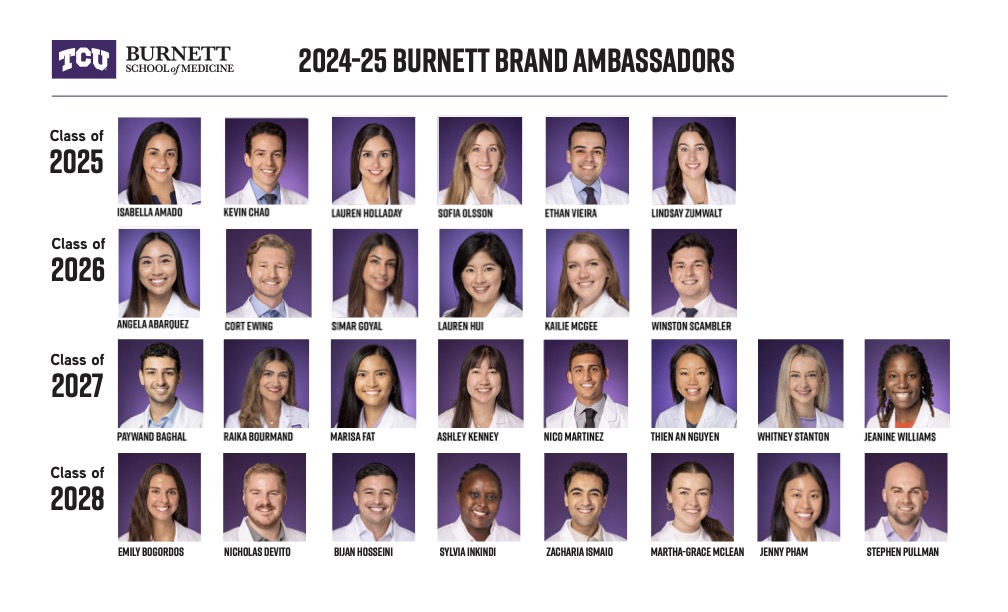
Class of 2028: Emily Bogordos, Nicholas DeVito, Bijan Hosseini, Sylvia Inkindi, Zacharia Ismaio, Martha-Grace McLean, Jenny Pham, Stephen Pullman
A committee consisting of faculty and staff evaluates and selects students who apply to the program, which is voluntary.
The program has grown to include media training from local journalists such as NBC 5 Today Anchor Deborah Ferguson, who gave tips on communicating effectively during a broadcast interview, and social media influencers such as J Mack Slaughter, Jr., M.D., an emergency medicine physician.
FORT WORTH – Tears rolled down the face of Makaela Mosely, a theatre major at TCU, as she ended a powerful monologue about the loss of a child due to a rare birth defect called Trisomy.
The audience sat stunned in silence. Then, applause and cheers erupted inside TCU’s PepsiCo Recital Hall.
“I actually have a former patient that comes and speaks to students about infant loss because she lost a child,” said April Bleich, M.D., Chair of Obstetrics and Gynecology at the Anne Burnett Marion School of Medicine at Texas Christian University.
“We’re good friends but it’s fascinating to hear her birth story versus my perspective which is purely from a medical perspective,” Dr. Bleich said.
This year’s Stethoscope Stage focused on maternal health. Burnett School of Medicine faculty and staff and Theatre TCU selected 15 monologues and short plays that were performed during the festival. This unique national play festival was created by Ayvaunn Penn, MFA, Assistant Professor in the TCU Theatre Department. Penn created the festival during the COVID-19 pandemic and was inspired by the recent advent of narrative medicine in medical school curriculum.
“Stethoscopes are instruments used to closely and carefully listen to the heart, and that is exactly what transpires here at Stethoscope Stage,” Penn said. “We are dedicated to facilitating open and honest conversations between patients and medical care providers both seeking truth, to be heard, and understood.”
Throughout the festival, there were a range of stories from women of all ages, cultural backgrounds and life experiences. Infant and maternal health has been a topic of discussion in Texas as infant and maternal mortality rates have risen since 2020 in a recent study released by the Texas Maternal Mortality and Morbidity Review Committee and Department of State Health Services.
Getting the opportunity to immerse yourself in a patient’s experience in this way is helpful for a health care provider, according to Sarah Morrow, CNM, Director of Nurse Midwives Hospitalist Group at Baylor, Scott & White All Saints Medical Center Fort Worth.
“I’m never going to get that kind of feedback from someone I’m seeing,” Morrow said. “If I can see it from other patients, even if it’s in a theatre or theoretical perspective, I can be very introspective on what my interaction looks like so that I can change in the future.”
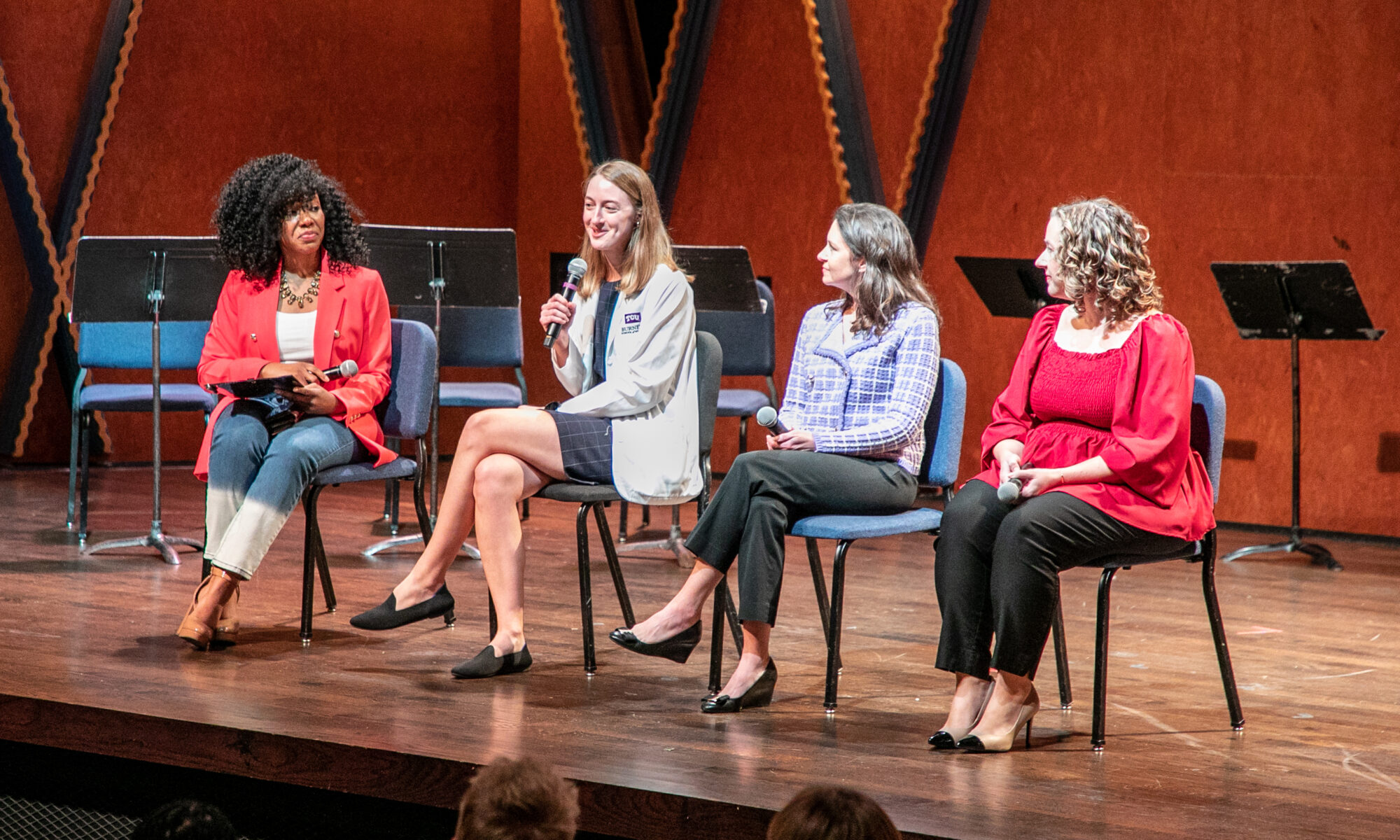
Following the performances Dr. Bleich, Morrow, and Elizabeth Slear, MS-3, president of the OB/GYN Student Interest Group at Burnett School of Medicine, discussed the importance of communication between health care providers and patients.
“This definitely opens your eyes to how things can be interpreted,” Dr. Bleich said. “It helps to remind you to slow down and use different terminology and things that you know the patient can understand.”
Slear, who plans to apply to OB/GYN residency next year, has spent a good portion of her medical school training with patients under the guidance of faculty physicians. Understanding a patient’s story and whole experience is critical to providing great care, she added.
“It really makes you think about what you could do differently to improve their experience and help explain things more to help ease some of that anxiety,” Slear said.
The community and engagement event is designed to expose students from disadvantaged and underserved communities to medicine in hopes of inspiring them to pursue a career in health care.
“Many of these communities don’t have great access to health care,” said Cheryl Hurd, M.D., Director of Service Learning at Burnett School of Medicine at TCU.
“They don’t have a lot of mentors or experience with the possibility that they could have a profession like that. We have to give them the opportunity and give them the knowledge that it’s out there.”
Leonardo Hernandez, a senior from Young Men’s Leadership Academy, is thankful for this opportunity.
“It gives me a lot of confidence because if they can do it then it lets me know that I can do it,” said Hernandez who wants to go into the medical field and pursue dermatology.
“I was able to get some hands-on experience and learn from all the doctors and medical students. It was a great experience,” he said.
“I think it’s important that young students see people that look like them or from their backgrounds. I hope they felt excited and are inspired to become physicians or follow their dreams.”
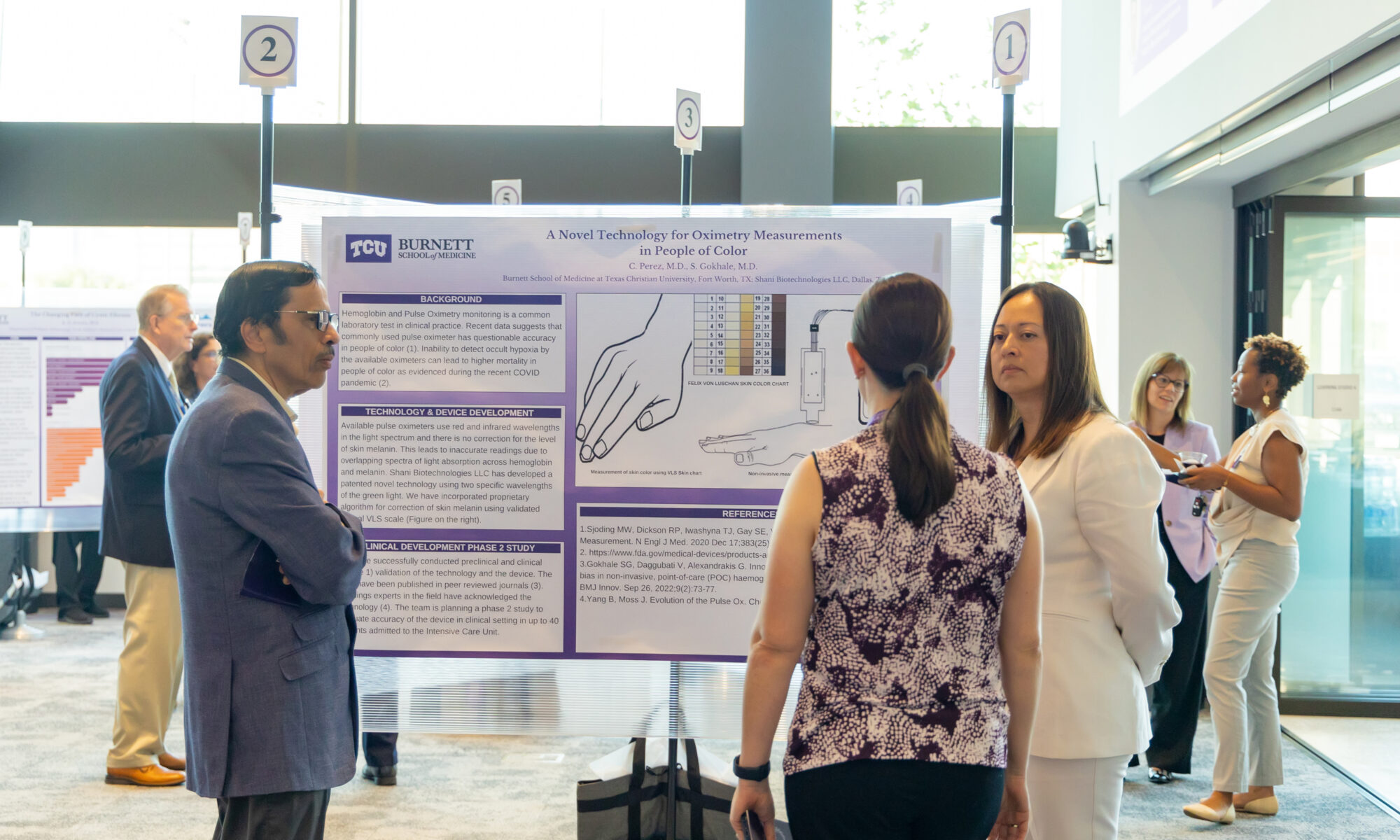
FORT WORTH – A group of physicians gathered around a poster presentation by Claudia Perez, M.D. on a novel device for oximetry measurements, which is the measurement of oxygen levels in a person’s blood or oxygen saturation.
The most used pulse oximeters tend to be inaccurate when used on people of color leading to higher mortality due to hypoxia and chronic respiratory failure, according to Dr. Perez. The new device, developed by Shani Biotechnologies LLC, based in Dallas, allows physicians to better detect low oxygen levels in people of color and improve health outcomes.
“We always have the potential to improve medicine, and our goal is always to do the best we can for our patients,” said Dr. Perez, Associate Professor at the Anne Burnett Marion School of Medicine at Texas Christian University.
More than 200 physicians attended the Fort Worth medical school’s first Faculty Research Symposium & Open House on October 8 at Arnold Hall.
There were 30 presenters with their posters spread around the Learning Studio inside the Amon G. Carter Inspiration Commons in Arnold Hall sharing medical knowledge to improve health care for patients. The exchanges brought a smile to the face of Greg Kearns, PharmD, Ph.D., Associate Dean for Research.
“Like our students who we want to be a lifelong learners, our faculty members have to be lifelong learners,” Dr. Kearns said. “We have to continually improve.”
The medical school has graduated two classes of physicians that all completed their required Scholarly Pursuit & Thesis (SPT) research projects alongside faculty mentors. As the medical school has blossomed, most of the research has been focused on students working with faculty. Now, faculty members are stepping into the spotlight with their own research, according to Dr. Kearns.
“Our faculty are the ones who help make the Empathetic Scholars®, which are our students, so this is a big day,” Dr. Kearns said.
Research at universities, particularly at medical schools, has many benefits including creating pathways for major advances in health care and science. The research by physicians at medical schools can incrementally build new knowledge to contribute to the larger scientific and medical community. It’s also a huge plus to the medical students learning alongside them, Dr. Kearns added.
“It can be research that is highly quantitative, some laboratory or qualitative research,” Dr. Kearns said. “Its broad ranging but we have to be engaged in it so we can be sure that the physicians we graduate are lifelong learners.”
Research also comes in many forms. Medical education and medical training are also areas where new discoveries can be made. Gamification is an innovative and growing practice in medical education.
Sandra Esparza, Assistant Dean for Clinical Curriculum at Burnett School of Medicine, presented her research poster that suggests games have the potential to promote learning, increase engagement, allow for real-world application and enhance collaboration.
“I think we should always be evaluating what we’re doing, and research is a great way to do that,” Dr. Esparza said.
Her research looked at the efficacy of using escape-room style exercises as a clinical skills teaching tool for medical students. Her team utilized Standardized Patients (SPs) to expose medical students to situations they may experience in future practice. Students used basic skills to identify heart sounds, lung sounds, and cardiac rhythms and rates. They also had to perform a physical exam properly to escape the room. By combining the principles of gamification and SP methodology, the Clinical Skills team designed an effective educational activity for first-year medical students.
“At the end when we surveyed the students, they felt like it was a great way to learn,” Dr. Esparza said. “They got to collaborate as a team and practice their skills.”
The more faculty research grows at the Burnett School of Medicine it also supports TCU’s larger research efforts.
Floyd Wormley, Ph.D., Interim Provost and Vice Chancellor for Academic Affairs at TCU, served as the keynote speaker for the research symposium. TCU is well-known for its research in humanities, but the university is looking to position itself as a leader in STEM, biomedical engineering and health innovation, according to Dr. Wormley.
“The work that’s being done right now with the Burnett School of Medicine ties directly into all of the great things we’re hoping to elevate and enhance,” Dr. Wormley said. “It’s going to be that springboard that takes us to higher heights.”
Fort Worth – The Anne Burnett Marion School of Medicine at Texas Christian University and The University of Texas at Arlington (UTA) announce the launch of a pioneering joint M.D.-Ph.D. program in biomedical engineering.
This innovative program will cultivate a new generation of physician-scientists who can bridge the gap between cutting-edge biomedical research and clinical practice. The first cohort of candidates will be considered during the 2024 M.D. admissions cycle and begin their studies in July 2025.
The dual-degree program merges the Burnett School of Medicine at TCU’s novel approach to medical education with the interdisciplinary research expertise of UTA’s Department of Bioengineering. The Burnett School of Medicine has successfully graduated its first two classes of physicians who have matched into some of the top residency programs in the U.S., like The Mayo Clinic, Stanford Health Care, UCLA and The University of Michigan.
“This collaboration will give students career advancing in-depth knowledge and skills in medicine and biomedical engineering to lead advancements in health care innovation,” said Stuart D. Flynn, M.D., Founding Dean of the Burnett School of Medicine. “Combining the expertise of both of these programs will provide an amazing opportunity for students to accelerate their knowledge and advance health care and research.”
The Ph.D. portion of the program, run by UTA, is designed to provide students with a robust training in biomedical engineering. Students will engage in rigorous coursework with significant laboratory-based research in a faculty investigator’s laboratory culminating in a doctoral thesis.
“This collaboration is a unique opportunity for UTA to leverage our half-century of providing education and research in biomedical engineering in North Texas,” said Peter Crouch, Ph.D., dean of UTA College of Engineering. “We are confident that working side-by-side with TCU’s medical students in performing specialized research, we will give them the knowledge they need to be pioneers in blending traditional medicine and technology.”
The United States faces a significant shortage of physician-scientists, individuals who are critical for driving biomedical advances and improving health care nationally and globally. This joint M.D.-Ph.D. program will prepare students to address some of the most vexing biomedical challenges of our time. Graduates of this program will be leaders in advancing discoveries in health care in the 21st Century.
Students enrolled in this program will have access to:
A curriculum that integrates the latest in medical education with cutting-edge biomedical engineering research.
Opportunities to be a member of cutting-edge research projects.
Guidance from leading faculty members who are at the forefront of their respective disciplines including bioinstrumentation, biomaterials and tissue engineering, biomechanics, medical imaging, and nanomedicine/nanotechnology, among others.
Graduates will be exceptionally prepared for careers in academic medicine, biomedical research, biotechnology, and regulatory agencies.
This joint M.D.-Ph.D. program represents a significant step forward in addressing the critical need for physician-scientists and offers students an opportunity to be leaders in health care innovation and advances.
FORT WORTH – The Burnett School of Medicine at TCU exceeded its goal on TCU Gives Day 2023 and secured a $50,000 Challenge Grant for scholarship support from Janeen and Bill Lamkin.
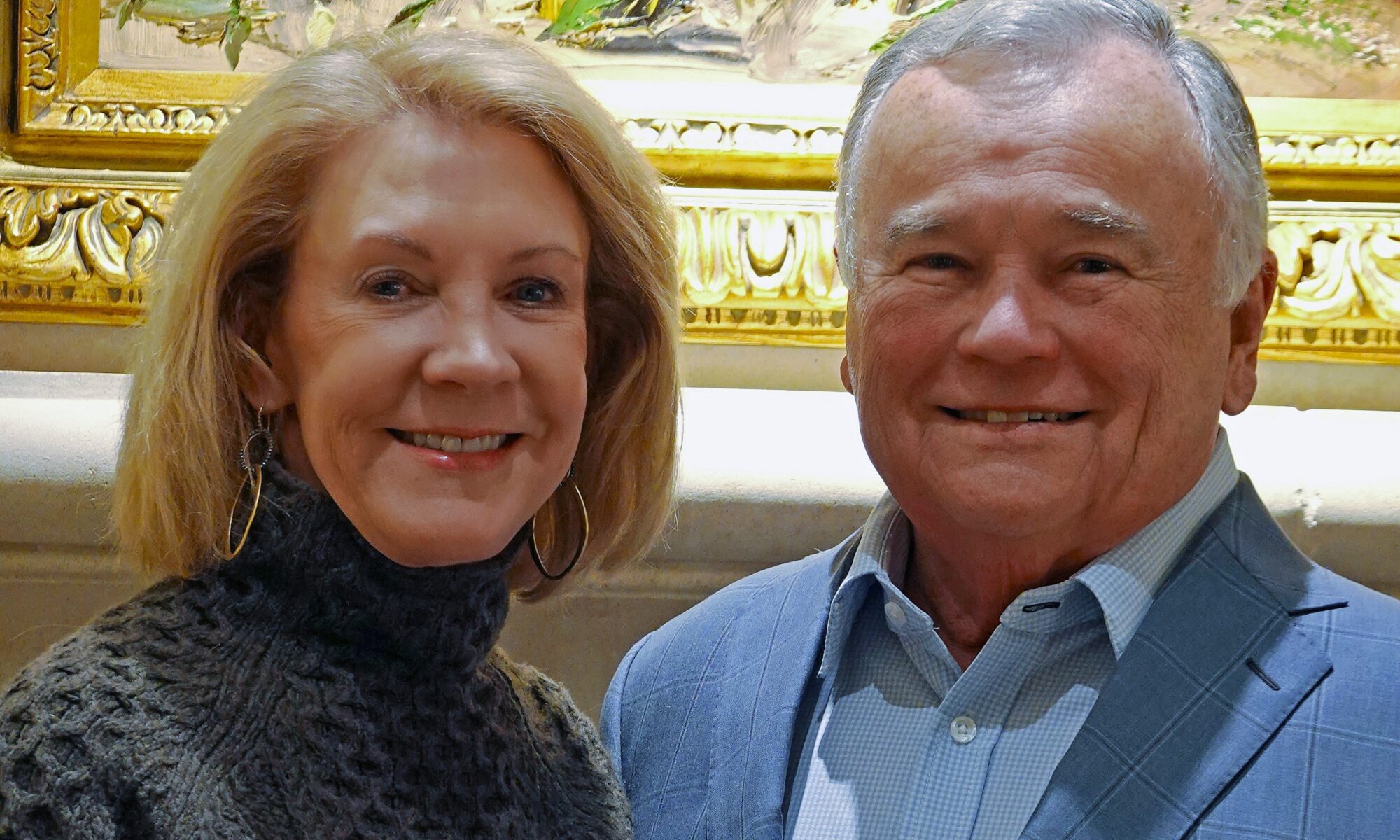
Servant Leadership is a Core Value of the Anne Burnett Marion School of Medicine. The Lamkins have served in volunteer leadership roles at numerous Fort Worth organizations and institutions for four decades, showing no signs of slowing down.
Texas Christian University and the Burnett School of Medicine at TCU are grateful beneficiaries of their generosity. Janeen has served as a community representative on the Admissions Committee of the School, pouring through hundreds of applications and reviewing the unique qualifications of applicants. Together, Janeen and Bill endowed a scholarship in 2019 as the Burnett School accepted its first students, setting an early example that many others have followed. Their generous annual gifts continue to support the School and its mission.
“We live in one of the fastest growing communities in the United States and in addition, it’s an aging community. Both of those factors demand that we increase the number of healthcare providers in order to meet the increased needs.” Bill continues, “By having the Burnett School of Medicine in Fort Worth it encourages new doctors to start their careers in the local area, which will greatly help support our communities’ needs both today and in the future.”
Highlighting Bill’s community service has been 19 years of involvement with Texas Health Resources including the Texas Health Resources Foundation Board (two years as Board Chair), the Texas Health Harris Methodist Finance Committee (Chair), Texas Health Community Impact Board and, currently, the Texas Health Resources Finance Committee.
Janeen, a 1989 TCU Neeley School of Business graduate, has also focused on health and the welfare of those most vulnerable in her volunteer roles. ACH Child & Family Services, Ronald McDonald House, and Texas Health’s Kupferle Health Board have all benefited from her investments of time and treasure.
“Having the honor of serving on the Burnett School Admissions Committee alerted me to the fact that students take on an average medical school debt of over $200,000. Anything we can do to minimize this added stress for our medical students, as well as the financial burden for our future caregivers, is a worthwhile investment.”
Janeen and Bill Lamkin are once again stepping up as Burnett School Challenge Donors for the 2024 TCU Gives Day effort.
They have pledged an additional $50,000 scholarship gift, which will be unlocked when 150 or more donors contribute this year. Your donation, no matter the size, will honor the Lamkins’ commitment and enhance the Burnett School’s ability to recruit and retain the most talented students, regardless of their financial circumstances.
3,066 donors provided more than $1.86 million in gifts across TCU for TCU Gives Day, making this a successful year for donor participation in the event’s 11-year history.
FORT WORTH – Teaching medical students to put the patient at the center of care and create a partnership between physicians, patients, and their families is a unique approach to medical education.
Stuart D. Flynn, M.D., the Founding Dean of the Anne Burnett Marion School of Medicine at Texas Christian University, and Jacque Chadwick, M.D., Special Assistant to the Dean, are trailblazers on this type of medical training. They are using that patient-centered model to create Empathetic Scholars®and physicians of the future.
“The delivery of health care is broken,” Dr. Chadwick said. “It’s not doing the best it can do for the patient, and so we need to have these doctors prepared to function within the system that exists.”
In a traditional four-year medical school curriculum, the preclinical phase is two years of science training where students sit in lectures learning about basic medical concepts, structures, functions of the body, diseases, diagnoses, and treatment concepts, according to the Association of American Medical Colleges (AAMC). The last two years are when students begin clinical rotations and get hands-on experience with patients in the major medical specialties.
The Burnett School of Medicine at TCU has flipped that model and pairs students with physicians and their patients in the major medical specialties all four years of their curriculum.
“I think every medical school obviously thinks about caring for patients, but then you have to see it ingrained in the culture of your environment – that’s how we put this school together,” said Dean Flynn.
Dean Flynn and Dr. Chadwick, discussed the creation of the medical school’s unique Empathetic Scholar®curriculum with faculty, staff and students during a panel discussion at the medical school moderated by Judy Bernas, Senior Associate Dean and Chief Communication and Strategy Officer.
“The faculty physicians here are paying back what they got when they were medical students and that is training the next generation of doctors with empathy and compassion,” Dean Flynn said.
The conversation followed the Burnett School of Medicine at TCU’s Dedication Event for its new medical education building, named Arnold Hall, in Fort Worth’s Medical Innovation District.
The impetus in creating an Empathetic Scholars® model began in the late 2000s when both Dr. Flynn and Dr. Chadwick worked for the University of Arizona College of Medicine – Phoenix.
Dr. Flynn served as the College of Medicine’s Founding Dean and Dr. Chadwick served as Vice Dean. They implemented a few concepts, however, they had to contend with the established curriculum, which had been in place since the early 1990s.
“We were given a curriculum, especially the clinical curriculum, from an established school that was very traditional. We were not able to change that at all,” Dr. Chadwick said. “We were able to create first- and second-year curriculum that was brand new and very different that we were proud of, and I think that gave us a bit of an appetite to do something full scope that we could create new.”
Dean Flynn’s expertise was in medical school curriculum and Dr. Chadwick excelled at clinical education. To do something radically different in medical education, they would need an opportunity to create a new medical school from the ground up so they could shape the culture and DNA of the school.
“If you start a new medical school, I think you’re obligated to take advantage of it,” Dean Flynn said. “At least where you can predict where medicine might be 5 or 10 years from now. It’s kind of hard to predict much past that.”
Dean Flynn, Dr. Chadwick, and a small team arrived in Fort Worth in 2015. They began laying the groundwork of what would become the Burnett School of Medicine and its Empathetic Scholar® curriculum. In those days, they would sit with about 30 to 40 physicians and basic scientists in a large room posing questions to one another.
What kind of medical student would you be proud of as a graduate of this medical school? What kind of physician would you want after residency? What kind of physician would you want for you and your family?
“Initially, the conversation with some of the groups was that we need the traditional, sit-in-a-lecture-hall curriculum,” Dr. Chadwick said. “It was very hard to convince some physicians that it might be better to do things different.”
Once the idea of creating a new paradigm of medical education came to fruition, the process became fun, Dean Flynn said. They set out to create a curriculum that’s forward-thinking and trains medical students for where medicine is going.
“Knowledge and technology is escalating big time,” said Chadwick recalling the early discussions on the new curriculum. “We focused on lifelong learning and critical thinking. How do you get the students to not memorize, but to interact with the material, the technology early on?”
The curriculum was also built to be adaptable and flexible as the medical school evolves, Dean Flynn said.
Another important part of the curriculum is to prepare future physicians for today’s health care industry.
When Dr. Flynn and Dr. Chadwick were in medical school, they never learned about the health care system. Medical students today “need to know about those things and hopefully be leaders to change it back to being a patient-centered way of delivering care.” Dr. Chadwick said.
The inaugural class of medical students, known as the Dorman Scholars, began in July 2019. Since then, the medical school has matriculated a full student body of 240 students, which is 60 students in each class, and graduated two classes. Graduates of the medical school have landed residency spots in top programs such as, The Mayo Clinic, Stanford Health Care, UCLA Health, Vanderbilt, University of Michigan, New York University, and University of Texas Southwestern Medical Center.
“I’m turning around to hand the baton to the next generation, and I want them to not only be able to take care of me and my family and all of their patients in the best way possible,” Dr. Chadwick said. “I want them to be the next group of leaders who want to also do their very best. I want them to be changeable and teachable.”
Servant Leadership is a Core Value of the Anne Burnett Marion School of Medicine. If looking for a couple that embodies this value and has proven so time and time again, look no further than Janeen and Bill Lamkin. The Lamkins have served in volunteer leadership roles at numerous Fort Worth organizations and institutions for four decades, showing no signs of slowing down.
Texas Christian University and the Burnett School of Medicine at TCU are grateful beneficiaries of their generosity. Janeen has served as a community representative on the Admissions Committee of the School, pouring through hundreds of applications and reviewing the unique qualifications of applicants. Together, Janeen and Bill endowed a scholarship in 2019 as the Burnett School accepted its first students, setting an early example that many others have followed. Their generous annual gifts continue to support the School and its mission.
“We live in one of the fastest growing communities in the United States and in addition, it’s an aging community. Both of those factors demand that we increase the number of healthcare providers in order to meet the increased needs.” Bill continues, “By having the Burnett School of Medicine in Fort Worth it encourages new doctors to start their careers in the local area, which will greatly help support our communities’ needs both today and in the future.”
Highlighting Bill’s community service has been 19 years of involvement with Texas Health Resources including the Texas Health Resources Foundation Board (two years as Board Chair), the Texas Health Harris Methodist Finance Committee (Chair), Texas Health Community Impact Board and, currently, the Texas Health Resources Finance Committee.
Janeen, a 1989 TCU Neeley School of Business graduate, has also focused on health and the welfare of those most vulnerable in her volunteer roles. ACH Child & Family Services, Ronald McDonald House, and Texas Health’s Kupferle Health Board have all benefited from her investments of time and treasure.
“Having the honor of serving on the Burnett School Admissions Committee alerted me to the fact that students take on an average medical school debt of over $200,000. Anything we can do to minimize this added stress for our medical students, as well as the financial burden for our future caregivers, is a worthwhile investment.”
Janeen and Bill Lamkin are once again stepping up as Burnett School Challenge Donors for the 2024 TCU Gives Day effort.
They have pledged an additional $50,000 scholarship gift, which will be unlocked when 150 or more donors contribute this year. Your donation, no matter the size, will honor the Lamkins’ commitment and enhance the Burnett School’s ability to recruit and retain the most talented students, regardless of their financial circumstances.
Join the Lamkins and the Burnett School of Medicine in supporting our Empathetic Scholars® who, as TCU physician graduates, will lead on the transformation of health care.