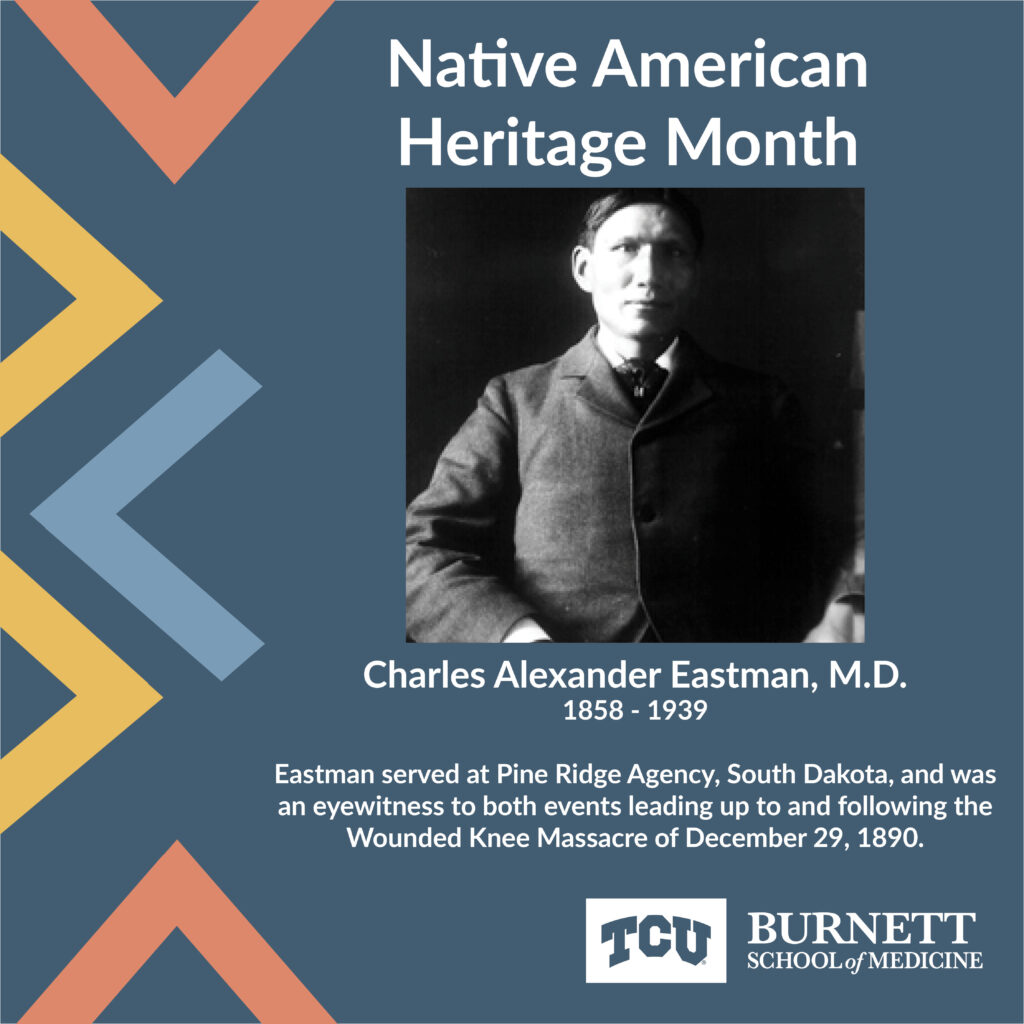
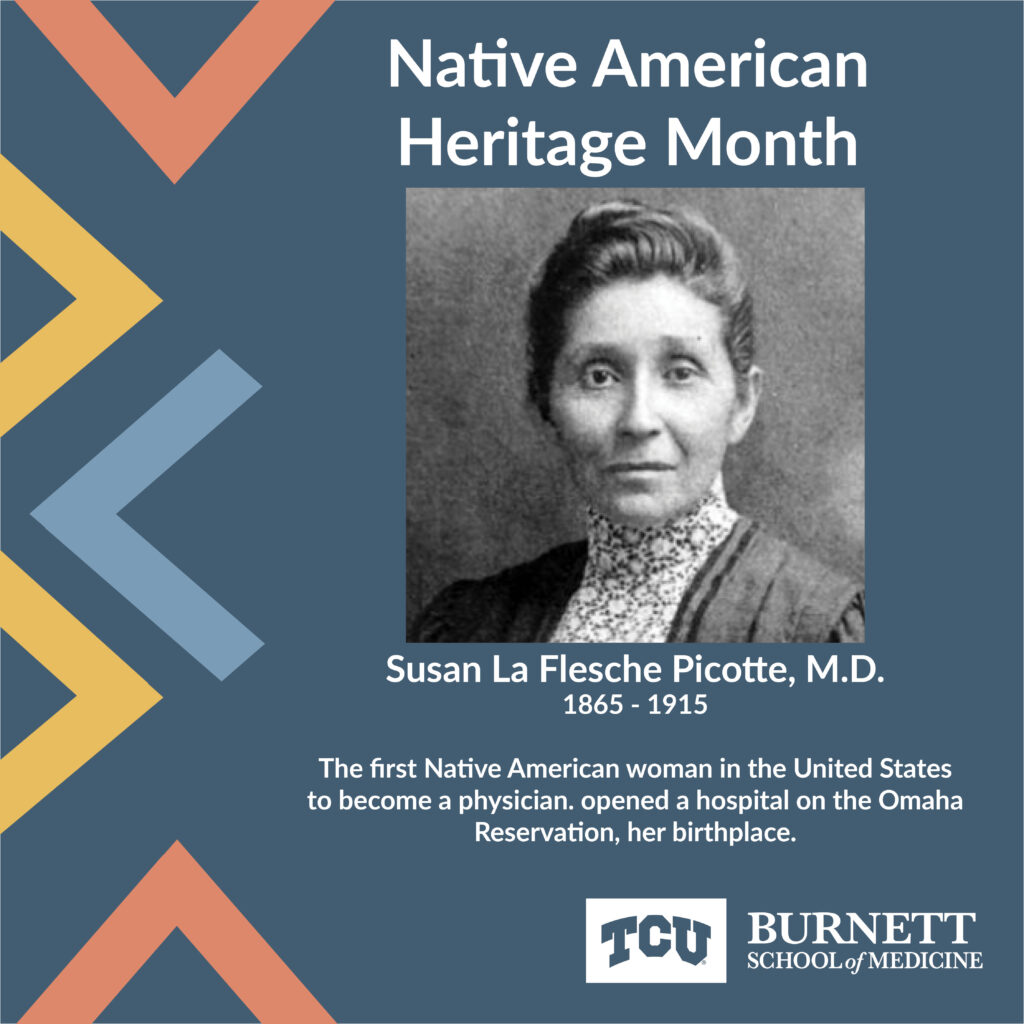
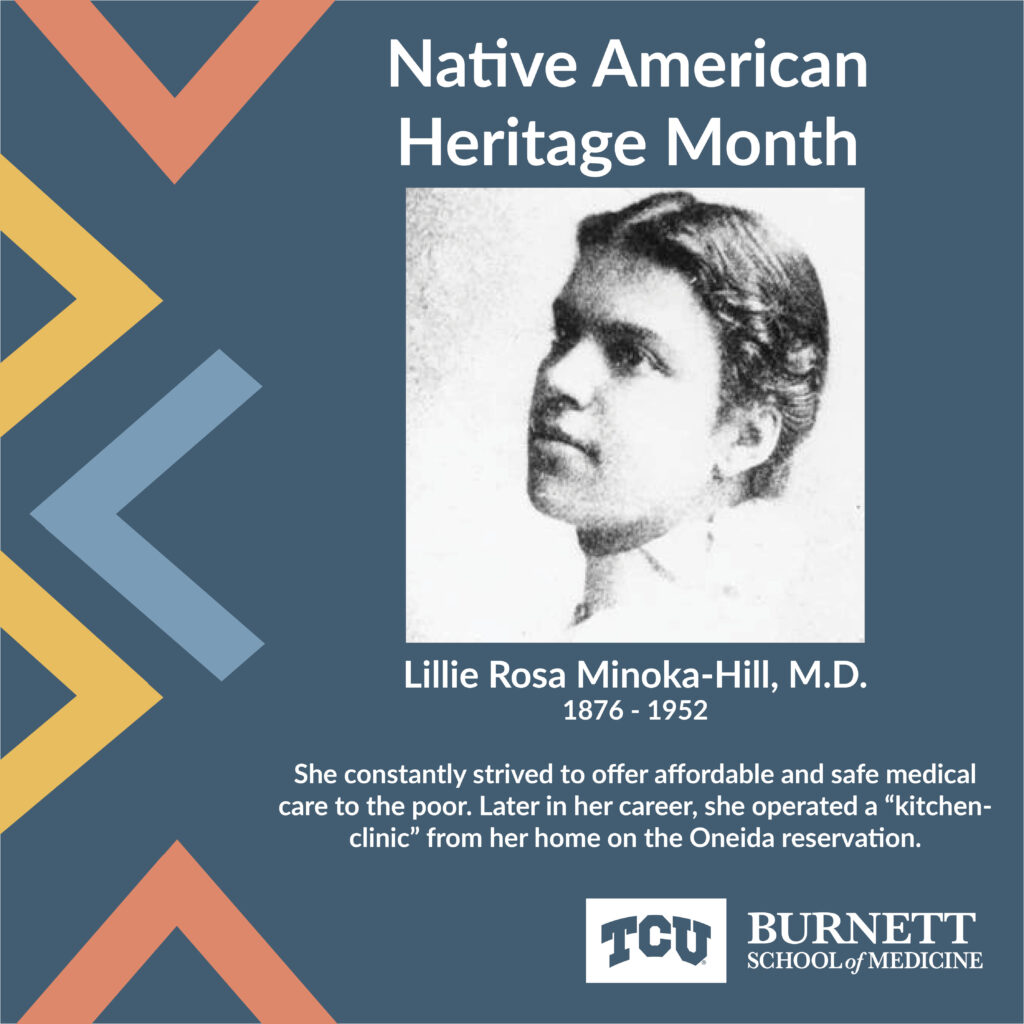
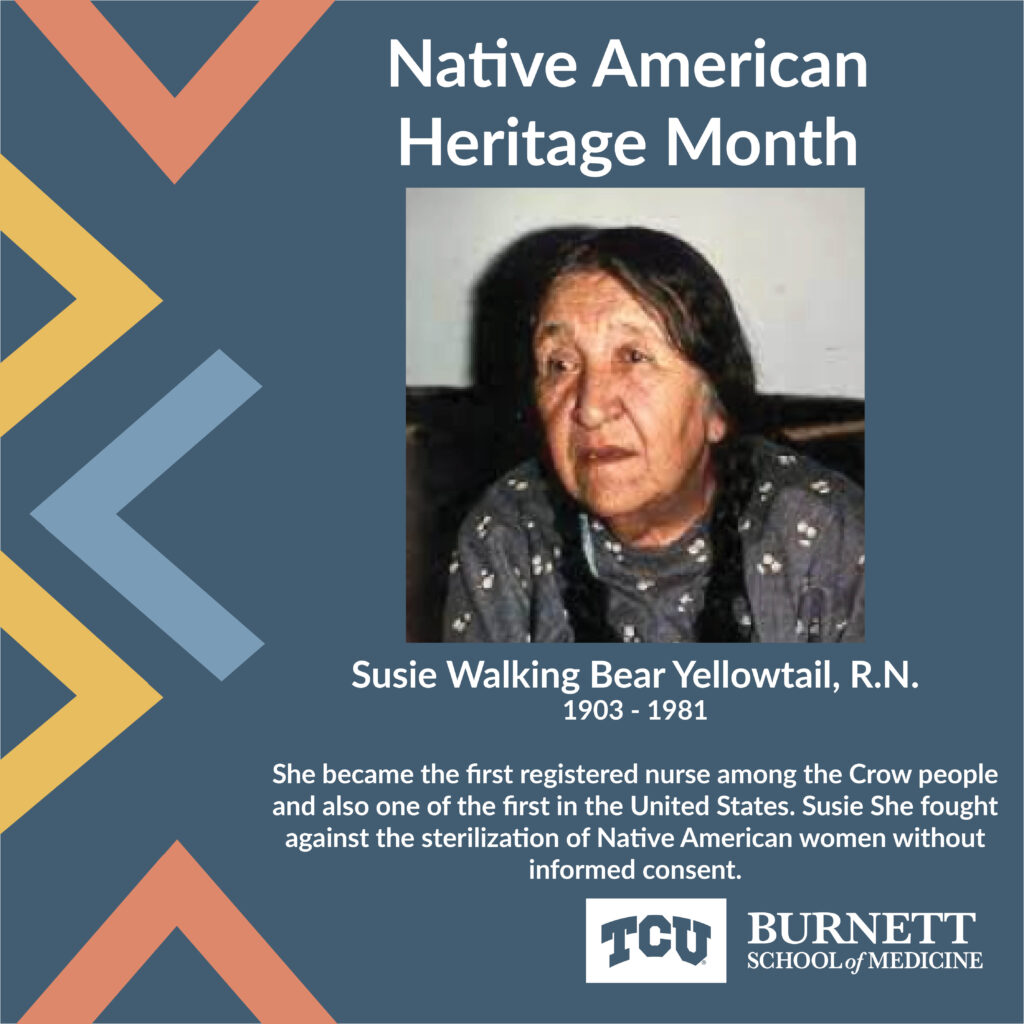
Native American Heritage Month, which is celebrated the entire month of November, celebrates and honors the contributions and traditions made by those of Native American backgrounds.
“This month is an opportunity to take a moment and reflect on the land that we currently have been on for so many years and the life that we built here as a country,” said Paywand Baghal, a first-year medical student at the Anne Burnett Marion School of Medicine at Texas Christian University. Baghal went on to say that it is important to reflect on who owns this land during Native American Heritage Month.
TCU acknowledges the many benefits, responsibilities, and relationships of being in this place, which we share with all living beings. We respectfully acknowledge all Native American peoples who have lived on this land since time immemorial. TCU especially acknowledges and pays respect to the Wichita and Affiliated Tribes; upon whose historical homeland our university is located.
Throughout the month, the Burnett School of Medicine at TCU will honor Native American health care professionals and their accomplishments.
“Our students have skills that are exportable outside of their local rotations,” JoAnna Leuck, M.D., Associate Dean of Educational Affairs at the Anne Burnett Marion School of Medicine at Texas Christian University said. “We often get feedback that our students are advanced beyond their level of training, especially around how they communicate with their patients.”
The away rotations are two- to four-week programs where medical students can “audition” for a Graduate Medical Education (GME) residency positions at a hospital or health care center. Even though away rotations are not required to apply to a residency program, it allows medical students an opportunity to impress potential residency directors and stand out from other candidates.
Throughout the year, we’ll showcase away rotation experiences from some of our Burnett School of Medicine at TCU students.
Sam Sayed
Hometown: Arlington, Texas
Classification: MS-4
Medical Specialty: Emergency Medicine
Away Rotations: Mayo Clinic in Rochester, Minnesota, Stanford Health Care – Palo Alto
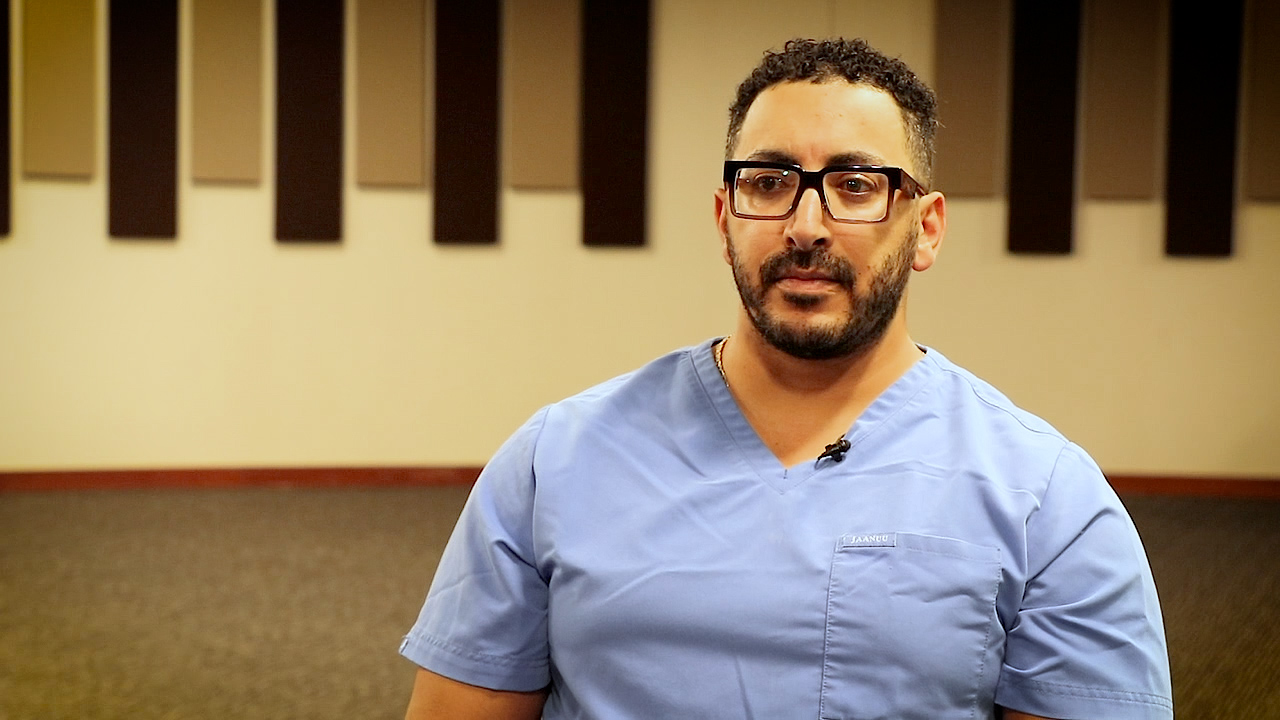
As Sam Sayed, MS-4, Burnett School of Medicine at TCU, headed off to away rotations at the Mayo Clinic in Rochester, Minnesota and Stanford Health Care in Palo Alto, California, this past summer he felt prepared.
“This medical school has been a dream come true for me,” Sayed said. “Over the course of my career here, I had a two-and-a-half-year head start over traditional medical students.”
Sayed and his classmates began seeing patients during their first year of medical school in the Burnett School of Medicine’s Longitudinal Integrated Clerkship (LIC) curriculum for 21 weeks. As second-year medical students, they had 10 weeks of inpatient hospital immersions and 40 weeks of clinical ambulatory rotations in eight medical specialties: Emergency Medicine, Family Medicine, Internal Medicine, Obstetrics & Gynecology, Neurology, Pediatrics, Psychiatry and Surgery.
During that period, Sayed became drawn to emergency medicine and grew more comfortable talking to patients. He credited the medical school’s LIC for giving him an edge when he was asked to get critical information from trauma patients on his rotations.
“When I was on my aways it allowed me to blossom at a critical point in my career,” Sayed said.
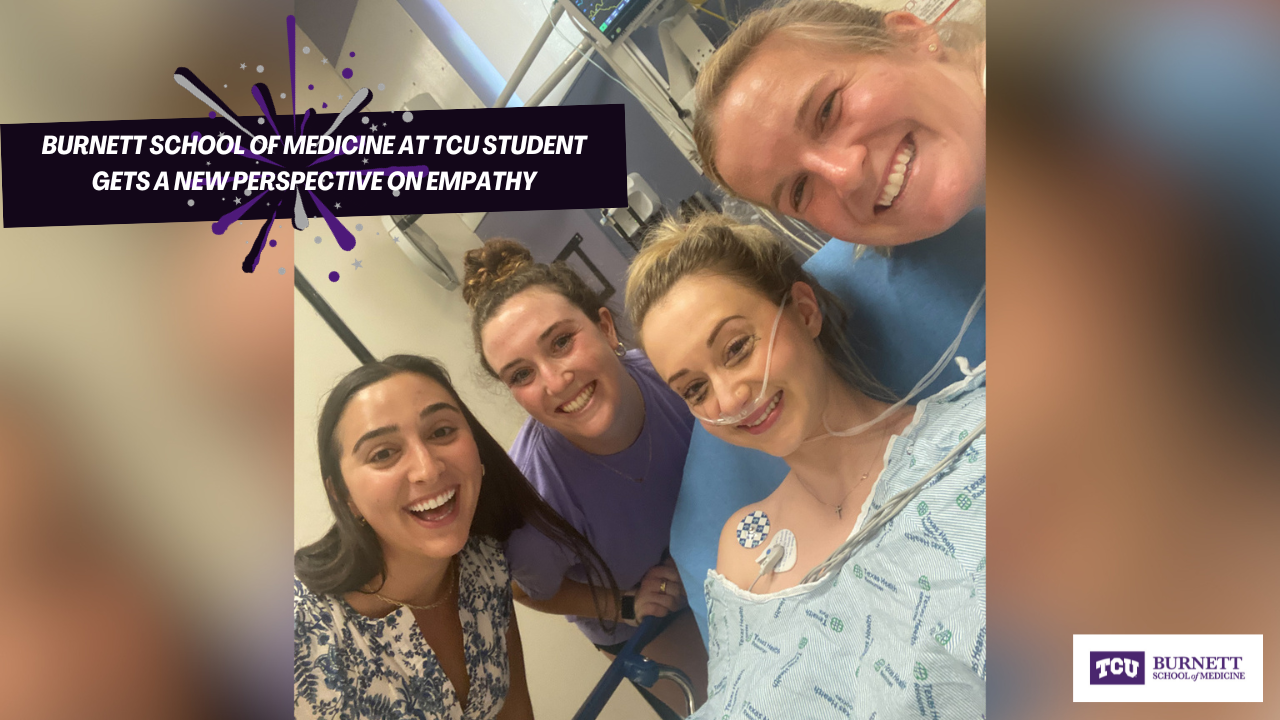
“I did not think six weeks into medical school that I would break my arm.”
In late August, Stanton said she was driving through the intersection of White Settlement Road and Athenia Drive in Fort Worth where another car ran through a stop sign and hit her car.
Stanton’s sister, who was in the passenger seat, was able to get out of the vehicle, but Stanton remained stuck in the driver’s seat. She looked down at her right arm and saw her wrist twisted.
“I remember thinking I need an ambulance and I need to get to the ER,” Stanton said. “I told them bring me to the best hospital.”
She was taken by ambulance to Texas Health Harris Methodist Fort Worth where emergency medicine physicians were able to get a quick look at Stanton’s injuries. Doctors determined that Stanton fractured her arm in multiple places and would have to undergo surgery. Her sister suffered minor injuries in the accident.
“As soon as I walked in the door she said, ‘You’re the Chair of Emergency Medicine,’ ” Dr. McCarthy said. “Early on, I just want to teach the students that it really matters how much you care about your patients. I sincerely wanted to check on Whitney.”
The outpouring of support didn’t stop with Dr. McCarthy. Several of Stanton’s classmates rushed to the hospital to be by her side. The Office of Student Affairs at Burnett School of Medicine also jumped into action providing a care basket for Stanton and working on getting her special accommodations for class.
Student Affairs is a hub and connector for students and a place for students to begin their inquiries when “life happens,” according to Mary Beth Mercatoris, Ph.D., Director of Student Affairs at Burnett School of Medicine.
“It is inevitable that life throws our students curveballs where support is needed,” Mercatoris said. “Our curriculum is complex and exacting so as a student is healing from an injury many School of Medicine colleagues are here to support the student’s forward progression within the curriculum without a pause-out or stop-out when at all possible.”
Stanton had surgery on September 6 and her right arm was placed in a sling until it fully heals. Her classmates have given her rides to school and helped apply icepacks to her arm during class breaks.
“I fully know now that the Burnett School of Medicine at TCU fully stands by our mission of creating Empathetic Scholars®,” Stanton said. “It’s not only the students who stand behind that but everyone who’s associated with our wonderful community here.”
For Stanton, this experience has given her an in-depth patient perspective.
“I definitely have an idea of what it’s like to be the patient and go through an operation,” Stanton said. “In the future, I hope I can be a calming presence and comfort to a patient in that situation and give back to someone in the future.”
FORT WORTH – Founding Donors and Dean’s Council charter members gathered for the first time on September 21 to hear about the progress of the Anne Burnett Marion School of Medicine at Texas Christian University.
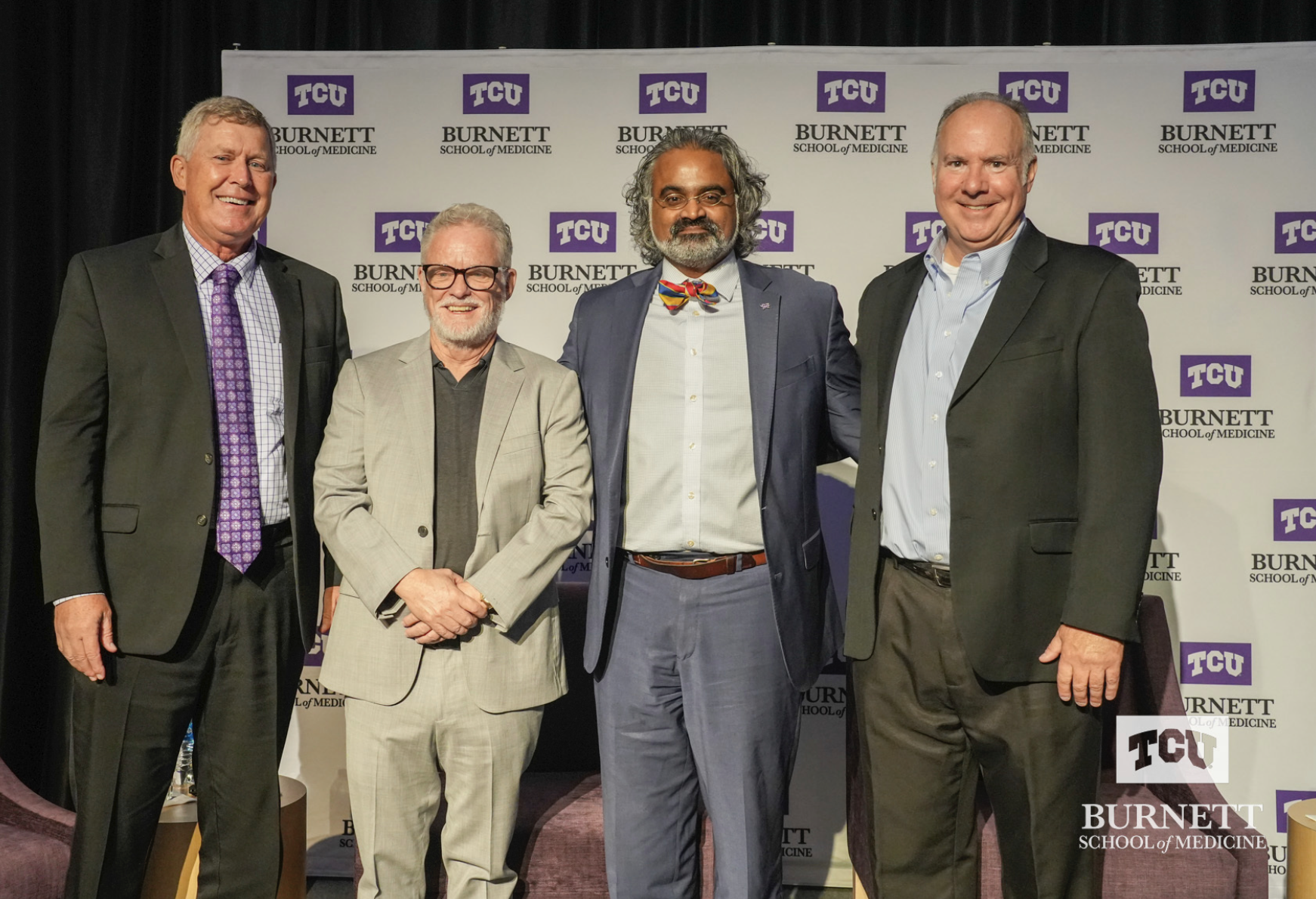
The panel discussion was led by Founding Dean Stuart D. Flynn, M.D., who was joined by Director of Service Learning Ric Bonnell, M.D., and Sam Sayed, MS-4. Judy Bernas, Senior Associate Dean and Chief Communication and Strategy Officer, moderated the discussion.
Dean Flynn shared the extraordinary achievements of faculty, staff and students in 2023 including the medical school obtaining full LCME accreditation, its inaugural class graduation and 100% residency match rate and the welcoming of the Class of 2027.
Dean Flynn also talked about the unique Burnett School of Medicine curriculum, which prioritizes compassionate communication, collaboration and a lifelong approach to learning. Dr. Bonnell shared his passion for service learning, putting students in touch with the communities they will serve as future physicians. Sam provided the student’s perspective of the curriculum, and noted the importance of research and away rotations to matching into selective residency programs.
The Burnett School’s Founding Donors have provided $1 million or more to the school during TCU’s Lead On Campaign. Individuals and organizations providing $5000 or more each fiscal year are recognized as members of the Dean’s Council at the Burnett School of Medicine. This philanthropic support provides the student body with scholarship dollars, research funding, program support, and student extracurricular opportunities.
Questions about philanthropy may be directed to Assistant Vice Chancellor for Development Doug White, douglas.a.white@tcu.edu or Director of Development Amanda de la Torre, a.m.delatorre@tcu.edu.
The Gold Humanism Honor Society has approved a chapter at the Anne Burnett Marion School of Medicine at TCU.
The recent notification of approval of the chapter allows the Burnett School of Medicine to begin forming the chapter and selecting the first and second group of students to be recognized as Gold Humanism members.
The Gold Humanism Honor Society (GHHS) recognizes individuals who excel at humanistic patient care and who can serve as role models, mentors and leaders in medicine. The GHHS is a community of medical students, physicians and other leaders who have been recognized for their compassionate care and reinforces and supports the human connection in health care.
Chapter advisors will be Ric Bonnell, M.D., assistant professor and Director of Service Learning and Community Engagement, and David Capper, M.D., professor and Chair of Clinical Sciences.
Once established, students in Spring of their third year will be asked to complete the Peer Nomination Survey, with an induction ceremony in late Spring.
Survey results will produce a list of candidates who will be reviewed by a Selection Committee and asked to submit an essay. The Selection Committee will be comprised of deans, faculty, clerkship directors and students recognized in the Servant Leadership Awards (past) and (future) previously inducted GHHS members.
The total number of GHHS members can be no more than 10-15% of the medical school class.
After a few years of the GHHS chapter, it will be expanded to induct up to four faculty members per year.
FORT WORTH – The Burnett School of Medicine at TCU exceeded its goal on TCU Gives Day 2023 and secured a $50,000 Challenge Grant for scholarship support from John Esch, Gregor Esch and Grainger Esch because of your generosity. In addition to their Challenge Grant the Esch family gave an additional $10,000, inspired by the donations of others.
The John Esch family has enjoyed a close and passionate relationship with TCU for seven decades. John earned his TCU Economics degree in 1964, and with his wife, Mary, set down roots in Fort Worth that remain strong today. The family’s connection to TCU has also remained strong. While older son Grainger earned his degree from Duke, younger son Gregor earned his 1996 Journalism degree from TCU. A mutual love of athletics, music, and the arts has led the entire family to campus often through the years.
Like many in Fort Worth, the 2019 launch of a new medical school attracted the family’s attention and interest. “TCU has provided Fort Worth with an incredibly important asset and resource with the rapid development of a quality medical school. The coming physical location in the medical district will magnify the impact even further,” explained John. The value of conducting a four-year research project and thesis particularly caught their eye. “We have the greatest amount of respect for the dedication, perseverance, and discipline that research entails.”
The family created the Mary G. Esch and Mary N. Esch Endowment Fund in 2021 to provide annual support to the Scholarly Pursuit and Thesis program, and to help offset the costs of 60 new student research projects each year. The fund honors the memory of wife and mother Mary Norwood Esch and mother and grandmother Mary Guinn Esch. “Research in all areas of humanity is vital to the betterment of life; but none more beneficial or needed as in the medical area,”added John.
“We are particularly grateful to Burnett School faculty and staff who gave so generously again this year,” said Burnett School Director of Development Amanda de la Torre. “It means so much when those closest to the School elect to add financial support to the many ways they already support our students.”
More than 3,700 donors provided more than $1.84 million in gifts across TCU for TCU Gives Day, making this the 2nd highest year for donor participation in the event’s 10-year history. Gives Day also set the stage for the 150th celebration and culmination of the Lead On Campaign.
More than 170 gifts were given to the medical school totaling more than $156,000. Your support has had a tremendous impact!
Each year, Hispanic Heritage Monthcelebrates the contributions and influences of Hispanic Americans to the history, culture and achievements in the United States. Throughout the month, which began on September 15 and runs through October 15, the Anne Burnett Marion School of Medicine at Texas Christian University will highlight some of its students, faculty and staff who will share what being Hispanic means to them.
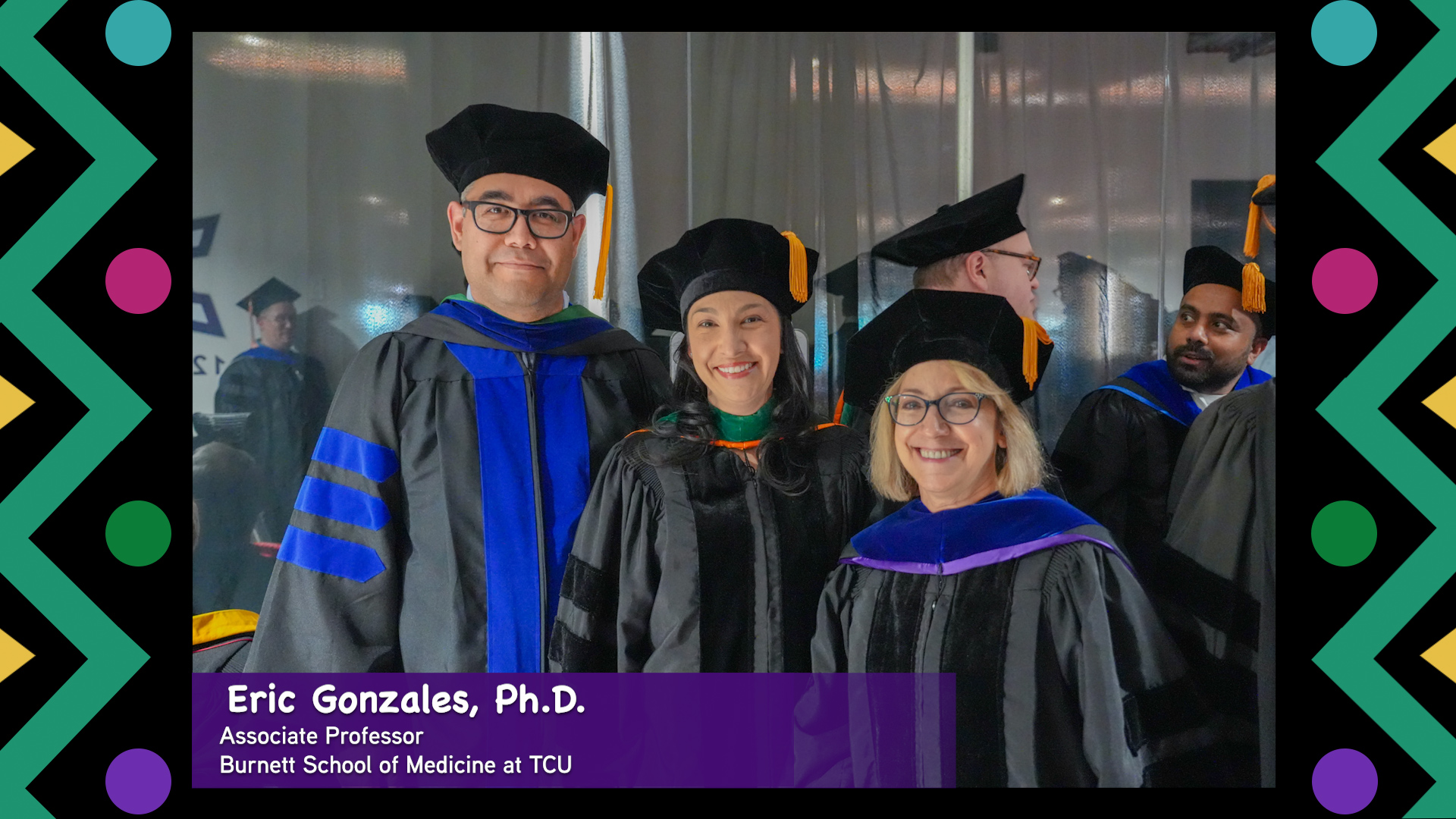
Eric Gonzales, Ph.D.
Hometown: Fort Worth, Texas
Heritage: Mexican American
What does Hispanic Heritage Month mean to you?
Dr. Eric Gonzales, Associate Professor & Longitudinal Basic Science Content Expert, says that he sees Hispanic Heritage Month as a time for reflection on how far Hispanics have come as a people and culture. Dr. Gonzales says that it’s a time to look at how they have been in positions of leadership and been “difference makers” and a time to look at where they can and will be in the future.
It is estimated that 85 percent of medical discoveries happen within a 20-mile radius of an academic medical center. The Burnett School of Medicine at TCU’s new medical education building, which is scheduled to open in Summer 2024, is in the center of Fort Worth’s Medical Innovation District.
This provides a unique opportunity for the medical school because Fort Worth is the 13th largest city and fastest growing city in America since 2020, according to data from the U.S. Census Bureau.
“We have one currency that many cities don’t and that would be patients,” said Stuart D. Flynn, M.D., the medical school’s Founding Dean. “We have great hospital partners, and we have a very diverse population of patients and that is something that is sorely needed in the discovery arm of medicine.”
Dean Flynn served as the moderator of a panel discussion titled “Shaping the Future of Health Care: The Research Vision of Burnett School of Medicine.” Panelists included Mohanakrishnan Sathyamoorthy, M.D., Chair of Internal Medicine at Burnett School of Medicine at TCU; Robert Benkowski, CEO of DesignPlex Biomedical LLC, CEO and Co-founder of Opsin Biotherapeutics; and Russell Lewis, Chief Information & Digital Officer of Parkland Center for Clinical Informatics.
“This is an opportunity to be transformative,” Sathyamoorthy said. “Our students get to ask key questions that have impact on our patients from our practice for instance. They are given the tools necessary to be very collaborative in research, seek resources and have no fear in terms of who they need to work with to ultimately get to that end point and the discovery is for the benefit of the patient and the student.”
Another opportunity is bringing big medical device companies to Tarrant County, said Bob Benkowski, who made the move to Fort Worth years ago. He discussed how Fort Worth has changed and progressed a lot regarding medical device development over the past 12 years.
“I think the potential is huge,” he said. With companies like “Galderma, Alcon and some of the new start-ups and the medical school, it’s going to be easier for us to attract talent to come to Fort Worth and stay here.”
Artificial Intelligence (AI) is starting to play a key role in research. AI is being used for participant recruitment in hopes of finding proper clinical trial participants, Lewis said.
“I think you’re going to see a greater volume of clinical trials because these AI companies that don’t really know anything about biotech or pharma are teaming with pharma companies to do small molecule drug discoveries, so the volume is going to go up,” he said.
More than 80 healthcare industry leaders across North Texas gathered to hear about the medical school’s new approach. Nestled at each table with those industry leaders were medical students sharing details about their current research.
“Research is important to put our name on the map as a medical school but also to make sure that our care for patients is the best that it can be,” said Kailie McGee, MS-2, at Burnett School of Medicine.
Research is a part of Burnett School of Medicine’s Empathetic Scholar® curriculum. Each student is required to complete a four-year Scholarly Pursuit & Thesis (SPT) research project. The SPT course is integrated throughout the four-year curriculum and is designed to develop physicians for patient-centric care and who become life-long learners capable of critical inquiry and medical information literacy.
McGee is researching if exercise can increase or decrease the response of Alpha Synuclein, a presynaptic neuronal protein that is linked genetically and neuropathologically to Parkinson’s Disease. She’s hoping to enroll 100 Fort Worth area patients into her study.
“Everyone has been kindly guiding us through this process,” McGee said. “They’ve taught us the basics of what we need to know to be able to do a project this massive.”
The medical school has a novel approach to medical education that partners students with physicians from their first day in medical school through its Longitudinal Integrated Clerkship (LIC) curriculum.
The early exposure to patient care and being able ask questions is unique to attending medical school in Fort Worth, McGee added.
“Once you show them that you are on their team it’s sort of attacking a disease or a problem together,” McGee said. “There’s that unbreakable bond it’s unlike anything I’ve experienced.”
Dr. Sathyamoorthy touched on how the students could go from learning about theory in their classrooms to executing a clinical trial. He emphasized the importance of transforming the way a person thinks about asking questions and how to find the best ways to answer any questions in the medical field.
“We’re distributing our resources and knowledge through the community,” Dr. Sathyamoorthy said. “And then we’re bringing the community into our research.”
Each year, Hispanic Heritage Monthcelebrates the contributions and influences of Hispanic Americans to the history, culture and achievements in the United States. Throughout the month, which began on September 15 and runs through October 15, the Anne Burnett Marion School of Medicine at Texas Christian University will highlight some of its students, faculty and staff who will share what being Hispanic means to them.
ANGIE CARTER, MA
Hometown: Elsa, Texas
Heritage: Mexican American
What does Hispanic Heritage Month mean to you?
Angie Carter, Accreditation Coordinator for the Burnett School of Medicine, said Hispanic Heritage Month means “sacrifice” to her: “I think about the sacrifice my grandmother made as she crossed the Rio Grande River [in Texas] as a young widow with my dad and his siblings…and the sacrifice that my dad made of enlisting in the military and serving in the Vietnam War.”
What’s your favorite family memory?
Carter says on Hispanic Heritage Month she also thinks about “family, food, lots of food, folklore and music.”
Our medical school is redefining medical education with its many Tarrant County health care partners, abandoning an outdated lecture model and transforming the clinical experience. The Burnett School of Medicine offers a one-of-a-kind educational experience, tailored to how students learn best, capitalizing on teamwork and application sessions to retain knowledge, and keeping the patient at the center of all we do.
Understanding the power of leading by example, John, Grainger, and Gregor are supporting 2023 TCU Gives Day by adding $50,000 to their endowment from the family’s donor-advised fund at the North Texas Community Foundation. They hope that this addition will challenge and inspire at least 150 others (with gifts of any size) to join them in supporting the Burnett School of Medicine.
The John Esch family has enjoyed a close and passionate relationship with TCU for seven decades. John earned his TCU Economics degree in 1964, and with his wife, Mary, set down roots in Fort Worth that remain strong today. The family’s connection to TCU has also remained strong. While older son Grainger earned his degree from Duke, younger son Gregor earned his 1996 journalism degree from TCU. A mutual love of athletics, music, and the arts has led the entire family to campus often through the years.
Like many in Fort Worth, the 2019 launch of a new medical school attracted the family’s attention and interest. “TCU has provided Fort Worth with an incredibly important asset and resource with the rapid development of a quality medical school. The coming physical location in the medical district will magnify the impact even further,” explained John. The value of conducting a four-year research project and thesis particularly caught their eye. “We have the greatest amount of respect for the dedication, perseverance, and discipline that research entails.”
The family created the Mary G. Esch and Mary N. Esch Endowment Fund in 2021 to provide annual support to the Scholarly Pursuit and Thesisprogram, and to help offset the costs of 60 new student research projects each year. The fund honors the memory of wife and mother Mary Norwood Esch and mother and grandmother Mary Guinn Esch. “Research in all areas of humanity is vital to the betterment of life; but none more beneficial or needed as in the medical area,”added John.
Please join the Esch Family and be part of the education and training of future physicians.