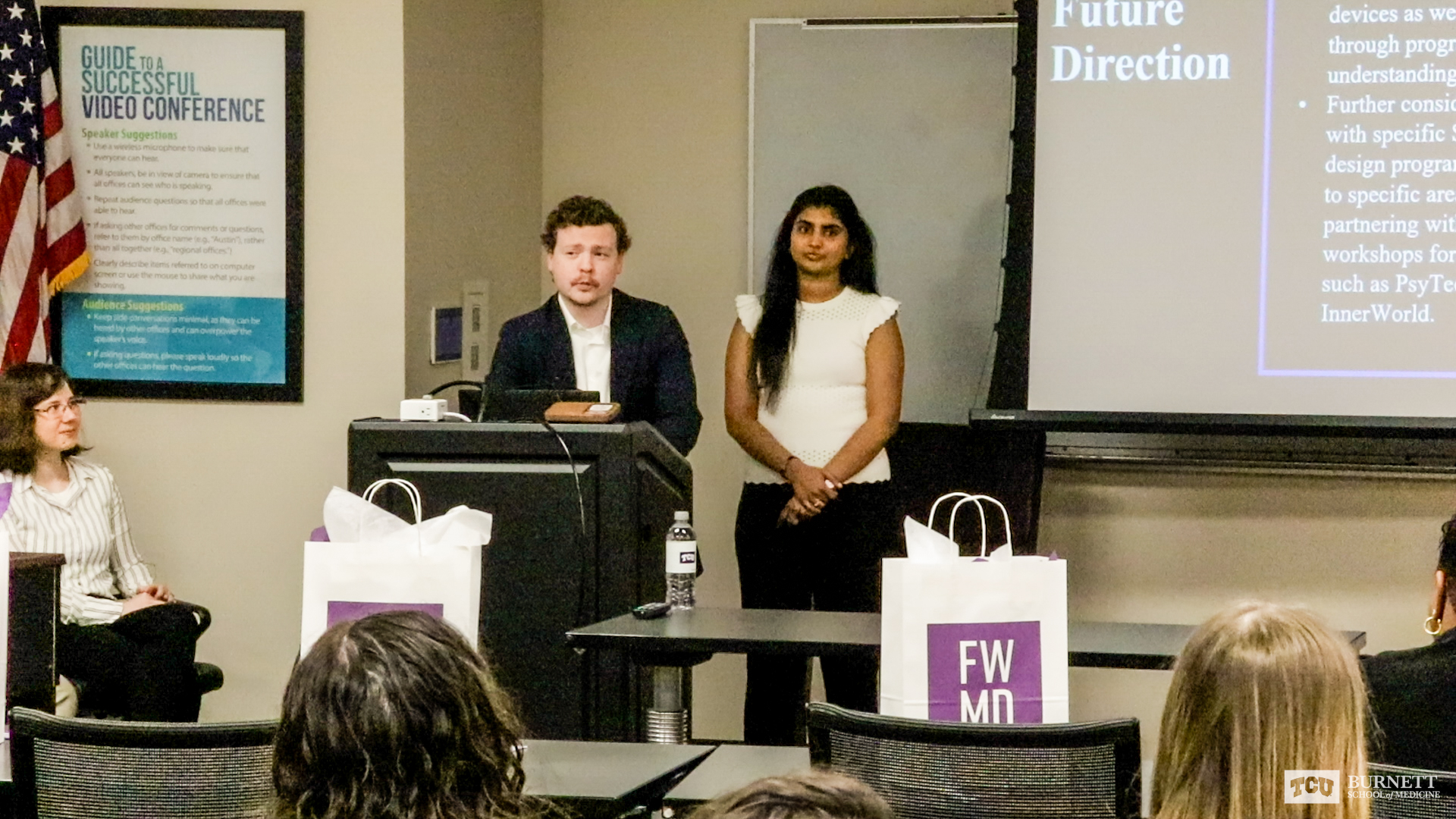
Stuart D. Flynn, M.D., Founding Dean of Burnett School of Medicine at TCU, addressed the class during the presentations. The work that the students have put into these research projects benefit the Fort Worth medical community and also their growth as future physicians, he said.
“As you go through your career you’re going to encounter a study and you’re going to be much more critically able to discuss it,” Dean Flynn said. “Mentors have been great for you and you’ve been great for the mentors.”
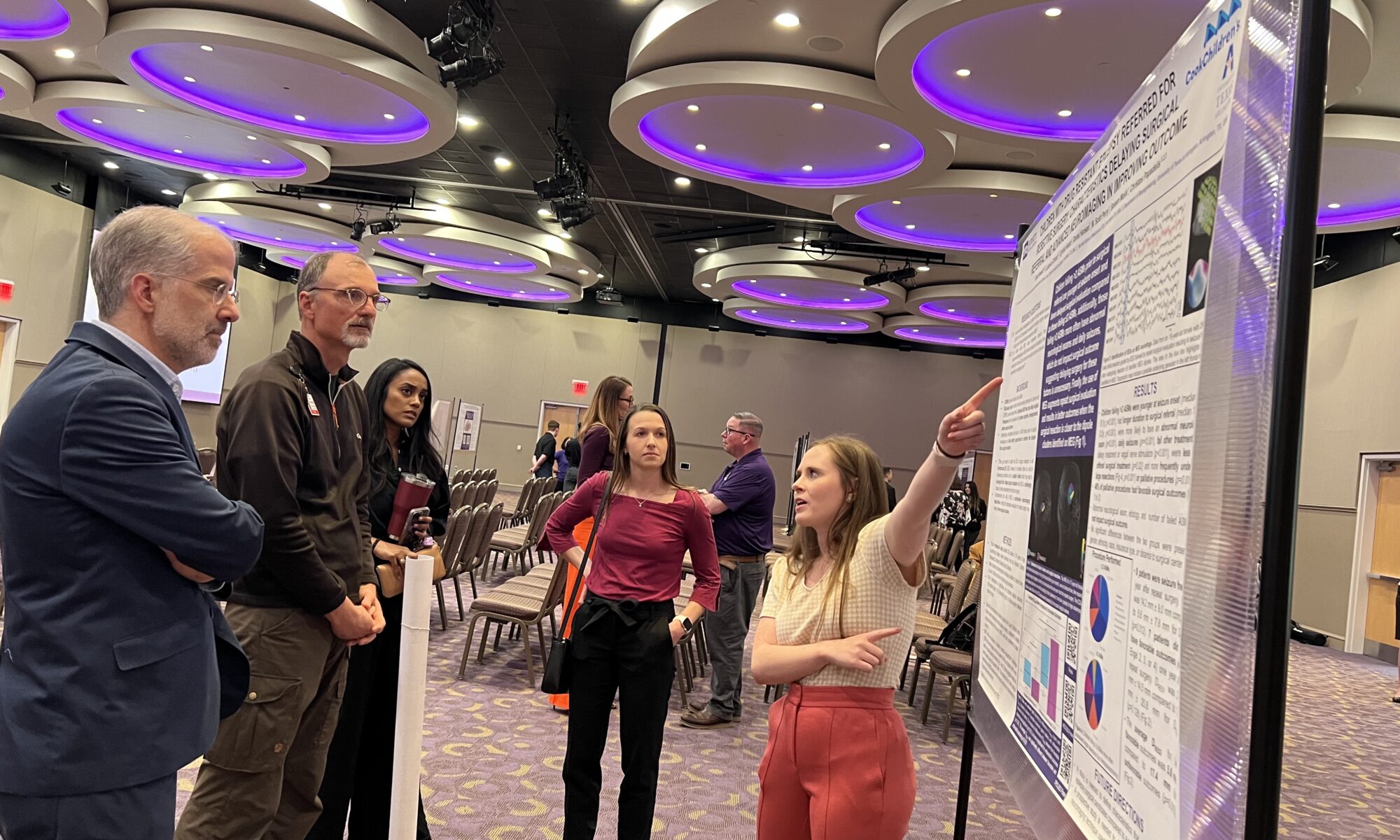
Members of the graduating Class of 2023 presented their research projects on large posters for those in attendance. The projects covered a wide range of topics including diabetes, homelessness, brain trauma, opioids and pain treatment, cerebral palsy, compassion in medicine and much more.
“We start in the first year working with the students and their prospectus, which is like a small research grant for their project and finishing up with their thesis,” Michael Bernas, M.S., Associate Professor & Director of Scholarly, Pursuit and Thesis (SPT) Course at the Burnett School of Medicine.
Fort Worth businessman H. Paul Dorman, who generously funded the first year of tuition for the Class of 2023 known as the Dorman Scholars, was the guest speaker at the event. Dorman has made a career out of groundbreaking research in the medical field and shared some words of wisdom with the class.
“Doing research you don’t necessarily have to go after a new or better molecule,” Dorman said. “There may be ways to make an existing proven item work better and safer with less side effects.”
Here are the Scholarly, Pursuit & Thesis research projects that were presented:
Sameer Allahabadi
SPT Mentor: Christos Papdelis, Ph.D.
Research Project: Better Mapping and Characterization of Brain Plasticity Changes In Pediatric Patients with Hemiplegic Cerebral Palsy Using Magnetoencephalography Combined with High-Density Electroencephalography and Diffusor Tensor Imaging
Mckenna Chalman
SPT Mentor: Ric Bonnell, M.D.
Research Project: Sleep and Exercise Among Incarcerated Youth: Establishing a Generalized Approach to Improve Sleep Quality/Quantity for Adolescents in the Juvenile Justice System
Arman Fijany
SPT Mentor: Robert Benkowski, MBA
Research Project: Pain Response Neuromodulation Via Optogenetic and Optical Stimulation
Kavneet Kaur
SPT Mentor: Erin Nelson, Psy.D., and Chase Crossno, MPH
Research Project: Compassion in Medicine: Assessing Physician Compassion Satisfaction and Fatigue
Nathalie Scherer
SPT Mentor: David Capper, M.D.
Research Project: Barriers to Care in Homeless Patients with Diabetes Mellitus
More than 200 donors, key stakeholders, faculty, staff and students at the Burnett School of Medicine at TCU, construction crew members from Linbeck, designers from CO Architects and Hoefer Welker gathered in Fort Worth’s medical district for a “Topping Out” celebration.
“We could not do this without donors, trustees, civic and community leaders and our world class faculty, students and staff. TCU is an institution of innovation and in many ways our innovation is going to run right through the Burnett School of Medicine,” TCU President Daniel W. Pullin said at the celebration. “It really changes the face of TCU by squarely positioning ourself in this part of the community. It will allow us to connect and collaborate. We definitely want to be a strong community partner in this way and at every turn. It’s a way for our students to reach out and serve and really shape the future.”
When the new 100,000-square-foot medical education building opens in the Summer of 2024, it will the home for 240 medical students, hundreds of staff and faculty and an innovational simulation and technology space. It will also be the first educational building located outside of TCU’s main campus.
A “Topping Out” celebration is generally held when construction crews reach the highest level of a building.
“The ceremony is a long-standing tradition for the construction team to commemorate the completion of a building’s structure, specifically the placement of the final steel beam,” said Todd Waldvogel, P.E., Associate Vice Chancellor for Facilities & Campus Planning at TCU.
Those in attendance were able to sign two of the final steel beams that were hoisted into the air and placed on top of the building.
The beams will be visible in the northwest corner of the building in the stair tower. The beams are uniquely designed from other supporting beams because they are white with the Burnett School of Medicine at TCU logo at the center. Once the building is completed anyone walking up the stair tower will be able to look up and see the beams.
“This is unusual, and special, as it signifies the importance of what will go on here,” Waldvogel said.
Another significant memento at the celebration was a pine tree , which was placed on the roof of the building and will be visible from miles away.
The pine tree is a symbol that dates back to 8th century Scandinavia, according to Brooke Reusch, Director of Project Management at TCU.
“It started out as a new pine tree being placed at a construction project and when the pine needles started falling off the tree construction crews knew it was time to be able to close the building because the timber inside was secured and dried out,” Ruesch said.
For many at the event it was their first time to be inside of the space and get a feel for the size of the building.
“It’s a rare opportunity for it to be safe enough and clean enough to have this kind of event,” Reusch said. “It will be really cool for the students to be able to sit in the Learning Studio at this point and see it as this open structure.”
“Knowing that we will get the opportunity to learn and study in a building that has been designed with us in mind is pretty incredible,” Hui said. “This is where future physicians will learn what it truly means to be an Empathetic Scholar® and a compassionate physician.”
FORT WORTH, Texas – Third-year medical students presented innovative ideas to improve community health in Fort Worth communities at the Anne Burnett Marion School of Medicine at Texas Christian University.
A representative from each community was in attendance for the presentation of the projects.
“Part of our medical school is getting students out of the traditional roles in clinics and out there in the community,” said Ric Bonnell, M.D., Director of Service learning at the Burnett School of Medicine at TCU.
“Several months ago, we had students out in the community asking them what was needed,” Dr. Bonell said. “Many times, these kinds of projects are started without the lead of the community and those are almost always destined to fail. We teach our students that you help the most by listening first and then acting on that information.”
The students gave brief presentations with posters outlining the details of each project utilizing themes from the Preparation for Practice curriculum.
ACCESS TO MENTAL HEALTH RESOURCES
Leaders at the COMO Community Center met with students about the lack of access to mental health resources for community members. One idea that came out of the meeting was the use of virtual reality headsets to connect community members with vital resources outside the community.
Carol Brown, executive director of COMO Lions Heart Inc., had been looking for ways to bring resources into COMO for residents who may not have transportation or internet access to see physicians.
“Our elderly people don’t go online,” Kirby said. “This will enable them to be able to come into the community center and sit down with somebody to help them.”
The students found a virtual mental health resource called BehaVR. It uses VR headsets to deliver digital therapeutics through wellness programs to empower people with lifelong coping skills and resources that extinguish stress, anxiety, and fear, according to BehaVR’s website.
“There’s a lot of evidence-based research and it’s shaping up to be one of the future directions psychiatry is utilizing to help with mental health,” said Thomas Redman, MS-3.
The VR headsets could have even more use for community members outside of health care.
High school students headed to college could also utilize the technology to learn more about different career paths using CareerLabsVR. It is another program the medical students found where job seekers can immerse themselves in an interactive experience exploring careers and completing job-specific tasks.
“We have at least 20 or more kids going off to college every year but they aren’t sure what they want to major in,” Brown said. “This gives them the opportunity to look into different career paths like engineering and see what it’s all about.”
The other projects presented included initiatives around food insecurities, health fairs, gun safety resources, child wellness and health literacy. As future physicians it is important for students to know that their role in the community is not just in a traditional medical setting, Dr. Bonnell added.
“You may not think as a physician your role should be in helping with education, but we know education is a big predictor of how children may end up faring in adult life or ending up in poverty,” he said. “We know poverty can have a tremendous effect on your health. Getting out there into the community and doing it on a consistent basis really brings those things to the forefront for our students.”
Igbokidi, MS-3 at the Anne Burnett Marion School of Medicine at Texas Christian University, wanted to create a safe space for men of color to discuss mental health. His passion project has now gained national attention.
The awards program recognizes medical students who have done exceptional work in their local communitypromoting public health and disease prevention.
Ikwo Oboho, M.D., ScM, director of infection prevention and control program at U.S. Veteran Affairs North Texas Health Care System, surprised Igbokidi with the award at the Burnett Schoool of Medicine.
“We were very impressed by the impact of it in the community and felt it was deserving of the public health award,” Dr. Oboho said. “Sometimes, medical learning can be very didactic. This kind of work gives them the vision before they complete residency and medical school. These are the needs of the community; it’s not just something you’re reading in a textbook.”
Igbokidi says the work he does is not to get awards or attention. “I do this work because I love being a part of the community, being immersed in the community, and doing the work with the community.”
FORT WORTH – For medical students across the nation, the weeks leading up to Match Day can be an anxious and stressful time.
As members of the inaugural class of the Anne Burnett Marion School of Medicine at Texas Christian University, the soon-to-be graduating MD students had an additional weight on their shoulders, becoming the standard bearers for generations to come.
On Match Day, 100 percent of the graduating class of the Burnett School of Medicine at TCU, known as Dorman Scholars, matched into medical residency programs throughout the United States. All students matched into recognized programs, including Mayo Clinic, Stanford, Vanderbilt, Penn State and Tufts, to name a few.
The National Resident Matching Program (NRMP) announces residency match results to all medical students in the United States at the same time on the third Friday in March. This year marked the largest Match in history with a record number of applicants who certified a rank order list, according to NRMP.
The following Burnett School of Medicine students not only matched, they also matched at their No. 1 ranked residency program. Here are their stories:
Briana Collins
Hometown: Dallas, Texas
Program: Internal Medicine at Stanford Health Care
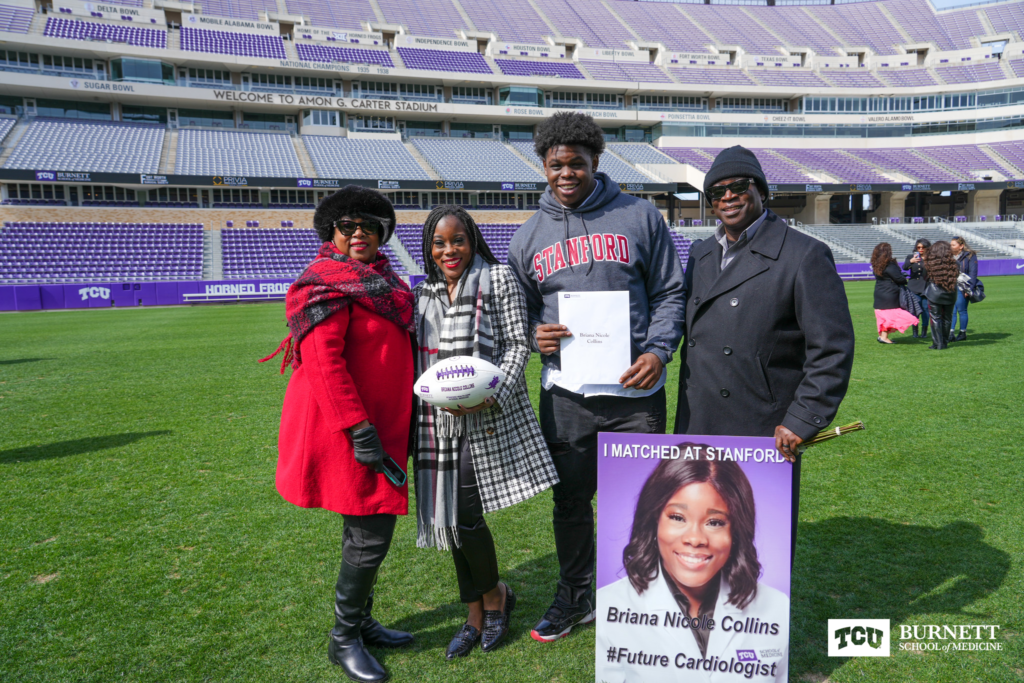
From left to right: Faye Collins, Briana Collins, James Collins II and James Collins at Burnett School of Medicine at TCU’s Match Day 2023 at Amon G. Carter Stadium at Texas Christian University in Fort Worth, Texas on Friday, March 17, 2023.
Initially, Briana Collins wasn’t sure she should apply to Stanford for an away rotation.
“I was my biggest enemy,” Collins said of the time she doubted herself. “What really hindered me in the beginning was that I didn’t want to apply for the Stanford away (rotation) because I didn’t think that I would qualify.”
She credits Burnett School of Medicine faculty members such as Rohan Jeyarajah, M.D., Chair of Surgery, and James Furgerson, M.D., for encouraging her to apply.
Not only did Briana get accepted and do well at the Stanford away rotation, but the experience also led to her getting her No. 1 residency program match in internal medicine at Stanford Health Care.
Her mother, Faye Collins, said Briana has always been a fighter. “She was born a preemie,” Faye said on Match Day. “She’s smart, perseveres, has patience and she’s a hard worker.”
Briana says the early exposure to patients during her Longitudinal Integrated Clerkship (LIC) helped her stand out above other applicants.
“From Day 1, I was in the clinic. I was at Stop Six Clinic at JPS with Dr. Reena Matthews,” she said. “Every week, I was seeing patients, taking interviews and presenting to her, and really getting into the habit of putting things together and coming up with an assessment and plan.”
Her parents, James and Faye Collins, have inspired Briana throughout her medical journey. Her brother, James Collins II, threw the custom-made football that revealed Briana’s residency match.
When her Stanford match was revealed, her father jumped up and down with a poster-sized photo of Briana with the words: “I matched at Stanford.” Her brother took off his outer layer to unveil a Stanford sweatshirt.
Her family seemed certain that Briana would get her No. 1 choice even though Briana’s exuberance and surprised reaction suggested that she may have had her doubts.
At Stanford, Briana will be joining graduating medical students from Harvard, Yale, Johns Hopkins and University of Chicago, to name just a few.
Her advice to other medical students: “If you have a big dream, go for that. As long as you believe in yourself, you can do it. Take that leap of faith. Do something that scares you because you can do it.”
Edmundo Esparza
Hometown: El Paso, Texas
Program: Internal Medicine at University of California San Diego Medical Center
Edmundo Esparza, MS-4, announces his match in internal medicine at UC San Diego.
For Edmundo Esparza, Match Day was the culmination of a long and challenging medical journey.
Before medical school began, his father passed away leaving his mother, Maria, to care for him and his seven older siblings alone. Edmundo worked multiple jobs to try to save up money for medical school and make the move from El Paso to Fort Worth.
Maria Esparza said Edmundo “has been very calm in his studies. He’s dedicated in making this his career and keeps moving forward.”
On Match Day, Edmundo’s mother and older brother, Henry Tocora, were at Amon G. Carter Stadium to witness him get his No. 1 residency choice in internal medicine at University of California San Diego Medical Center.
“I am excited to start my residency training because I’ve found my passion in life, which is internal medicine,” Edmundo said. “I love working with patients and underserved populations and I want to have that power as a full attending in the future to finally be able to do that. The only way to do that is through residency.”
The moment the family found out Edmundo’s match “was very emotional to me,” Maria said. “It’s very beautiful because he’s going to a place he wanted to go.”
Throughout medical school, Edmundo has led several community initiatives including registering residents for COVID-19 vaccinations in the mostly Hispanic communities of North Side and Diamond Hill. He was also a student leader at the TCU-Baylor Drive-Through Vaccination Clinic, where nearly 19,000 vaccines were administered to Tarrant County residents during a span of just 12 weeks.
Edmundo pioneered the Back-to-School Supplies Drive for underserved Fort Worth communities in which more than 4,500 school supplies were distributed. As a leader in the Latino Medical Student Association, he helped design a course in Spanish that was added to the curriculum as an official elective.
“It’s been a long journey to get to here,” Edmundo said on Match Day. “There’s moments when you think you want to give up, but it’s all worth it in the end.”
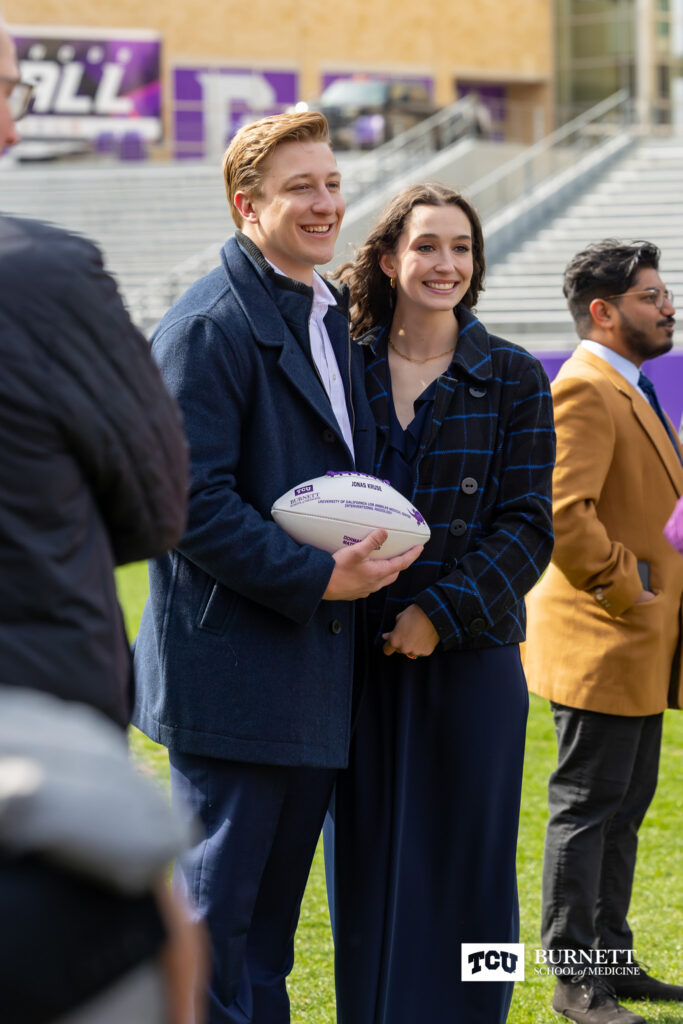
Jonas Kruse
Hometown: San Clemente, California
Program: Interventional Radiology at University of California Los Angeles Medical Center
Jonas Kruse and his wife, Anabel, celebrate his residency match at UCLA in interventional radiology.
Jonas Kruse was one of three students selected in the nation to be matched in the interventional radiology residency program at University of California Los Angeles Medical Center.
On Match Day, Jonas with his wife, Anabel, by his side had a two-word reaction to achieving his No. 1 choice: “Let’s go!”
Early on, Jonas stood out as a leader at the Burnett School of Medicine. He was selected by the senior leadership to be one of six students who participated in TCU Magazine’s four-year-long narrative project. He was also chosen by his peers to give the class remarks at the White Coat Celebration in 2019, and he’s been a Burnett Brand Ambassador throughout all four years of medical school.
Jonas said the medical school’s curriculum, specifically the patient communication training and four years of LIC, along with his away rotations helped him achieve his No. 1 match.
“I was on an away rotation and I was asked to hold the pager, which is something that is typically done by a resident,” Jonas said. “The next day, the attending physician came up and said, ‘I don’t think we’ve ever had a student just take the pager and handle it.’ They were impressed with that.”
Jonas said he also appreciated the medical school’s emphasis on patient communication: “Those initial awkward moments get ironed out a lot earlier than our third year when most medical students are in a clinical setting…there’s also a lot of challenging, sensitive conversations that we’ve had practice having.”
Jonas said his away rotations were the most exciting time of his medical school experience: “This is where all the preparation and the studying and the hours comes together.”
He participated in away programs at UCLA and at the Mount Sinai Hospital at Icahn School of Medicine. During his last month of away rotation in interventional radiology at UCLA, Jonas said he felt comfortable talking to attendings and working with the residents.
“By the time I walked in there, I had four months of interventional radiology and I’d been mentored by preceptors for three straight years when it came to medicine,” he said. “Then, I also put in my work with everybody. First in, last out. All that together really helped me thrive.”
Brandon Mallory
Hometown: Keller, Texas
Program: Emergency Medicine at New York Presbyterian Hospital-Columbia and Cornell
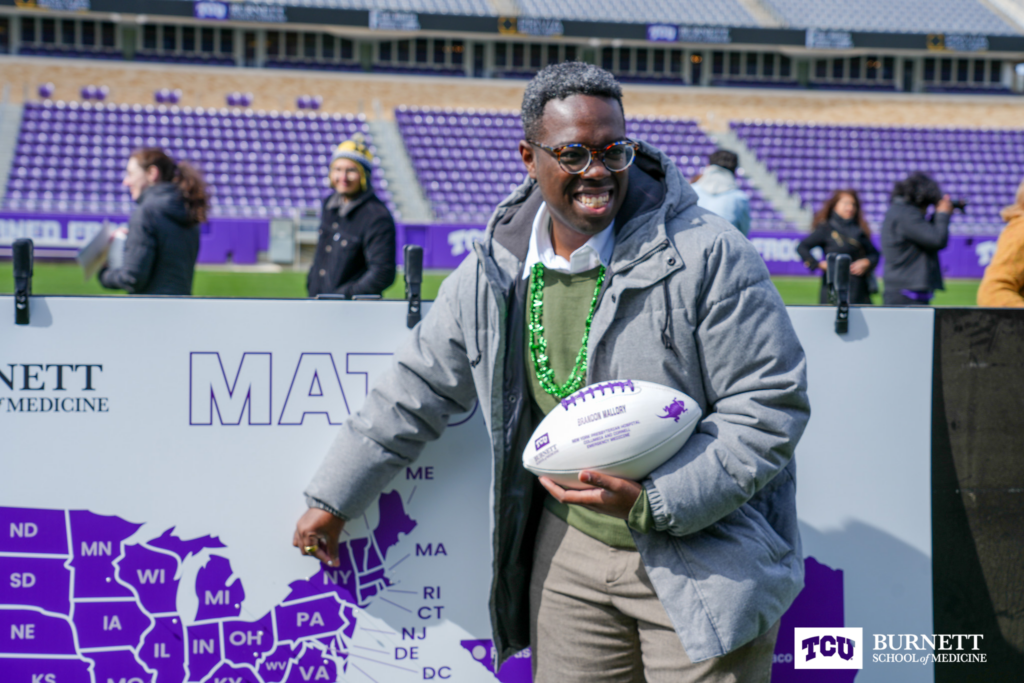
Brandon Mallory, MS4, pins his residency match at Burnett School of Medicine’s Match Day.
In 2019, Amanda Mallory stood beside her son Brandon as he put on his white coat for the first time. She tearily explained that Brandon wanted to be a doctor ever since he was in elementary school.
On Match Day, Brandon was the one in tears when he found out that he would be heading to New York City and his No. 1 choice of residency program.
Fittingly, Brandon’s mom was the one to deliver the news in the form of a football – he matched in emergency medicine at New York Presbyterian Hospital-Columbia and Cornell.
“My mom has been with me obviously my entire life – a lot of times it was just me and her. We’ve been through a lot together,” Brandon said fighting back tears. “There’s no person I would rather have here. She’s my No. 1 inspiration for everything.”
Brandon said that the Empathetic Scholar® curriculum attracted him to the medical school.
“Patients have told me multiple times: ‘You are the first doctor that really listened to me,’ ” he said. Being empathetic and compassionate “is so important and this school has taught me that.”
Brandon knew from the start of medical school that he wanted to specialize in emergency medicine thanks to his experience as a scribe for Terence McCarthy, M.D., the John M. Geesbreght M.D., M.S., FACEP, Chair of Emergency Medicine at Burnett School of Medicine.
Brandon wrote a letter of gratitude to Dr. McCarthy in which he said: “You have always exemplified what it means to be a kind and patient physician. You take the time to hear patients out and work with them through their toughest times. You really showed me what it meant be an empathetic physician before I became an Empathetic Scholar®.”
“Brandon is really living up to his potential at this medical school,” Dr. McCarthy said after reading Brandon’s letter. “He’s one of those students who really dives in wholeheartedly.”
Brandon is looking forward to starting the next chapter of his medical journey, meeting new residents and building new relationships.
“I just want to be able to help so many people,” he said. “I want to continue to learn and be the best doctor I can be.”
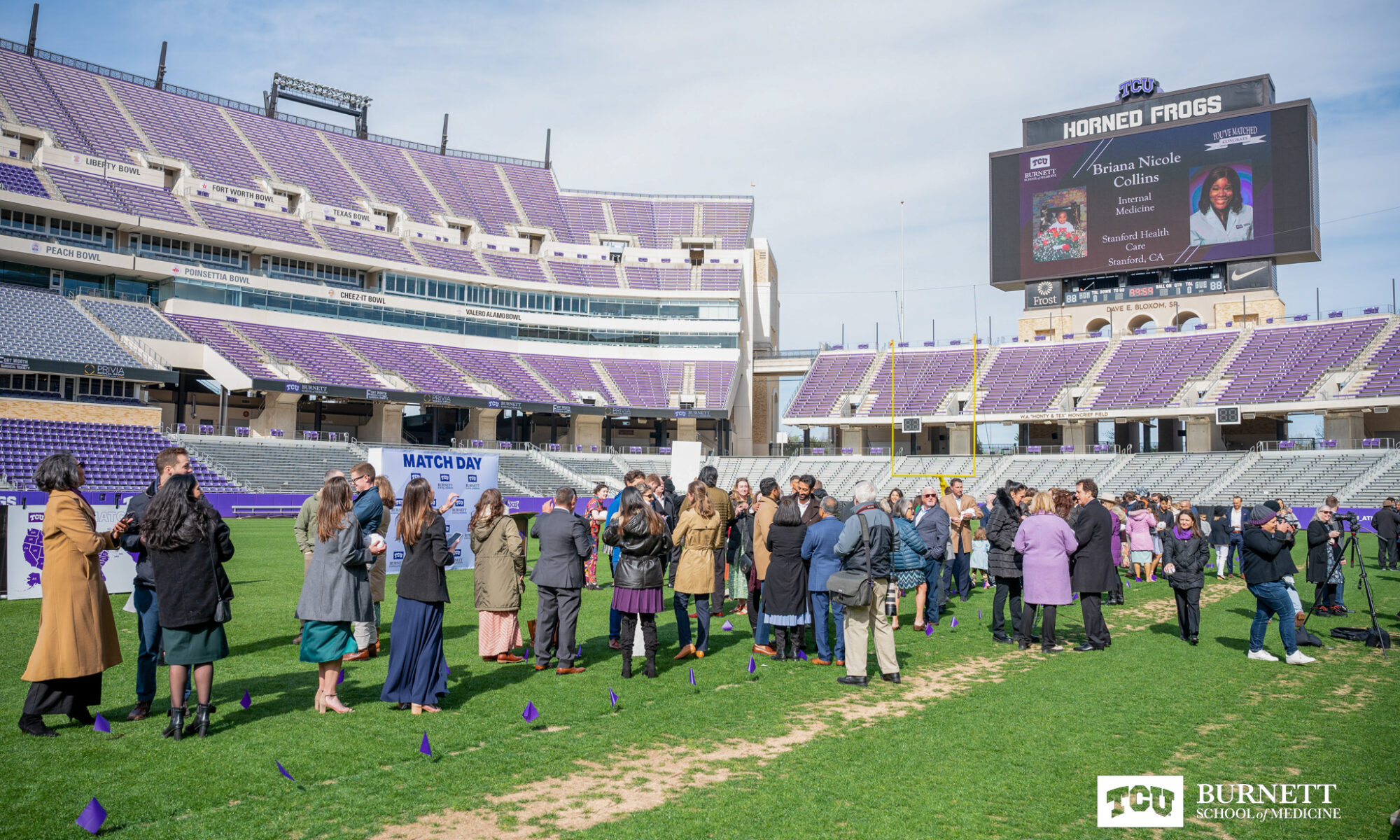
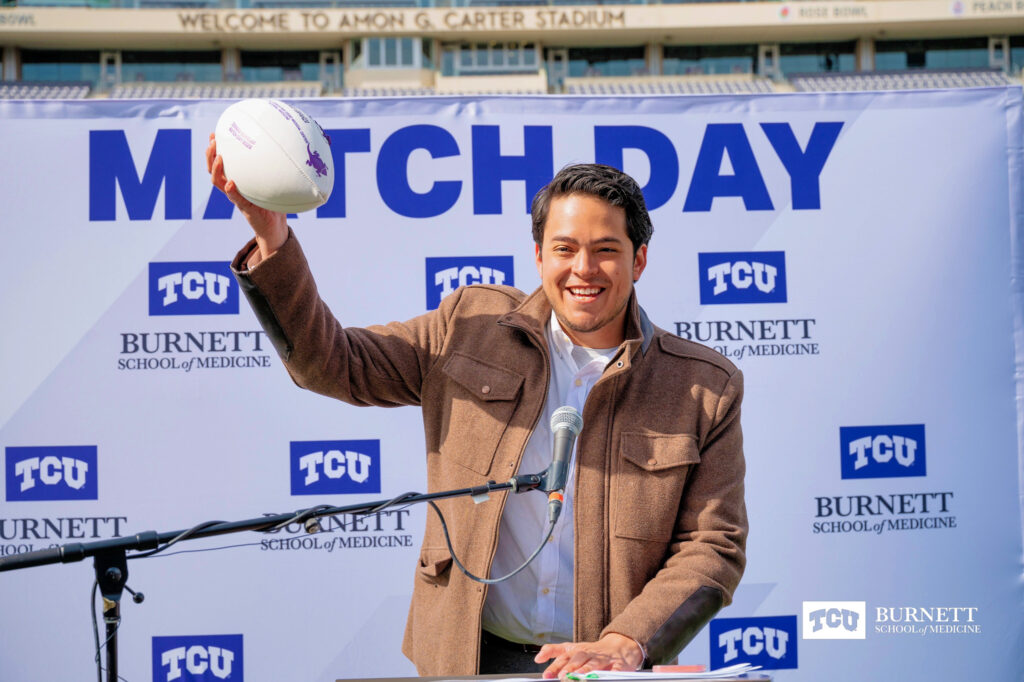
The future physicians learned where they will start the next phase of their medical education as resident physicians during a Match Day event held at TCU’s Amon G. Stadium on Friday, March 17.
“I am so proud of this inaugural class, and our team of leaders, who made this Match Day a success for all,” said Stuart D. Flynn, M.D., the Founding Dean of Burnett School of Medicine at TCU. “This moment is the culmination of four years of hard work, passion and dedication. As Empathetic Scholars®, they will carry their passion for excellent patient care into hospitals and communities across the country. These students are the future of health care in our country.”
Every year, graduating medical students around the country find out at the same time where they will begin their careers as doctors within the specialty of their choice. The National Resident Matching Program (NRMP) releases results to applicants seeking residency and fellowship training positions in the United States at 11 a.m. CST. This year, approximately 20,000 M.D. fourth-year medical students competed for residency positions in the United States.
The NRMP conducts the match using a computerized mathematical algorithm to align the preferences of applicants with the preferences of U.S. residency programs seeking new trainees. Residency training for most graduates will begin in June or July.
“The 2023 Main Residency Match is the largest in NRMP’s 70-year history in graduate medical education with 42,952 applicants who certified a rank order list and a record 40,375 positions in the Match,” says NRMP President and CEO Donna L. Lamb, DHSc, MBA, BSN. “We’re honored to be able to celebrate with the next generation of physicians as they transition to residency and are grateful of the trust Match participants continue to put in us year after year.”
With more medical school graduates than residency slots, placements are extremely competitive. In 2022, about 1,500 MD school graduates did not match in the process.
The Class of 2023, also known as the Dorman Scholars, are the inaugural class of medical students at the Burnett School of Medicine and matched to top residency programs such as the Stanford Health Care, Tufts Medical Center and the Mayo Clinic.
There will be 15 students entering residency programs in Texas, including nine in the Dallas-Fort Worth area.
The Burnett School of Medicine has been working with hospitals throughout North Texas to help build and grow graduate medical education (GME) slots. In 2021, the school announced an expanded affiliation with Texas Health Resources that includes support of GME programs at hospitals in Fort Worth, Hurst-Euless-Bedford and Denton with nearly 50 new slots. That annual number is expected to increase to more than 110 by July 2024. In 2020, we announced a partnership with Baylor Scott & White All Saints Medical Center Fort Worth for a resident training program that will eventually train more than 150 physicians annually.
Most medical schools reveal residency matches during an event where students open envelopes to reveal their match. But, the Burnett School of Medicine put a unique spin the event. It was held on the football field where students were able to choose a VIP to toss them a football containing a peel-away sticker revealing their residency match. Family and friends of the students, along with faculty and staff from the medical school, were also on the field or in the stands cheering them on.
Before the reveal, attendees were welcomed with brief remarks from Natalie Lundsteen, Ph.D., Assistant Dean of Student Affairs at Burnett School of Medicine, and Yolanda Becker, M.D., Director of Career and Professional Development at Burnett School of Medicine.
“We’ve all had the opportunity to get to know and watch these students grow into physician leaders who will help improve health care in all the communities you will enter,” Lundsteen said.
Briana Collins, MS-4, at Burnett School of Medicine matched in Internal Medicine at Stanford Health Care, which is one of the most prestigious residency programs in the country. She couldn’t believe she matched at her top choice.
“If you have a big dream, go for that,” Collins said. “I had folks pouring into me who believed in me when I went out to Stanford for my away rotation.”
Jonas Kruse, who matched at University of California Los Angeles Medical Center for an Interventional Radiology residency, added that the Burnett School of Medicine curriculum prepared him to land a residency spot.
“That was the last place I did as a part of my away rotations and I was the first one in and the last one out each day,” Kruse said. “For the last four years working with physicians in this curriculum really prepared me to do my best and put my best foot forward.”
The Student National Medical Association (SNMA) chapter of the Burnett School of Medicine took over the school’s Instagram account to present programming for Black History Month. Follow our IG account here. Watch a video of the takeover here.
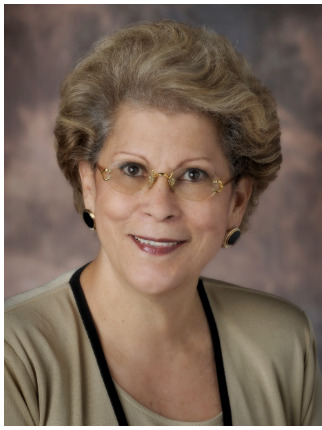
In 1990, Antonia Novello, M.D., became the first woman and first Hispanic to become surgeon general of the United States. As a child in Puerto Rico, Novello suffered from a congenital digestive condition that her family could barely afford to treat. That experience motivated her to study medicine and ensure that care was available to all. She earned her medical degree from the University of Puerto Rico and was committed to battling health inequities among the poor and minority groups. As surgeon general, Novello chose to focus on protecting the young and the vulnerable, addressing such issues as underage drinking and cigarette ads that targeted children. In 2019, Dr. Novello visited our medical school to speak with students and faculty. On teaching future physicians, Dr. Novello said: “If one can teach them that medicine can be tech savvy, but at the same time empathetic, respect of the patient, communication, and caring about your human beings, what a way to go.”
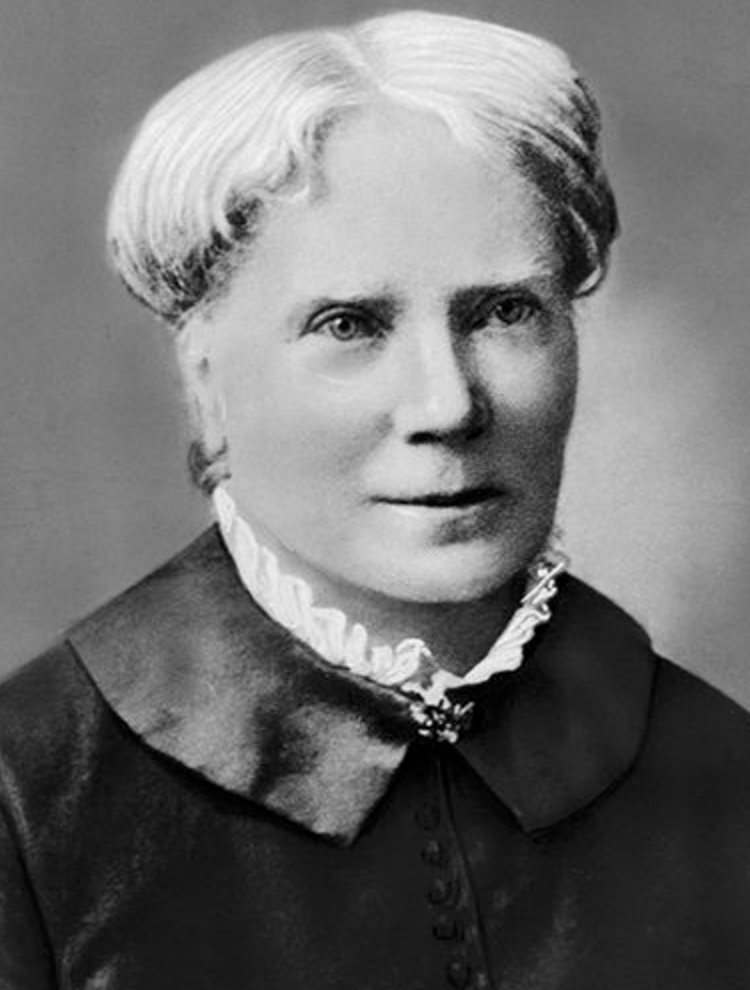
Elizabeth Blackwell, M.D.
Elizabeth Blackwell, M.D., said she turned to medicine after a close friend who was dying suggested she would have been spared her worst suffering if her physician had been a woman. In 1849, she became the first woman in the United States to be granted an M.D. degree from New York’s Geneva Medical College. She supported medical education for women and helped many other women’s careers. She also published several important books including Medicine as a Profession For Women in 1860 and Address on the Medical Education of Women in 1864. Dr. Blackwell wrote that she was initially repelled by the idea of studying medicine: She “hated everything connected with the body, and could not bear the sight of a medical book… My favourite studies were history and metaphysics, and the very thought of dwelling on the physical structure of the body and its various ailments filled me with disgust.”
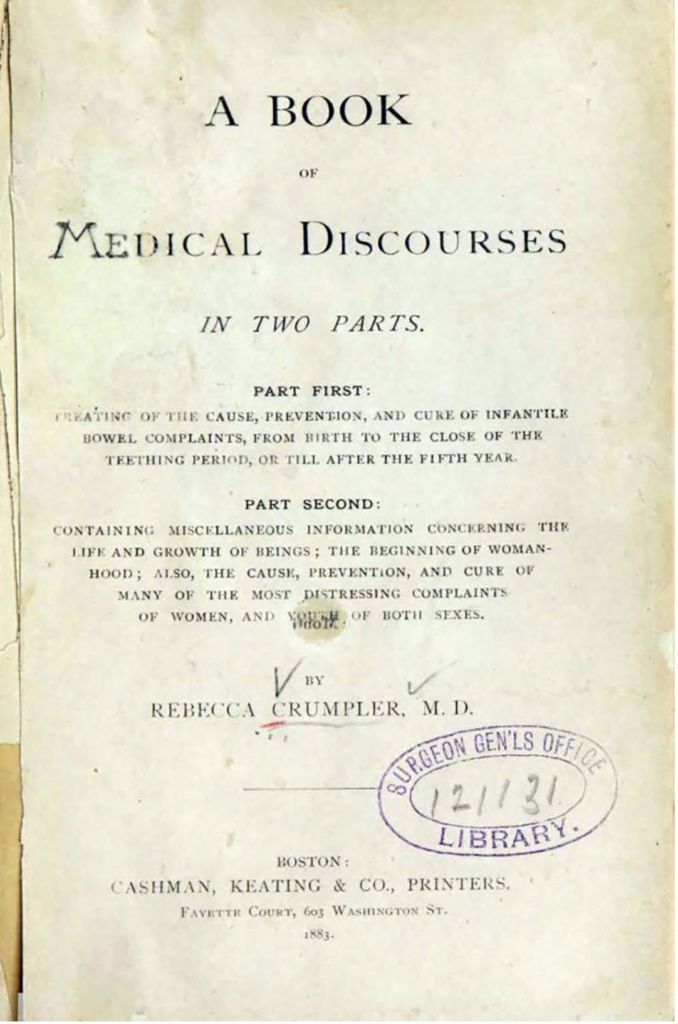
Rebecca Lee Crumpler, M.D.
Rebecca Lee Crumpler, M.D., was admitted to the New England Female Medical College in 1860. When she graduated in 1864, Crumpler was the first African American woman in the United States to earn an M.D. degree, and the only African American woman to graduate from the New England Female Medical College, which merged with Boston University School of Medicine in 1873. In her groundbreaking 1883 publication, A Book of Medical Discourses: In Two Parts, Dr. Crumpler wrote: “It may be well to state here that, having been reared by a kind aunt in Pennsylvania, whose usefulness with the sick was continually sought, I early conceived a liking for, and sought every opportunity to relieve the sufferings of others.”
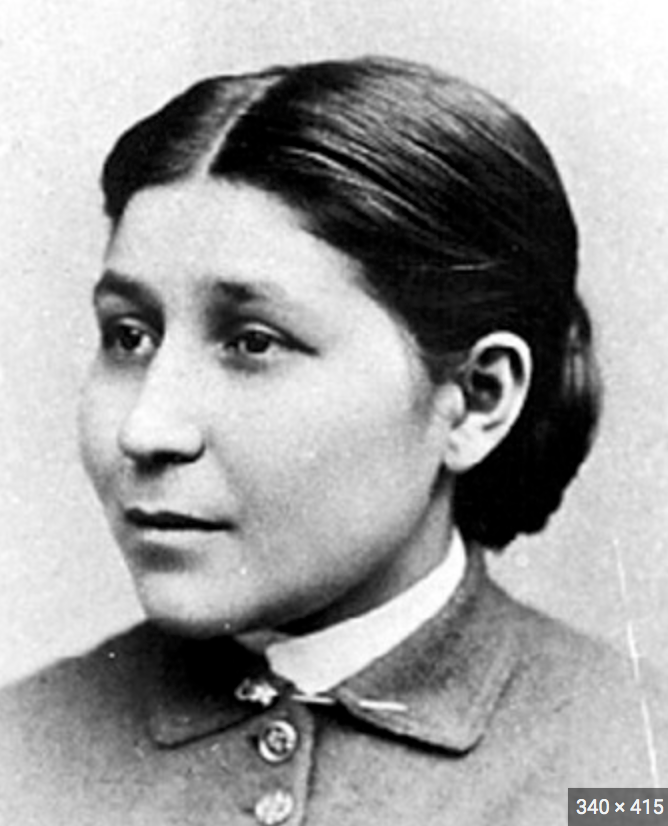
Susan LaFlesche Picotte, M.D.
When she was a child, Susan LaFlesche Picotte, M.D., witnessed a white doctor refusing to care for a Native American woman. In 1889, Picotte, the daughter of an Omaha chief, graduated from the Woman’s Medical College of Pennsylvania at the top of her class and became the first Native American woman in the United States to earn a medical degree. Upon returning home in 1890, she worked as a government physician responsible for 1,200 to 1,300 people. Dr. Picotte worked 15-hour days, yet she earned only half of what others in that position received. She was a strong advocate for political reform. In 1906, she led a delegation to Washington to lobby for prohibiting alcohol on the reservation. Dr. Picotte also became a county health officer and lobbied the state legislature to improve public health laws. In 1913, she opened a hospital in the remote reservation town of Waterhill, Nebraska.
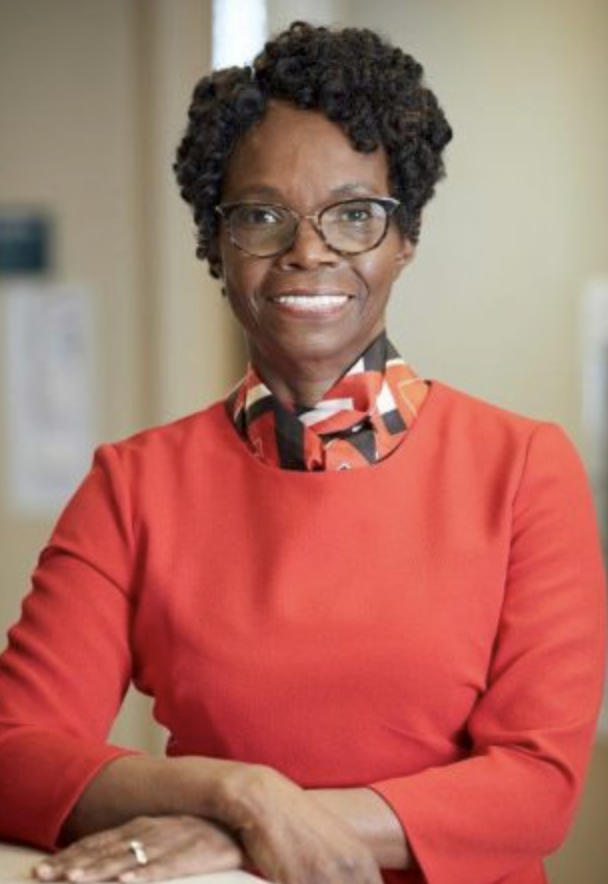
Velma P. Scantlebury, M.D., FACS
Velma P. Scantlebury, M.D., FACS, knew she wanted to physician when she was 8 years old. In 1969, her parents moved from Barbados to New York City to give her a better chance to become a doctor. She earned her medical degree from Columbia University in New York City and became the first female African American transplant surgeon in the United States in 1989. She recently retired from ChristianaCare’s Kidney Transplant Program where she served as the Associate Director, and Director of Outpatient Clinics. Dr. Scantlebury is currently a Professor at the Burnett School of Medicine. “We have a lot of things to be grateful for when it comes to those who have paved the way before us,” Dr. Scantlebury said. “But when I think about the social inequities we have to realize that there are opportunities out there and that we all have potential. We all need to have that potential fostered and developed and recognized and given an opportunity to excel.”
Fourth-year medical students Briana Collins, Rachel Rice and Shelby Wildish shared their experiences during their Global Health Elective in India on the Burnett School of Medicine at TCU’s Instagram account last week. The students, accompanied by faculty member Hari Raja, M.D., are participating in a monthlong observation of Bangalaore Baptist Hospital. Watch a video here.
“I think today was profound,” Igbokidi said. “We had so many testimonies. We had so many young people.”
The mental health initiative, which was held at Lake Como House of Fades Barbershop on Sunday, February 5, is a collaboration between the Burnett School of Medicine at TCU and the FWISD Family Action Center. Igbokidi partnered with the barbershop to give men of color a safe space to discuss mental health with their peers.
Over the course of three hours, Black men were able to come in and get a free haircut, while discussing topics close to their heart.
“It think it was everything it was supposed to be for an event that uplifts, inspires and empowers the community,” Igbokidi said.
Outside the barbershop, patrons were able to get free health screenings courtesy of the Black Heart Association. About 50 men were able to get screened and learn more about their health at the event.
“I hope that more people can be able to experience this magic that comes with the Barbershop Talk Therapy project,” Igbokidi said.