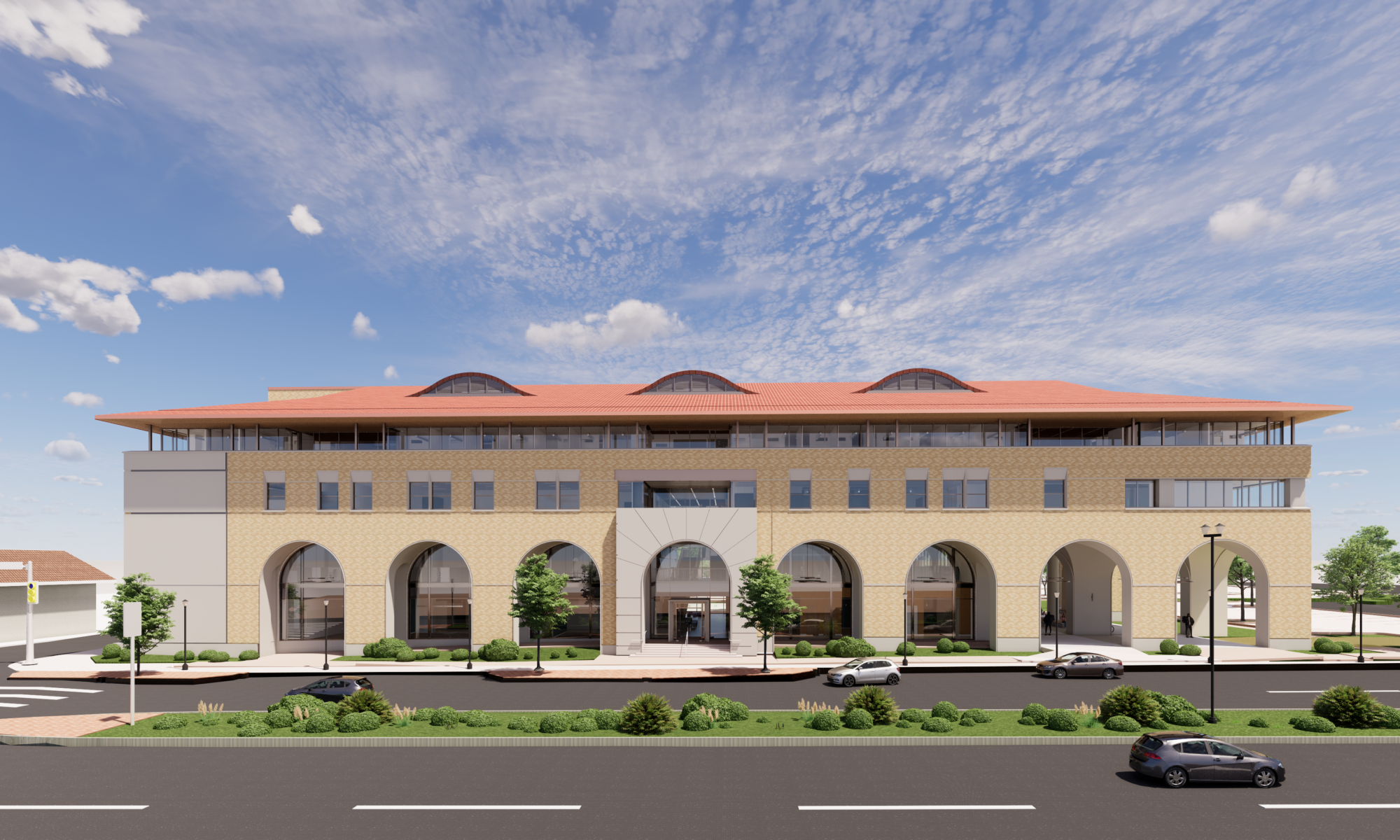
The Burnett School of Medicine will be located at the corner of West Rosedale and South Henderson streets in the heart of Fort Worth’s medical district. The building will support 240 medical students and hundreds of faculty and staff. Completion is expected in summer 2024 and additional facilities are expected as part of the site’s master plan.
The new building projectin the city’s Near Southside neighborhood shows TCU’s continued investment in Fort Worth, Tarrant County and the state of Texas.
It’s been a scorching summer in Texas, so the Burnett School of Medicine enlisted the help of TCU Chancellor Victor J. Boschini Jr.; Stuart D. Flynn, M.D., Founding Dean of the Burnett School of Medicine; former Mayor Betsy Price and several medical students to create a “Groundbreaking” video in lieu of a traditional in-person event.
“Through the unique and compelling stories of our medical students, we’ve been able to showcase our unconventional medical school and novel approach to medical education,” said Maricar Estrella, Director of Digital Development and Content Strategy, who founded the program in 2019. “The new cohort of brand ambassadors brings great enthusiasm and we look forward to watching their stories unfold.”
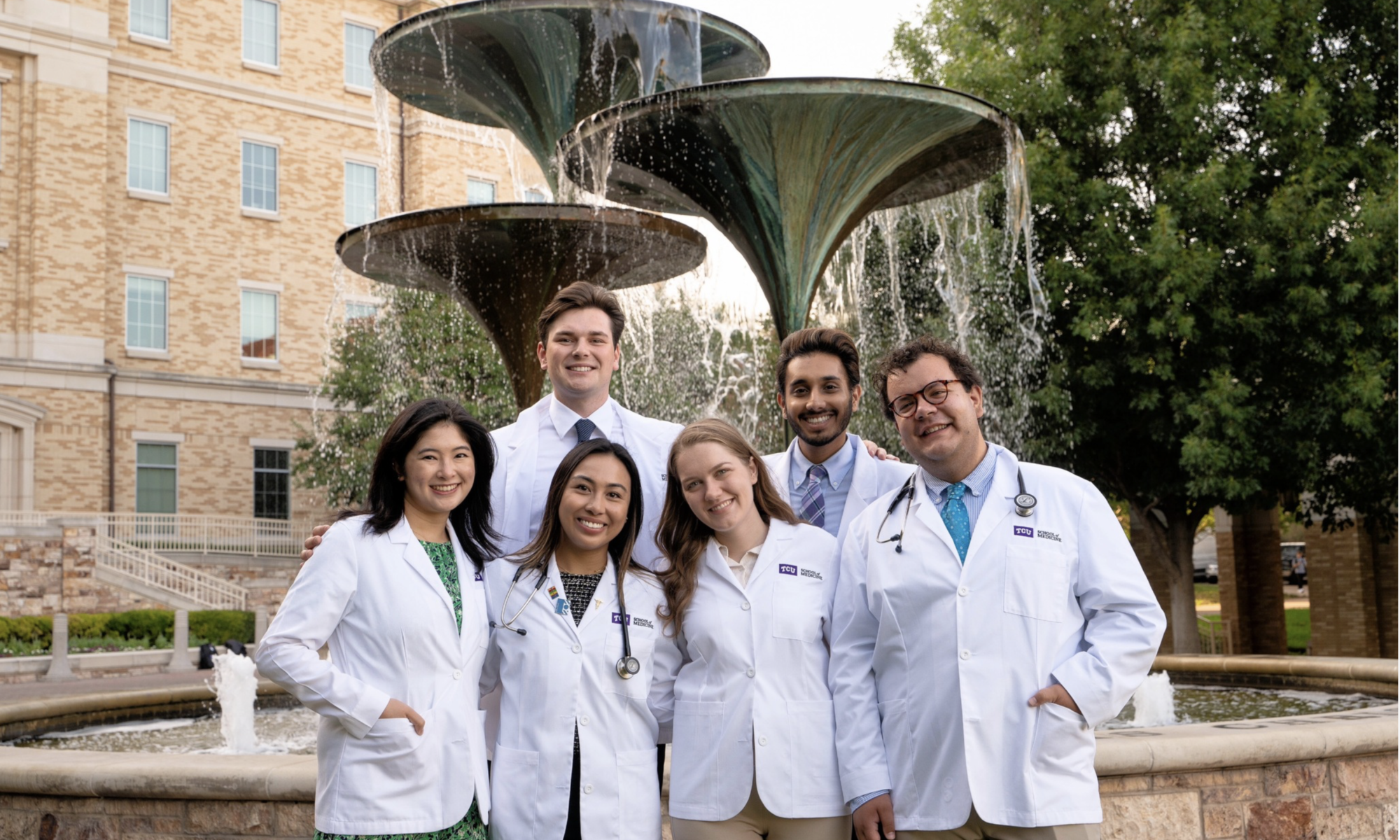
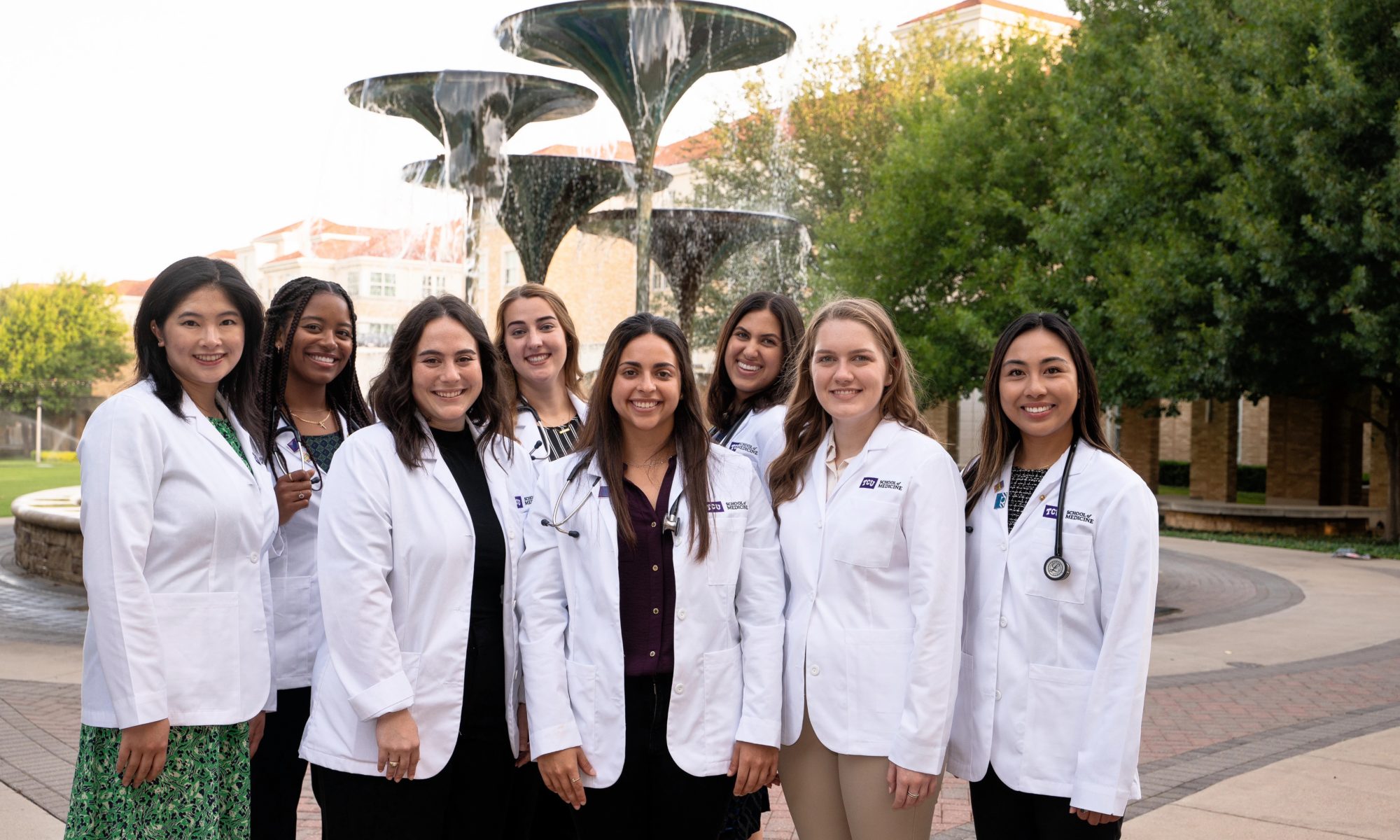
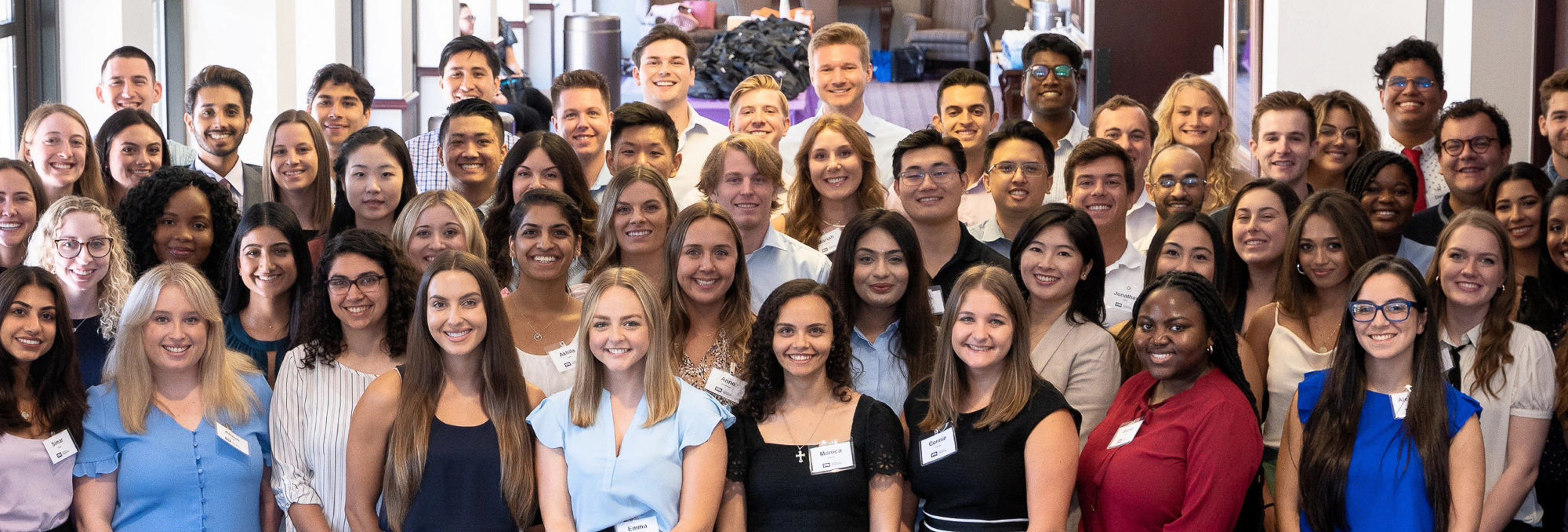
The 35 Burnett Brand Ambassadors represent the Fort Worth medical school in media interviews as well as marketing and social media campaigns. They may also be asked to attend special events and functions and give reports or speeches about the school.
The 2022-23 SOM Brand Ambassadors are:
Class of 2023: McKenna Chalman, Briana Collins, Mei Mei Edwards, Edmundo Esparza, Sam Evans, Kav Kaur, Charna Kinard, Jonas Kruse, Quinn Losefsky, Sarah Lyon, Brandon Mallory, Ive Mota Avila, Connor Rodriguez, Nathalie Scherer, Dilan Shah, Juhi Shah, Shelby Wildish
Class of 2024: Toni Igbokidi, Lauren Moore, Danielle Sader, Sam Sayed, Kyle Simon, Ilana Zago
Class of 2025: Isabella Amado, Kevin Chao, Christopher Corona, Alejandra Gutierrez, Ethan Vieira, Lindsay Zumwalt
Class of 2026: Angela Abarquez, Parminder Deo, Lauren Hui, Kailie McGee, Jonah Schmitz, Winston Scambler
The program has grown to include media training from local journalists such as NBC 5 Today Anchor Deborah Ferguson, who gave tips on communicating effectively during a broadcast interview, and experts such as Sheila Scott, MBA, who taught persuasive speaking techniques.
Students are selected through an application process in which a committee consisting of faculty, staff and current student brand ambassadors evaluates applications and conducts interviews. The program, which is voluntary, is run by the Strategy and Communications team.
Here is what is expected of a Burnett Brand Ambassador:
Serve during the 2022-2023 Academic Year, which begins in July 2022 and ends June 2023.
Attend at least one of the SOM Brand Ambassadors Media training sessions. .
Submit IG Takeover Responsibility Agreement form and host at least one IG Takeover during the academic year or participate in a SOM social media campaign (FWMD Live, video, etc.)
Participate in at least one media interview request, SOM interview request, marketing request, advancement request, video request, photo request or social media request during the academic year.
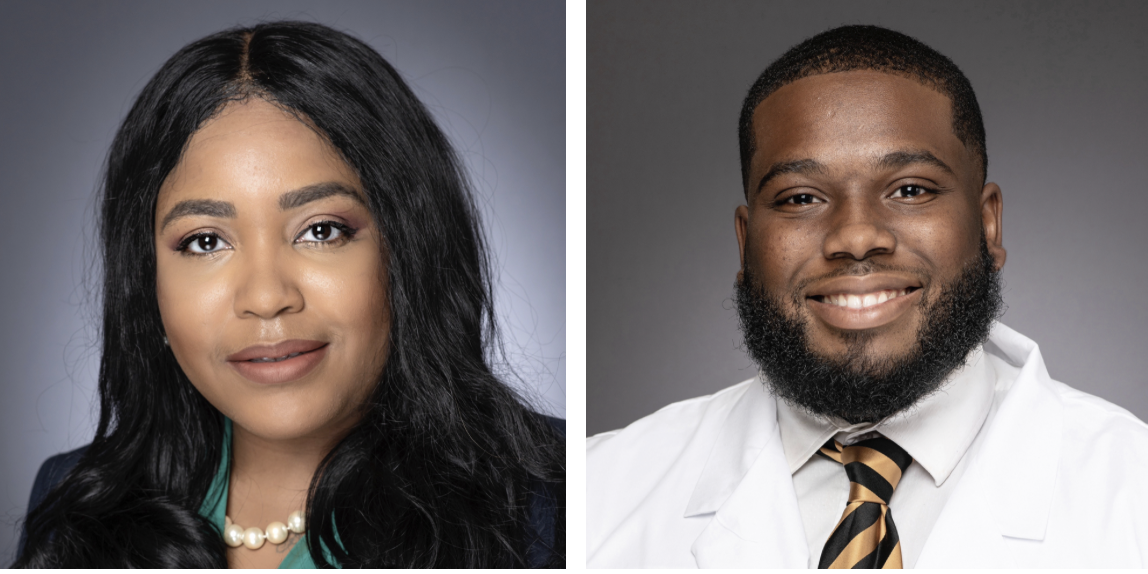
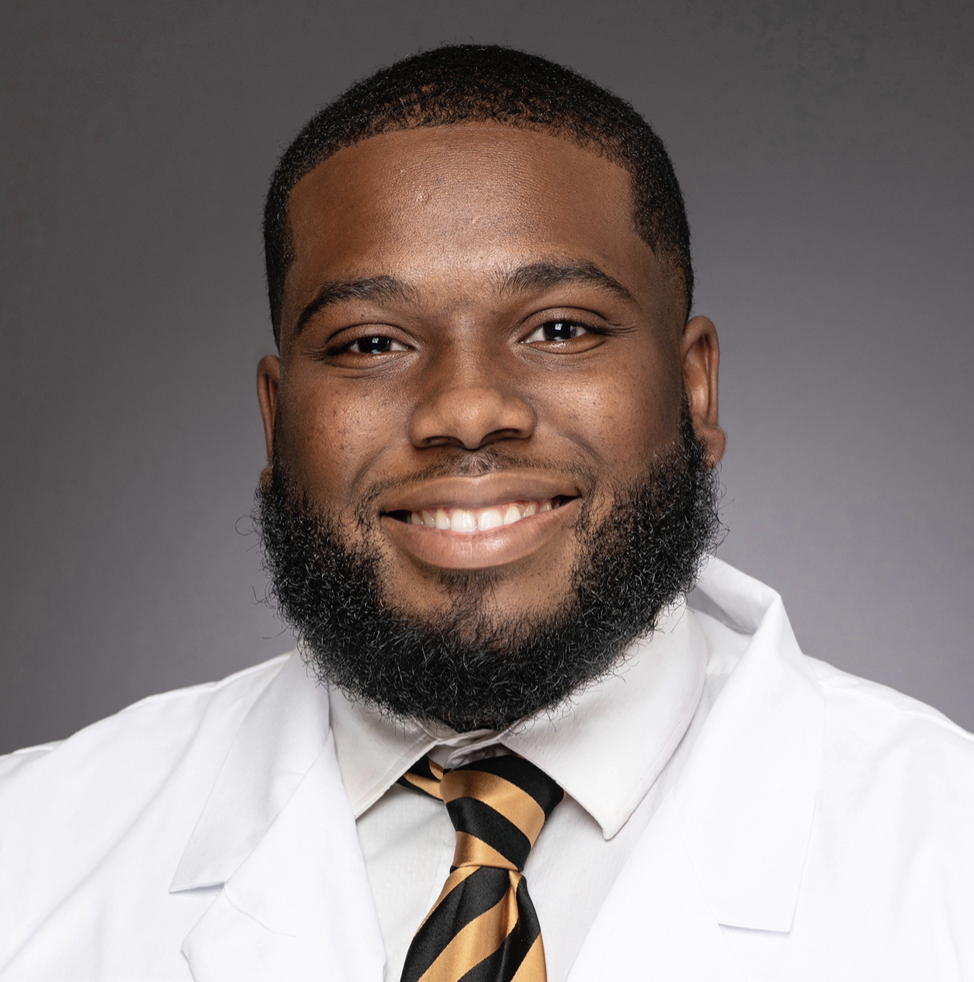
Charna Kinard, a fourth-year medical student, will serve as Academic Affairs Committee Co-Chair, and Toni Igbokidi, a third-year medical student, was appointed National Treasurer at the 2022 SNMA Annual Medical Education Conference (AMEC) in April.
SNMA is the nation’s oldest and largest independent, student-run organization focused on the needs and concerns of students of color who are underrepresented in medicine. SNMA has more than 150 chapters across the nation with a membership of more than 7,000 medical students, pre-medical students, and physicians.
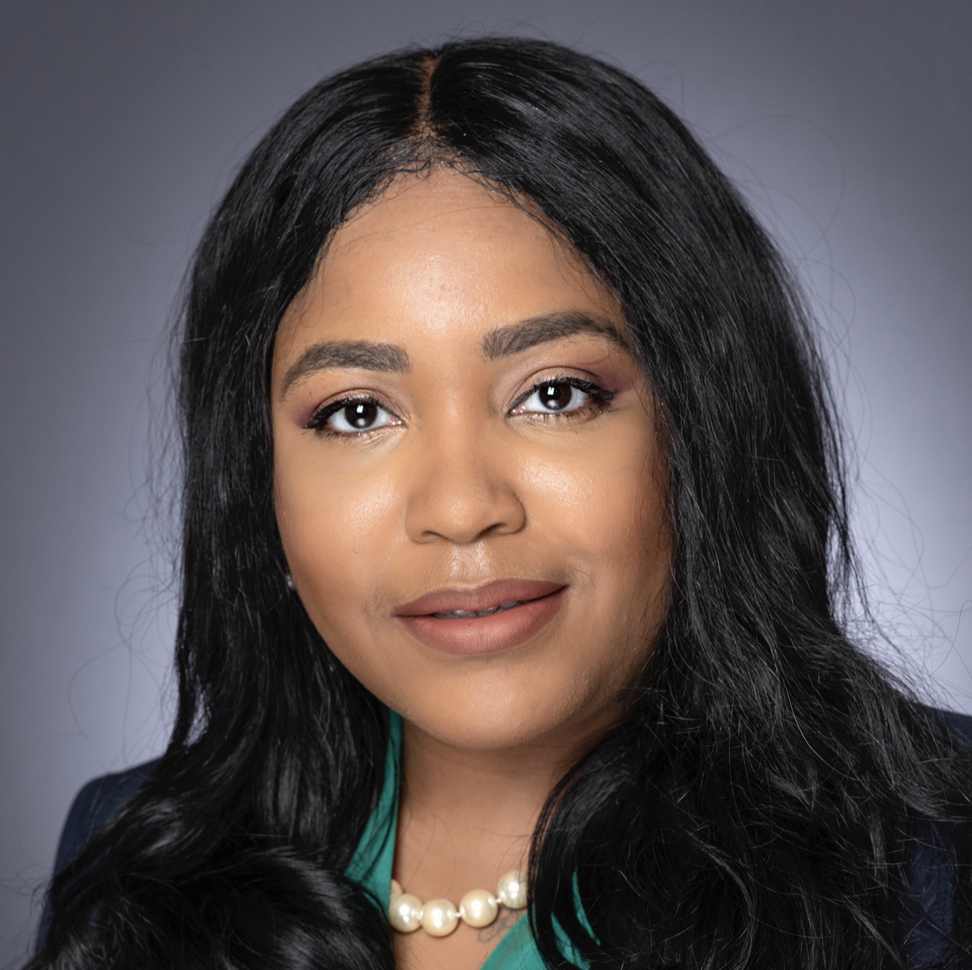
About Charna Kinard
Charna Kinard
Charna Kinard, MS-4, was born and raised on the Southside of Chicago. She attended Loyola University Chicago, where she received her Bachelors of Arts in Economics, with minors in Biology and Dance. She later attended Southern Illinois University Carbondale to complete the post baccalaureate program MEDPREP.
Kinard is passionate about student advocacy in medical education and is involved with the AAMC Organization of Student Representatives where she provides the student voice to numerous AAMC stakeholder committees.
She is also deliberate about mentorship and community outreach, leading numerous collaborative projects with local healthcare systems. She will be applying to general surgery residencies this fall, with the career goal of becoming an academic general surgeon with an interest in restorative medical education to cultivate effective community outreach and relationships. In her spare time, Kinard can be found binge-watching anime, playing videogames on Nintendo Switch or spending time with loved ones.
About Antonio Igbokidi
Toni Ikbokidi
Igbokidi, MS-3, graduated from the University of Arkansas with degrees in Biology and African American Studies and is complimenting his current medical education with a masters in Bioethics from Creighton University.
Igbokidi said he believes that true advocacy and positive change stems from the community level upwards. He started an initiative called the Barbershop Talk Therapy Project, designed to integrate mental health professionals into the barbershop in order to heal and de-stigmatize mental health in men of color. He is passionate about integrating community health in his role as a future physician to uplift the voiceless and marginalized.
Igbokidi said it is imperative that we “lift as we climb” by giving back to the community, uplifting the people from our community and creating a healthy space for people of color to be healed, to belong and to thrive.
About the Burnett School of Medicine
The Anne Burnett Marion School of Medicine at Texas Christian University, Fort Worth’s M.D. school, opened with a class of 60 students in July 2019. The allopathic medical school was formed in 2015. The Burnett School of Medicine’s focus on communication, a first-of-its-kind curriculum and the development of Empathetic Scholars® uniquely positions the school to radically transform medical education, improving care for generations.
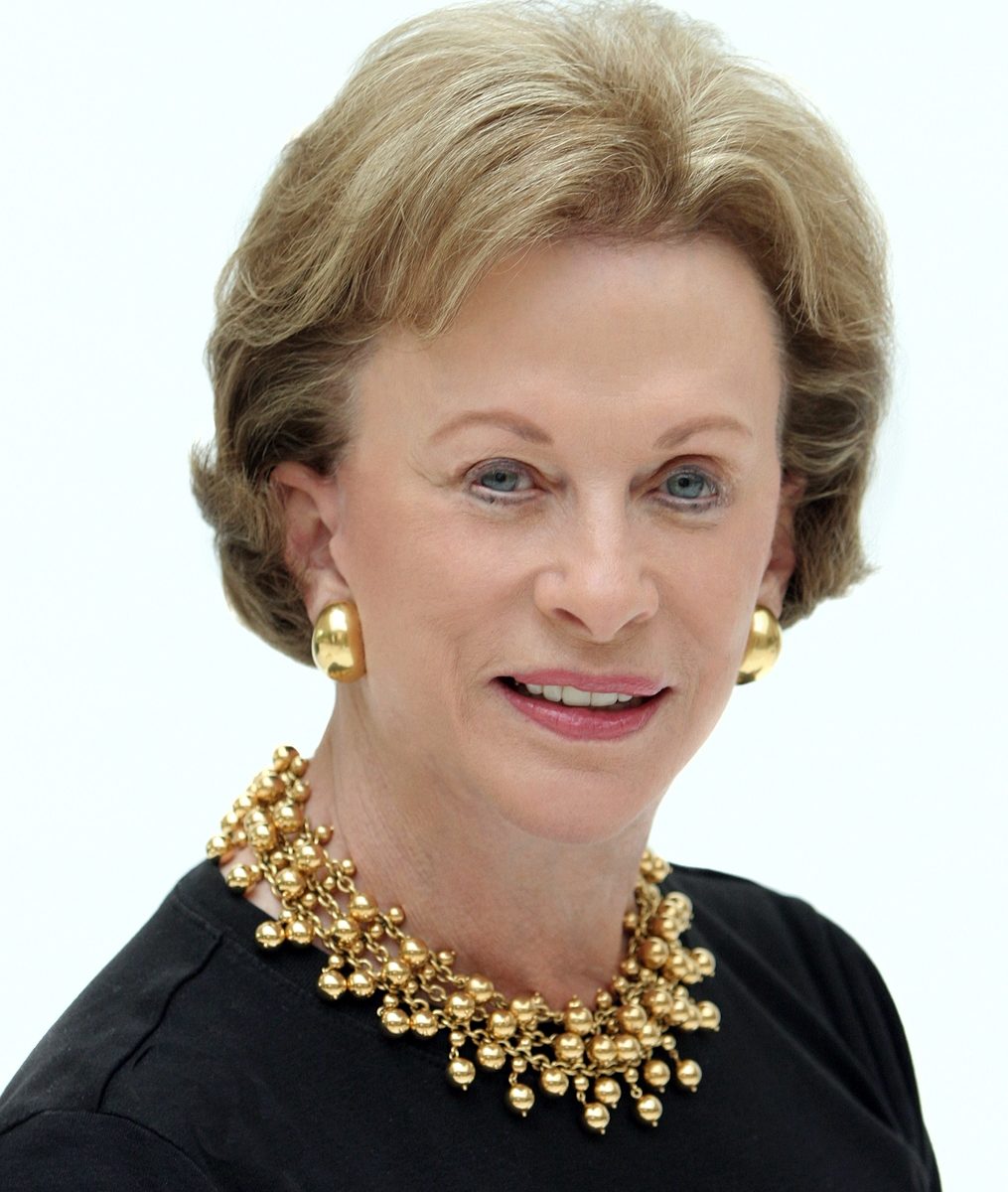
Anne Burnett Windfohr Marion will remain the epitome of a philanthropist and leader; her work at TCU has made a truly transformational difference for the university. In fact, she comes from a family with a 100-year history of participating in and supporting important initiatives at TCU.
Before her passing in February 2020, Mrs. Marion said, “I am inspired by the vision of the School of Medicine to transform medical education. This school is bringing considerable advances and innovations that are reshaping curriculum and preparing its graduates to better serve the community. I am pleased to make this gift.”
Facts About Anne Burnett Marion
Anne Burnett Marion was a member of the Board of Trustees of TCU, serving as a Trustee 1979-1992, Emeritus Trustee 1992-2006, and Honorary Trustee 2006 until her death on February 12, 2020.
She established the renowned Georgia O’Keefe Museum in Santa Fe, New Mexico, where she served as chairman of the museum for 20 years.
In Fort Worth, she was a primary influence and benefactor of the Fort Worth Museum of Modern Art, and the driving force behind the museum’s internationally renowned building, designed by acclaimed architect Tadao Ando, which opened in December 2002.
For 40 years, she also served as a director on the board of the Kimbell Art Museum.
In addition to serving as chairman of the Burnett Ranches, she was the chairman and founder of the Burnett Oil company and president of The Burnett Foundation.
Her holdings included the historic Four Sixes Ranch in King County, Texas. The 6666 Ranch is world-renowned for its Black Angus cattle and American Quarter Horses. At the time of her death, the three ranches encompassed 275,000 acres.
Over nearly 40 years, the Burnett Foundation has distributed more than $600 million in charitable grants, supporting arts and humanities; community development; education, health and human services.
Marion served as a director of Texas Health Harris Methodist Hospital in Fort Worth and was the namesake of the Marion Emergency Care Center at the hospital.
She was director of the Texas andSouthwestern Cattle Raisers Association; member of the Board of Overseers of Memorial Sloan Kettering Cancer Center in New York City; and director emeritus of the National Cowboy Hall of Fame in Oklahoma City.
Other past directorships included the board of regents of Texas Tech University, The Museum of Modern Art in New York and The Fort Worth Stock Show.
Her many awards include the Great Woman of Texas (2003); the Bill King Award for Agriculture in 2007; and in 1996 the Governor’s Award for Excellence in the Arts, in Santa Fe, N.M. She was inducted into the National Cowgirl Museum and Hall of Fame in 2005; the American Quarter Horse Association’s Hall of Fame in 2007 and The Great Hall of Westerners National Cowboy and Western Heritage Museum in 2009.
FORT WORTH – Texas Christian University today announced that the School of Medicine will be named the Anne Burnett Marion School of Medicine in honor of the late Anne Burnett Marion’s lifetime of friendship and support and her extraordinary generosity to the TCU School of Medicine.
The estate of the late Anne Burnett Marion and The Burnett Foundation, a charitable foundation based in Fort Worth, have made a second $25 million gift to The Anne W. Marion Endowment in support of the TCU School of Medicine operations in perpetuity.
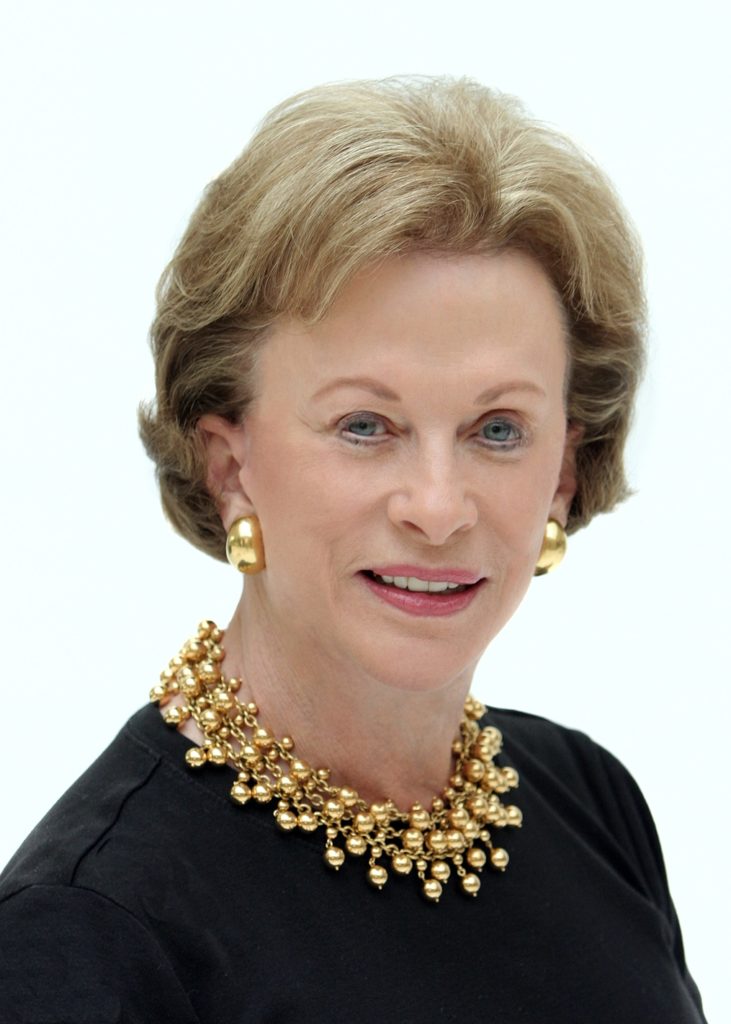
Courtesy of the Georgia O’Keeffe Museum/Photo by Robert Wood
“During her lifetime, Anne Marion’s support of the university through her service as a trustee and her philanthropy played a vital role in strengthening TCU’s academic profile and reputation. Her investment of $50 million in our School of Medicine enhances her legacy and will have a momentous influence on TCU for the next 150 years,” TCU Chancellor Victor J. Boschini, Jr. said. “The history of TCU is beautifully intertwined with the Burnett family’s legacy. It is impossible to imagine where we would be without their generosity and longstanding loyalty. We are grateful to Anne’s daughter, philanthropist Windi Grimes, for the honor of establishing this tribute to her mother, marking her indelible contributions to TCU and generations of physician leaders.”
The first gift ever made by The Burnett Foundation, formerly known as The Anne Burnett Tandy and Charles Tandy Foundation, was to TCU, an endowment in her mother Anne Burnett Tandy’s and Charles Tandy’s names. Marion gave to nearly every area of the university, culminating with her final gift of $25 million to TCU through The Burnett Foundation, among the most generous gifts in university history. It was a pivotal one for the TCU School of Medicine as it established The Anne W. Marion Endowment to support the students, faculty and programming of the school permanently.
“This level of generosity will create a lasting legacy through the many doctors who will go on to be physician leaders in their communities and in the field of health care, serving others and changing lives for the better for generations to come,” Boschini said. “We could not be more proud to have our School of Medicine bear her and her family’s great name forever.”
Anne Burnett Marion was a native of Fort Worth and was deeply committed to her community and supporting the future of medical education. Her family ties to the Fort Worth community date back nearly a century. They have a long history of supporting the priorities of the city and its institutions. The Burnett Foundation has been a generous patron of the city, investing significant resources to enhance the community in myriad ways. The foundation focuses on building capacity in organizations and people through the arts and humanities, education, community affairs and health and human services.
“Legacy and loyalty have always been Burnett family traits,” Windi Grimes said. “My grandmother’s first foundation gift was to TCU, and it seems fitting that my mother’s last foundation gift goes to support the University as well. My mother was inspired by the TCU School of Medicine, and we hope that the Anne Burnett Marion School of Medicine will provide a profound impact to all those it serves.”
The gifts that total $50 million for the School of Medicine strengthen TCU’s endowment and propel the university closer to its $1 billion goal for Lead On: A Campaign for TCU. This historic fundraising effort fuels the university’s strategic plan and positions TCU for even greater success in the future.
“The Anne W. Marion Endowment will provide funds to support our students, faculty and programming for the medical school and continue to fuel our mission of transforming health care by inspiring Empathetic Scholars®,” said Stuart D. Flynn, M.D., the founding dean of the School of Medicine. “This generosity empowers us to continue recruiting and nurturing talented and diverse students who are shaping the future of medicine and health care in an abundance of ways. We continue to carry out the vision of creating physicians who are knowledgeable and compassionate care givers.”
The Anne Burnett Marion School of Medicine, which will be known as the Burnett School of Medicine, welcomed its first class of medical students in July 2019, and they will graduate in 2023. The Burnett School of Medicine’s fourth class began in July 2022 bringing the school to full enrollment.
TCU is also expanding the university’s footprint in Fort Worth into the Near Southside area and Medical District to open a new campus for the Burnett School of Medicine. The four-story, and approximately 100,000-square-foot medical education building will sit at the northeast corner of South Henderson and West Rosedale streets. It will be the academic hub for 240 medical students and hundreds of faculty and staff. Completion is planned for fall 2024, and additional facilities are part of the master plan.
About Texas Christian University
Founded in 1873, TCU is a world-class, values-centered private university based in Fort Worth, Texas. The university comprises 10 schools and colleges offering 114 areas of undergraduate study, 60 master’s level programs, and 38 areas of doctoral study. Total enrollment stands at 11,938, including 10,222 undergraduates and 1,716 graduate students. The student/faculty ratio is 13.6:1, and 88 percent of TCU’s 699 full-time faculty members hold the highest degree in their discipline. TCU consistently ranks among the top universities and colleges in the nation, and the Horned Frog family consists of more than 97,195 living alumni. For more information, please visit TCU’s website.
About Lead On: A Campaign for TCU
In October 2019, TCU launched the community phase of Lead On: A Campaign for TCU. The $1 billion goal of this campaign will strengthen TCU’s people, programs and endowment. To date, more than 51,000 donors have contributed over $835 million. For more information, please visit the Lead On: A Campaign for TCUwebsite.
About the Burnett School of Medicine
The Burnett School of Medicine, Fort Worth’s M.D. school, opened with a class of 60 students in July 2019. The new allopathic medical school was formed in 2015. The Burnett School of Medicine’s focus on communication, a first-of-its-kind curriculum and the development of Empathetic Scholars® uniquely positions the school to radically transform medical education, improving care for generations. To make this new school possible, the greater North Texas community continues to offer generous philanthropic support. The school’s current Founding Donors include Alcon Vision; Amon G. Carter Foundation; Baylor Scott & White Health; Mrs. Rebecca and Mr. Jon Brumley; The Burnett Foundation; Cook Children’s; Mrs. Anita and Mr. Kelly Cox; Mr. H. Paul Dorman; Mrs. Harriette and Mr. Arnold Gachman; Mrs. Priscilla and Dr. John Geesbreght; Martha Sue Parr Trust; The Morris Foundation; Sid W. Richardson Foundation; Thomas M., Helen McKee, & John P. Ryan Foundation; Tartaglino Richards Family Foundation; Texas Health Resources; and three anonymous donors.
The medical school was created with an innovative curriculum that focuses on developing Empathetic Scholars® and future physicians who are able to walk in a patient’s shoes. This forward approach to medical education includes flipped classrooms without lectures and partnering students with physicians from their first day in medical school.
The Burnett School of Medicine has also launched graduate medical education collaborations with Baylor Scott & White All Saints Medical Center Fort Worth and Texas Health Resources that will remain in place. Those important partnerships will improve health and the delivery of care in North Texas as well as help address the increasing physician shortage in Fort Worth and beyond.
FORT WORTH – Sixty new medical students at TCU School of Medicine received their customary white coats as they begin their journey to become physicians.
“Those of us at the TCU School of Medicine are passionate about being a part of your journey,” said Stuart D. Flynn, M.D., the Founding Dean of the TCU School of Medicine. “Celebrate this moment. You all have worked hard to get here and you’re going to work hard from this point forward and we are going to be next to you every step of the way in your journeys.”
The students received their white coats at TCU’s Legends Club at Amon G. Carter Stadium. Each year, white coat ceremonies are held by medical schools all across the U.S. and medical students receive their short white coats. It signifies the beginning of their journey to achieve the long white coat, when they are physicians, according to the American Medical Association.
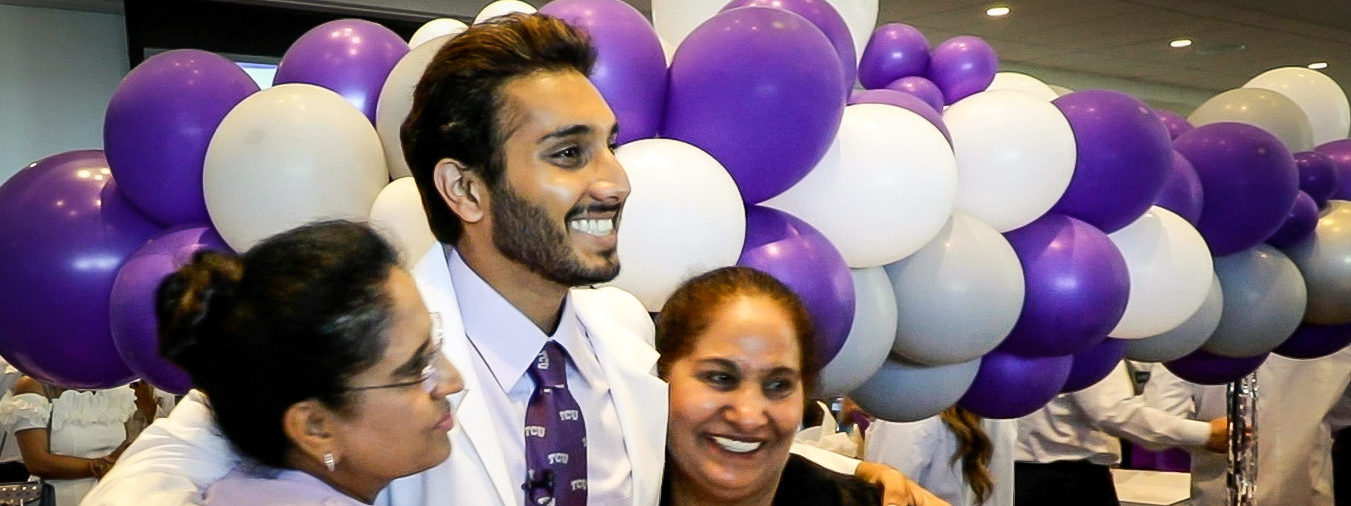
The TCU School of Medicine adds their own twist to the celebration by having family members gathered around each medical student to help them put on their white coat for the first time.
The Class of 2026 also, made history by rounding out the student body at the medical school bringing the total amount of students to 240.
“As we stand here all together in this room we are making TCU School of Medicine history,” said Erin Nelson, Psy.D., Assistant Dean of Admissions, Outreach and Financial Education at the TCU School of Medicine. “You all are bringing the house together and we have students in all four years.”
Teresa Abi-Nader Dahlberg, TCU Provost and Vice Chancellor for Academic Affairs, was also on hand to welcome the new medical students into the Horned Frog Family with words of encouragement.
“You have worked hard to get here for the privilege to take care of your fellow human beings with compassion, empathy and skill,” Provost Dahlberg said. “You belong here and you are now a part of the TCU Horned Frog community.”
The festive event was capped off with speeches by Jonas Kruse, MS-4 at TCU School of Medicine, and Parminder Deo, MS-1 at TCU School of Medicine.
Deo spoke about the importance of celebrating the achievement of making it to medical school.
“This rite of passage is an important one because it marks the beginning of medical school,” Deo said. “We are now physicians in training taking the first steps on a difficult path but one that we chose to pursue and one that is bursting with potential.”
FORT WORTH – An endowed scholarship honoring Carnival Cruise Line’s Brand Ambassador John Heald has been created at the TCU School of Medicine.
The scholarship was created by two frequent guests on Carnival Cruise Line, Carol and Richard Hoefs. The couple wanted to name the scholarship after someone who has made a significant positive impact both in their lives and to the world in general.
“John Heald is a very good man who does everything in his power to help everyone he meets. He treats everyone with the utmost respect and kindness. As such he makes the world a better place and is an inspiration to me to do likewise,” Richard Hoefs said.
The Hoefses have committed to contribute $120,000 to fund the John Heald Medical Scholarship between now and mid-2023. The school will invest the funds in the TCU endowment. The scholarship amount that is spent annually is based on a percentage of the market value of total funds so as to maximize the scholarship payment and ensure the preservation of the fund for future students. This percentage is determined annually by the TCU Board of Trustees and is approximately five percent. The first annual scholarship of approximately $6,000 will be awarded to a student in the fall of 2024.
THRIVE is the longitudinal, integrated, collaborative system of instruction, learning, and support at the TCU School of Medicine that focuses on student well-being.
“Right now, they are really separated,” said Tori Flores, Assistant Director of Student Affairs.
“Being able to bring them together and build that community again through our THRIVE medical student well-being initiative is a huge, monumental thing for us”.
The students have been away from each other for more than six weeks preparing for the USMLE STEP 1 examination. STEP 1 is taken by students after completing their second year of medical school. This exam decides whether students are allowed to begin practicing medicine while supervised.
This event allowed students to come together to further build community with one another along with their THRIVE team coaches.
Antonio Igbokidi, a third-year medical student at TCU School of Medicine, shared what he is looking forward to at the beginning of the academic year in July.
“I’m just looking forward to fellowshipping with my friends, my classmates, the new class…and becoming better, being the physician want to be,” he said.
FORT WORTH – Sixty new medical students will arrive at TCU School of Medicine for two weeks of intense preparation that will begin their medical school journey.
“This is our fourth class of future physicians and we will now have a full campus of 240 medical students who have chosen a new approach to medical education as their calling,” said Stuart D. Flynn, M.D., the founding dean of TCU School of Medicine. “These students will have a unique viewpoint of the role that empathetic communication plays in better patient care.”
The TCU School of Medicine will prepare students to be compassionate physicians, excellent caregivers and prepared to meet the challenges of the rapid advances in medicine.
The medical school’s aim is to transform medical education by having a unique curriculum that incorporates communications trainingthroughout the curriculum. Students are paired with patients and physicians from their first day in a Longitudinal Integrated Clerkship model. The students also benefit from world-class simulation and technology, using the Microsoft HoloLens and HoloAnatomy® mixed reality learning experience. The students also encouraged to be life-long learners capable of critical inquiry and medical information literacy through their required four-year research project.
“We are training medical students as Empathetic Scholars® who will have a skillset that will be invaluable to future physicians providing patient excellent care and medical innovation,” Dean Flynn said. “Our medical students will become outstanding physicians who will focus on treating their patients with compassion, empathy and respect. That is how we help patients get better health outcomes and improve community health overall.”
The 60 new medical students at the TCU School of Medicine will be the first cohort of students to be welcome onto TCU’s campus and the medical schools’ new temporary space in southwest Fort Worth.
The Class of 2026 will participate in Introduction to Medicine, July 11-22, on both the TCU campus and the TCU School of Medicine campus at the International Plaza in southwest Fort Worth where they will meet faculty and staff and participate in orientation activities.
On Saturday, July 16, the White Coat Celebration will be held at TCU’s Legends Club. On Monday, July 18, the students will be at TCU’s BLUU Ballroom to hear from retired Phoenix police officer Jason Schechterle. As a rookie police officer in 2001, a car crashed into the rear of Jason’s patrol car. Upon impact, Jason’s squad car burst into flames, trapping him inside. He suffered severe burns to over 40 percent of his body which drastically altered his appearance. He will share his story with the public and the incoming medical students.
The two-week event will culminate on Thursday, July 21 when the medical students with begin their Introduction to Service Learning curriculum. The students will meet community partners in southeast Fort Worth to create a mural in the Eastland neighborhood.
Here’s a look at previous Introduction to Medicine Week activities and the White Coat Celebration:
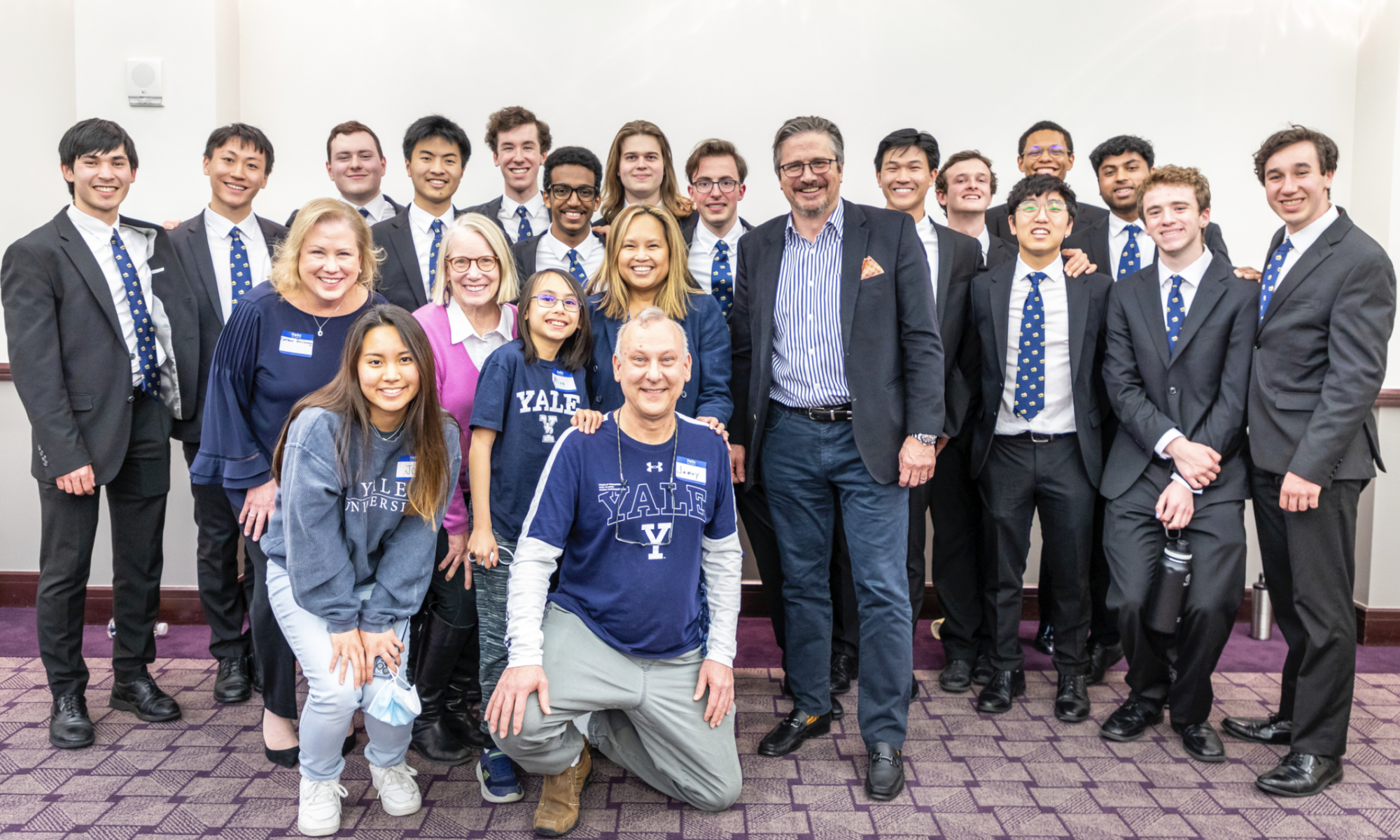
FORT WORTH – The TCU School of Medicine collaborated with The Yale Club of Fort Worth on a discussion about medical education and the growing influence the medical school is having on health care in Fort Worth.
Stuart D. Flynn, M.D., Founding Dean of the TCU School of Medicine, was the featured guest at The Yale Club of Fort Worth‘s Music and Medicine event. The chat with Dean Flynn was followed by music from Yale’s The Society and Orpheus and Bacchus, the longest operating all-undergraduate a cappella group in the nation.
The event was held inside TCU’s Kelly Center and was sponsored by Brant Martin, a board member of the Yale Club of Fort Worth and senior partner at Wicks, Philips, Gould & Martin, LLP.
“It’s good for TCU, it’s good for Fort Worth and it’s good for Yale in terms of recruiting,” Martin said. “I brought two of my children because I want them to see there’s more out there that they can aspire too. It’s good for all parties involved.”
Martin, a Fort Worth native, added that bringing the YCFW together with TCU is a good community connection.
“Anytime we can bring more exposure to TCU and the great things they are doing in Fort Worth it’s good for everybody involved,” Martin said.
Dean Flynn, who spent 20 years of his career in medical education as a professor of pathology and surgery at Yale School of Medicine, gave the crowd insight into what it takes to create a new approach to medical education and create future physicians that are knowledgeable and empathetic to their patients.
“I found what he had to say absolutely inspiring,” said Kathleen Galloway, Yale Club of Fort Worth President. “To hear him talk about his passion for developing a medical school and how he cares about the students just makes me so excited about this medical school and his leadership of it.”
The YCFW packed about 60 people inside a ballroom at the TCU Kelly Center that included Fort Worthians, young and old. Dean Flynn talked about how important medical schools are in jump-starting medical innovation in large cities, such as Fort Worth.
“This was important because there still is a lot that the community wants to know about what’s happening (in health care),” Martin said. “He explained what it means to be in the stage that TCU and the medical school are in and I found that to be informative.”
Dean Flynn talked in great detail about The Compassionate Practice®, a innovative communication curriculum based in the disciplines of theater, narrative medicine, journalism, and population health. Community members had many questions for Dean Flynn about the importance of humanities training for future physicians.
“Going out into hospitals I can see that these patients want more from me than the diagnosis and the treatment plan,” Edwards said. “They want to feel like they’re heard and to be treated like a person and not just a medical ailment.”
After the informative discussion with Dean Flynn, the community members in attendance were treated to more than an hour of soulful renditions of popular songs from the early 1900s to today’s hits such as, Olivia Rodrigo’s, ‘Good 4 U,’ from The Society and Orpheus and Bacchus.
“Our primary mission is to be active in the Fort Worth community and create new connections,” Galloway said. “This event was a great way of connecting our Yale community in Fort Worth with TCU and their commitment to this city.”