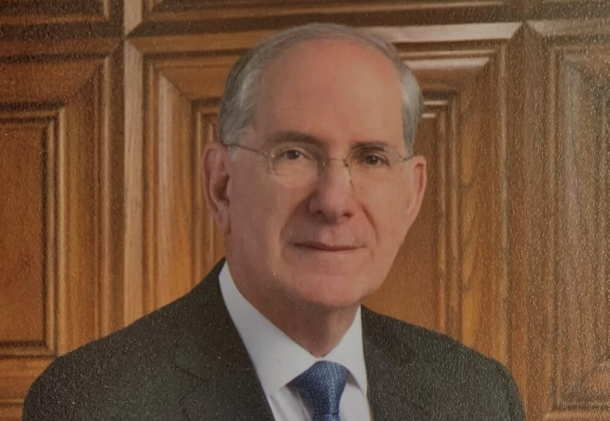
Each year, this award recognizes a faculty memberwho exemplifies innovative teaching and training, research, and superb patient care at the Burnett School of Medicine at TCU. The tribute reflects Gachman’s lifelong commitment to education and health care. “Arnie became a student and a scholar of our school and what we are doing right from the beginning,” said Dr. Stuart D. Flynn, Founding Dean of the Burnett School of Medicine. “His contributions are immensely valuable.”
Gachman leads one of Fort Worth’s oldest family-owned businesses, Gamtex Industries, and helped pioneer the scrap recycling industry. He and his wife, Harriette, are Founding Donors to the Burnett School of Medicine and have established endowed scholarships for medical and business students. Their generosity ensures that faculty excellence and future generations of Empathetic Scholars® will thrive.
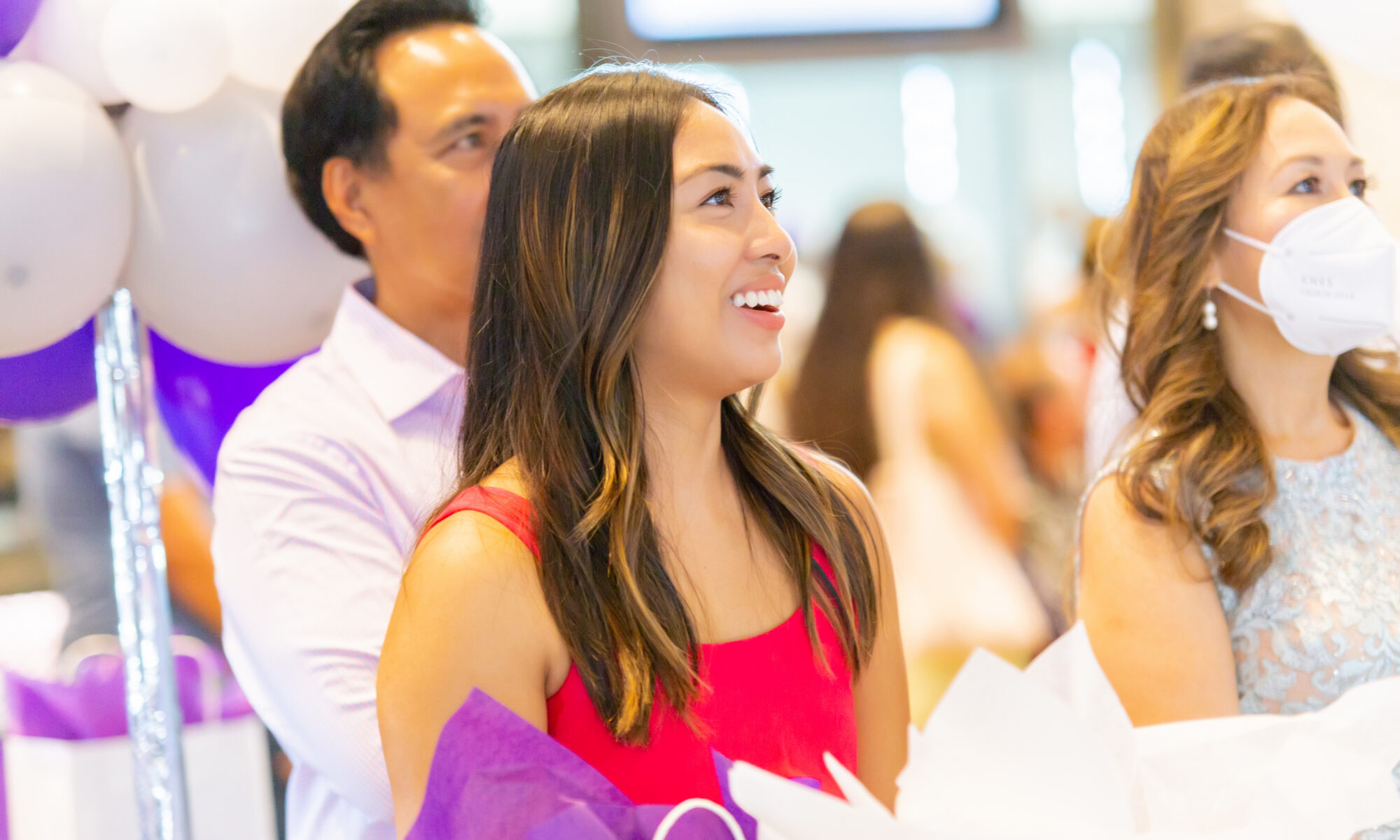
FORT WORTH – On any given day of the week, you can find Angela Abarquez, MS4, lacing up the gloves and strapping on leg pads as she fights her way through a grueling Muay Thai kickboxing workout at a gym in Fort Worth.
Stress levels are high for the California native as her dream to become a physician gets closer to reality. She will be the first doctor in her family and fulfill a dream that her aunt once had.
“It means a lot to my family,” Abarquez said. “My aunt really wanted to be a physician, but my dad’s family didn’t have enough money to send her to medical school in the Philippines.”
Abarquez’s dad and his three siblings were raised by a single mom and lived in a hotel room. Her grandma served as a principal at a school, so education has always been important to the family.
“Hearing Dr. Abarquez will be powerful,” said Abarquez. “It represents everything my family has done to give me what they didn’t have.”
Her family now has a scholarship fund at the school where her grandma worked, and they sponsor a few scholars each year.
“One day, I hope to sponsor a student’s education as a tribute to the gift of education my family gave me,” Abarquez said.
As for her aunt, she is a nurse practitioner and will be on hand for Abarquez’s Commencement in May.
But first, Abarquez will find out what residency program she will match in on March 20.
“I’m really excited for Match Day,” said Abarquez. “I can’t wait to have my family by my side in that moment.”
She applied for Internal Medicine programs and hopes to stay in the Dallas-Fort Worth area. She eventually wants to become a gastroenterologist.
“I’m excited to have the next level of responsibility for patients,” said Abarquez. “I think Burnett School of Medicine at TCU has done an excellent job in making sure we can confidently carry out patient interactions. It’s an important skill that I’m glad our school taught us.”
FORT WORTH – Walking through Arnold Hall,Quinn Babcock took photos and video for an Instagram takeover.
“I was hoping to learn how the communication team communicates about the medical school and how they use the stories of the medical students to attract new students,” said Babcock, a junior at the Bob Schieffer College of Communication, and a member of TCU’s Public Relations Student Society of America chapter.
Babcock was one of several students who took part in “Shadow Day,” a program developed by the Greater Fort Worth Public Relations Society of America(GFW PRSA) with student chapters of the organization in the Fort Worth area.
“We wanted to show different aspects of the strategic communication field, and how curiosity, lifelong learning and compelling storytelling are integral in creating compelling campaigns,” said Estrella, who serves on the GFW PRSA board as a director.
As part of the program, the students were given assignments including creating social media posts that would promote the medical school. The strategic communication students took a tour of the medical education building including the simulation and technology department where they met and talked with Hal®, the newest and most technologically advanced high-fidelity Manikin at the school.
Emma Santos, a TCU freshman, asked Hal®, “How are you?” and to her amazement, he replied: “I’m feeling uncomfortable because of the pain.”
“I’ve never experienced anything like that in my whole life,” Santos said.
Following the visit at the medical school, the PRSSA students and PRSA mentors gathered at the Key School and Training Center, which hosted a panel discussion of PR professionals and luncheon.
“I’m glad to see these students take advantage of this opportunity to not just learn, but also to network,” said Lewis Jackson, Digital Media Producer and Marketer at Burnett School of Medicine. “I think this will be huge for them as they continue their journey to become communicators.”
FORT WORTH – Many are familiar with the Manikins used for CPR training, but what would happen if those robots could move and talk?
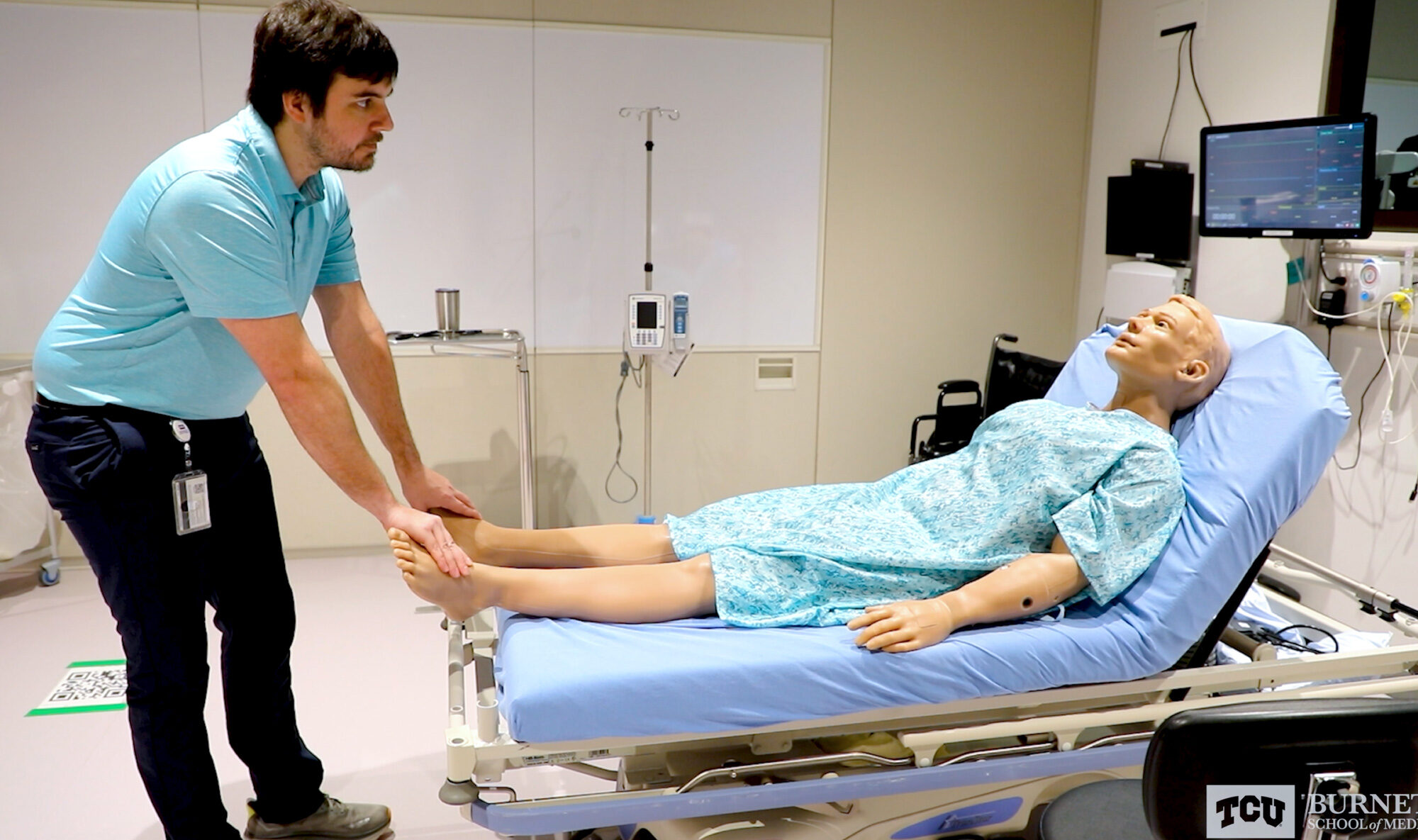
At the Anne Burnett Marion School of Medicine at Texas Christian University, medical students are learning with the newest innovations in robotics that can move and talk back. Meet HAL® S5301. Developed by Gaumard® Simulators for Health Care Education, the newest high-fidelity Manikin uses Artificial Intelligence (AI) that can simulate lifelike symptoms of a neurological emergency.
HAL® can also be programmed to speak different languages and respond in one primary language or multiple languages. This allows students to work on some of the communication skills that might involve language barriers in a safe environment, Dr. Jennings said.
AI extends to HAL’s® physiology as well. His active motor function allows it to have reflexes in its right arm. It can shake hands, squeeze hands, raise its arm, use the arm for a withdrawal response, and have abnormal posturing. The head and eyes can also turn toward the speakers and make facial expressions.
“This gives our students a great opportunity in a safe space to do neurological testing and we can see how they respond when the Manikin lets them know they are doing thingsit doesn’t like,” Dr. Jennings said.
HAL® uses patient monitoring devices and mechanical ventilators so students can also learn medical procedures such as chest tube thoracostomy, surgical airway management, abdominal wound bleeding, CPR, blood glucose testing, and more.
“This is really the next level of medical education where artificial intelligence really gets students prepared to go into hospital environments with confidence,” Dr. Jennings said.
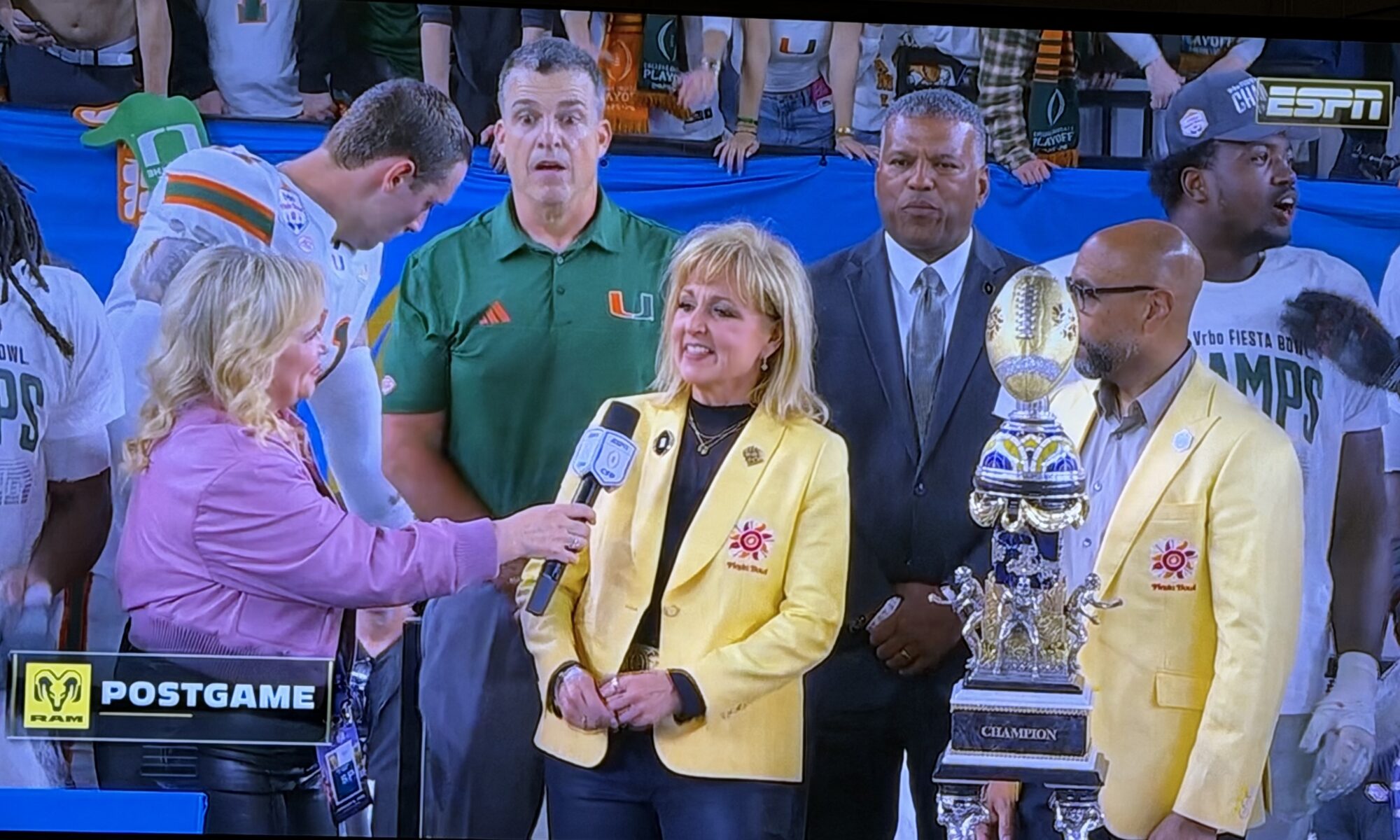
With just 18 seconds left in the fourth quarter, the Miami Hurricanes scored a late touchdown defeating the Ole Miss Rebels 31-27 in the Vrbo Fiesta Bowl College Football Playoff Semifinal on January 8. The dramatic comeback sent Miami to the National Championship game and marked the end of another successful run.
“To me personally, the Fiesta Bowl has been a myriad of incredible experiences and watching some of the best football games,” Bernas said. “It has been my honor to be a part of the Fiesta Sports Foundation and continue to grow our bowl game into the best bowl game in all of college football. We want everyone to know that and share in that excitement and enthusiasm for college football each year.”
Over the last two football seasons, Bernas has led the strategic direction of the nonprofit organization during its first-ever College Football Playoff Quarterfinal at the Vrbo Fiesta Bowl when the CFP expanded to a 12-team format.
“The Fiesta Bowl has been around for more than 50 years,” Bernas said. “In that time, we have celebrated some of the biggest games in college football.”
In 2025-26, the Fiesta Sports Foundation impacted more than a million Arizona residents through 22 charitable grants, youth programming, educational programming and sports programming.
“We really support our community,” Bernas said. “We’ve given an amazing amount of funds to help student athletes, build football fields, encourage education and scholarship, and support for our teachers in the community.”
Bernas became a board member of the Fiesta Bowl in 2013. During her time, she has served on committees in nominating and governance, hospitality, charitable giving, strategic planning and audit and compliance. Prior to becoming the Chair of the Board, she served as Board Chair-Elect and was a member of the Executive Committee.
Before joining the Burnett School of Medicine at TCU, she previously served at the University of Arizona for 24 years at the main campus in Tucson and helped launch their medical school in downtown Phoenix. She also served as Board Chair for the Arizona Sports and Tourism Authority and is a 40 Under 40 recipient from Inside Tucson Business and the Phoenix Business Journal.
She was named the 2013 Woman of the Year for the Leukemia and Lymphoma Society of Arizona. Bernas received her undergraduate degree from the University of Arizona and is currently completing her Master of Public Health at Arizona.
Dr. Fowler began his two-year term as Vice President/President-elect at the start of 2026. He will serve as Chief of Medical Staff for two years starting in 2028, then will transition into a two-year term as immediate past president.
“This role is a six-year commitment,” Dr. Fowler said. “We’re charged with making sure there is the highest quality care for our patients and highest quality of practice by our physicians.”
In his new role, Dr. Fowler will advocate alongside the Chief Medical Officer and help secure technology and resources needed to provide the best care throughout the hospital system.
“For example our surgeons might need improved robotic equipment for medical procedures or we may need the most advanced MRIs to improve the quality of care the medical staff can provide,” Dr. Fowler said. “In my role, I can advocate to the leadership to make those things available for our physicians.”
Even with his new responsibilities on the administrative side of health care, Dr. Fowler will still carve out time to see patients and teach medical students. It’s a great place to help cultivate the next generations of physicians and serve our community, he added.
“I’ve been at JPS for eight years now and seen so many things happen,” Dr. Fowler said. “It’s really a role to give back to the health care profession.”
“Honestly, I was a little bit skeptical and confused,” said Isabela Agi Maluli, MS-1. “I was like, ‘what are we doing today?’ I was just really overwhelmed, and I just wanted to hear a lecture.”
The brown envelopes, packed with cue cards and scissors along with red, yellow and green markers, were part of a non-traditional class session for the medical students.
“We are doing a very interactive hands-on model building,” said David Goff, M.D., who is an Assistant Professor at Burnett School of Medicine at TCU. “It’s not just a lecture where we throw information at them, interacting will help the information stick.”
Interactive learning requires students to touch, feel, hold and move things to get a better understanding of the material.Goff is hoping to publish this innovative, interactive student learning modality to share with other medical schools.
“I’m a hands-on learner,” said Sereen Osman, MS-1. “Looking at table charts and graphs helps me to visualize and store it in my brain. Doing the interactive learning makes it easier for me.”
Students built a hypothalamus and pituitary gland, which is the control center for the endocrine system and controls and maintains our metabolism and balance.
It’s part of the flipped-classroom model in which students prepare for the material prior to class and then expand on it during class.
Dr. Goff says data shows how impactful interactive learning can be and that students learn by coming up with ways to remember the content.
“I’m trying to create a picture in their brain so that down the road when they are treating somebody, they think about that picture in their brain more than reading something or trying to memorize it,” Goff said.
“I’m really thankful to Dr. Goff and the school for doing this,” Osman said. “I feel like I learned a lot and I was more involved and more engaged and I can’t wait to use this more going forward.”
FORT WORTH –Three students from the Anne Burnett Marion School of Medicine at Texas Christian University received 2025 C.V. Roman Memorial Scholarships.
“It’s not just about the scholarship, they get to see your journey as a medical student,” said Tyra Banks, MS3 at the Burnett School of Medicine at TCU.
Banks received a $3,000 scholarship alongside her classmates Nana Okraku-Yirenkyi, MS3, and Oluwatoyin Duyile, MS4. Okraku-Yirenkyi received a $3,750 scholarship and Duyile received a $750 scholarship.
“So many people from the scholarship committee came up to us and gave us hugs and told us things about our story that resonated with them from reading our applications,” Banks said.
The investment in medical education for every student on the road to becoming a future physician requires planning and budgeting, according to the Association of American Medical Colleges (AAMC). The scholarship program at C.V. Roman helps reduce the financial burden for students from underrepresented minority groups to make medical education more accessible.
“It’s more than just a scholarship,” Okraku-Yirenkyi said. “The relationships we build with these doctors who have walked in our shoes before can give us great insight on where we’re trying to go.”
The C.V. Roman Memorial Scholarship supports medical students who demonstrate academic excellence, leadership in community service, and a commitment to addressing healthcare disparities. Each year, the organization awards students enrolled in medical schools within the Dallas-Fort Worth area who are active members of the Student National Medical Association (SNMA) or similar organizations.
FORT WORTH– What happens when improvisation interacts with the Burnett School of Medicine at TCU? You get medical improv. But it’s not what you think.
“There’s a lot of misconceptions when you hear the word improv,” said Erin Nelson, Psy.D., Associate Dean of Physician Communication at the Anne Burnett Marion School of Medicine at Texas Christian University. “A lot of people think about comedy. But there are two parts of improvisation, and we are looking at applied improv, which is the use of improv techniques in order to further teamwork, communication and connection.”
Burnett School of Medicine at TCU held a medical improv training led by Belinda Fu, M.D., along with local improvers at Arnold Hall. The goal was to show faculty different techniques and exercises that they can pass on to students to help them deal with unscripted medical situations.
“The old-school way of teaching communication skills in medical school was often to use scripts,” said Belinda Fu, M.D., who is an international leader in the field of medical improv. “So, improvisation really allows you to be comfortable with uncertainty and you can adapt to the unpredictable situation.”
During the workshop, students engaged in a number of exercises that will prepare them for whatever encounter they will have with patients and the family of the patients.
“I think this will better help me when I interact with patients,” said Ashley Kenney, MS-3. “I’m excited to use these strategies in the future and I just want to have better communication and be more aware of the word choices I make when caring for patients.”
Burnett School of Medicine faculty from both Physician Communication and Clinical Skills teams are fully trained in medical improv exercises. Faculty members use these exercises during the Phase 3 Prep for Practice session, however, the techniques can be applied to any content application session.
“We’re not teaching students how to be improvers,” Nelson said. “We are using this modality to teach students exceptional communication skills.”
FORT WORTH – Tackling a major health care issue like morbidity and mortality among women and infants is a task that requires health care professionals from all levels working to find solutions.
“It’s important to get the whole community working on it together,” Eletel said.
Eletel and five other students at Burnett School of Medicine at TCU have dedicated their mandatory four-year Scholarly Pursuit & Thesis (SPT) research projects to finding answers to the high mortality and morbidity rates for women and infants in North Texas.
“TCU is a part of the Fort Worth family and we’re all in this together that’s how I see this,” Dean Flynn said. “The research our students are doing dovetails beautifully with what we’ve been doing.”
Eletel is hoping her research will add valuable insight into finding solutions for Fort Worth’s high mortality and morbidity rates among women and infants. She is using data from Cook Children’s Neonatal Intensive Care Unit (ICU) and birthing centers in Tarrant County to see if out-of-hospital births are associated with more adverse outcomes for infants and if those infants need more health care utilization.
“From what we can see, it’s yes and yes to both of those questions,” Eletel said.
She is also looking to find out what is motivating pregnant women to deliver outside the traditional hospital setting. The insight could also shed light on what health care providers can do to reduce the need for out-of-hospital births.
Working on maternal care issues together is ultimately how we’re going to make the most change, Eletel said.
Eletel is being mentored through this process by David Riley, M.D., Assistant Professor at the Burnett School of Medicine and a neonatologist at Cook Children’s. He specializes in treating infants after birth who may be born with congenital issues, birth complications or trauma that would require them to be admitted into the intensive care unit.
With Dr. Riley’s help, Eletel has been able to analyze data from 132 neonatal intensive care unit admissions at Cook Children’s from 2019 through 2024 to see what percentage of infants admitted into the ICU were delivered at birthing centers or were at-home deliveries experiencing complications.
“The preliminary look that we’ve had on the data certainly shows that the infants that come to our care from those facilities have a very high burden of disease,” Dr. Riley said. “We don’t have a really good sense of how many babies are being delivered in this situation; we only see the ones that come to us.”
Eletel is also working with eight birthing centers across Tarrant County to collect data about their standard of care during deliveries.
“We don’t know what the standard of care is,” Eletel said. “It’s important to get all the facts in order to have a standardized approach to the research. If some birthing centers or some home birth midwives are approaching those things differently that can ultimately affect the data.”
Hospitals in Tarrant County follow guidelines from the American College of Obstetrics and Gynecologists and the American Academy of Pediatrics for delivery and care of newborns. Eletel is hoping her research can push for the creation of standard of care guidelines for birthing centers and at-home births to help reduce morbidity and mortality rates among women and infants.
“It’s not going to get done to lower that infant mortality rate if it’s just one birthing center or just one hospital is in on it,” Eletel said. “We ultimately have to come together on this.”