FORT WORTH – Something as simple as lifting your foot could dramatically impact your quality of life if there’s any pain involved.
A little known medical condition called foot drop, or drop foot, is having difficulty lifting the front part of the foot, according to the Mayo Clinic. If you have foot drop, the front of your foot may drag on the ground when you walk leading to risks of falling, chronic fatigue, and pain.
“If left untreated or misdiagnosed it can spiral into more injuries and long-term mobility issues,”said Mitchel Hawley, MS4 at Anne Burnett Marion School of Medicine at Texas Christian University. “That’s why early and accurate diagnosis matters so much.”
Hawley and Thien An Nguyen, MS2, at Burnett School of Medicine at TCU, have conducted research that has validated a novel, low-cost diagnostic tool called the “Phoenix Sign.” The tool could provide early insight for patients dealing with foot drop. The students’ poster presentation of the research won first place at the Association of Extremity Nerve Surgeons (AENS) Annual Meeting.
“This tool bridges a critical gap in diagnosing foot drop,” Nguyen said. “It gives us a clearer path toward deciding who will genuinely benefit from surgical decompression.”
It offers a promising path for determining which patients will benefit from corrective surgery, said Richard Adams, D.P.M., Assistant Professor of Podiatric Medicine at the Burnett School of Medicine, who mentored the students on the research project.
“As a preliminary validation study their work highlights its value and potential to reveal reversible neural ischemia and accurately predict which patients will benefit from surgical decompression even when classical electrodiagnostic studies are unclear,” said Michael Bernas, Director of Scholarly Pursuit & Thesis (SPT) at Burnett School of Medicine.
FORT WORTH – There are many medical conundrums that physicians keep searching for answers for patients. One is fighting off the development of Alzheimer’s disease and dementia in the human brain.
This is what Jack Bonnell, MS2 at Anne Burnett Marion School of Medicine at Texas Christian University, wants to solve.
“I’ve seen my friends and their families struggle with Alzheimer’s and it hits hard,” Bonnell said.
Data from 2022 showed that Alzheimer’s disease and related dementias are the fifth leading cause of death globally and the seventh leading cause of death in the United States, according to the World Health Organization (WHO).
Bonnell has found an opportunity in the Burnett School of Medicine at TCU’s novel Empathetic Scholar® curriculum to do research around Alzheimer’s and dementia.
“In medicine, every patient comes in with a different presentation and a different set of problems,” Bonnell said. “Learning to do research now is a small-scale version of how we’ll be working with patients in the future.”
Burnett School of Medicine students are required to a complete a four-year research project before graduation through the unique Scholarly Pursuit & Thesis (SPT) curriculum. The SPT course develops aspiring physicians to be life-long learners capable of critical inquiry and medical information literacy.
“Students are being less and less challenged to think independently and be creative,” Green said. “Research is one of those pure fields where we still have to engage the critical thinking components of our minds.”
Bonnell is working with Dr. Green, and her research group called the Green Research Group. One of their biggest projects is searching for ways to deliver medications to the brain to fight Alzheimer’s and dementia in patients.
“Once I joined Dr. Green’s research team and saw more of the research behind it, it grew as a passion of mine,” Bonnell said.
Dr. Green’s lab at TCU is where chemistry, biology and physics intersect. They provide extensive training and collaborative opportunities for undergraduate and graduate students.
His research project in medical school is an extension of his research as a TCU undergraduate student. Through a National Institutes of Health (NIH) R15 grant, Dr. Green’s lab has been able to pay 50 undergraduate students from TCU stipends during the summer to work in the lab.
Bonnell was one of the undergraduate students who benefitted from the grant that has been granted a continuation.
“That grant 100% majorly impacted my project,” Bonnell said. “I probably achieved over 90% of my work over the summer.”
The problem with most medications to fight Alzheimer’s is there isn’t a direct path to get the medication into the brain. There is a well-developed barrier between your blood stream and your brain, which is called the blood brain barrier.
“A huge target for developing drugs for things like Alzheimer’s is how to get past the blood brain barrier,” Bonnell said.
One of the main causes of damage to the brain with Alzheimer’s is oxidative stress. There are drugs to fight it but getting them to the brain is a medical challenge.
“It doesn’t matter how well your drug can fight oxidative stress on a bench testing in a lab,” Bonnell said. “You need to get it to the brain where the disease is occurring.”
There are many ways to approach creating a drug delivery mechanism that could include creative drug design. In Bonnell’s research project, he’s using an approach that mimics the relationship between oil and water and how they interact.
The drugs need to be able to cross the blood brain barrier, which acts like oil. If the drug can cross the barrier into your blood stream, which would be much like water, it needs to stay intact so it can dissolve fully and reach the brain with the Alzheimer’s fighting ingredients.
To do that, you have to find the perfect balance in a molecule to let it go back and forth between the two, Green added.
“They should be able to act like oil and act like water and by having both properties those molecules should be able to wiggle into a lot of places,” Green said.
So far, Bonnell and Dr. Green have seen promising results of the iron-based molecule they’ve been using in bench-top tests in the lab. However, it’s a long road to having the drug delivery system used in a patient study.
“There’s this saying among scientists that we can only see farther because we stand on the shoulders of giants,” Green said. “Everyone wants to come out of the womb and cure cancer but there are millions of tiny contributions that may one day lead to a cure.”
Bonnell is hopeful that by graduation he will have successfully created the molecule compounds and be able to publish a paper on his research alongside the Green Research Group.
“That way other people can see what we’re doing and replicate it,” Bonnell said.
Statistics like those sparked fear in Chantil Atkins, of Fort Worth, when she became pregnant with her first child in February 2024.
“There were just a lot of things happening on the news and a lot of articles I had read,” Atkins said.
The report showed there were 134.4 cases of SMM among Black women in Texas for every 10,000 hospitalizations compared with 82.2 for Hispanic women, and 72.6 for non-Hispanic White women. In Tarrant County, the maternal mortality rate is the second highest in Texas.
“I was more afraid that myself or her wouldn’t survive this pregnancy,” Atkins said.
After eight years of marriage, Chantil and her husband William Atkins struggled to conceive. Her pregnancy came as a shock after years of trying, Chantil said.
“All of a sudden I was pregnant and at first it was scary,” Chantil said. “But then [my husband] just kept talking me through it and saying it’ll be OK.”
What Chantil didn’t know at the time was there was someone in her own neighborhood waiting to guide her through pregnancy.
The MHIC would later collaborate with universities and health systems in Dallas County to form the Maternal Health Accelerator (MHA) with a goal of improving the health outcomes of women and infants free of cost in North Texas.
A central part of that effort is supporting moms before, during, and after pregnancy, according to Adam Powell, president and CEO of United Way of Tarrant County.
“We talked to a ton of pregnant women throughout this process of creating a resource and the one thing they told us is that they felt unsupported,” Powell said.
The United Way of Tarrant County (UWTC), in partnership with the Child Poverty Action Lab (CPAL), created a community doula training program to provide moms with essential support throughout pregnancy, birth and postpartum. Both organizations are a part of the MHA and are creating resources to close gaps in healthcare for moms and infants.
“I think the one thing that jumped out for us were the use of doulas [who were] people from those communities and often times know these people,” Powell said.
The doula program has graduated 120 doulas and armed them with stipends to get the equipment needed to support expectant moms. Lytissa “Lady” Greene, of Fort Worth, completed the doula program in 2024 and works with moms in 76104 as their advocate throughout their pregnancy.
“It’s important for African American and Hispanic moms to have care in that area because they don’t know that they have the resources,” Greene said. “When they’re getting ready to have a baby, they’re in exhausting situations so you’re not thinking about mental health or maternal health.”
Early on in Chantil’s pregnancy, she had a lot of questions about the birthing process. “This was my first pregnancy so there were a lot of things I didn’t know,” Chantil said.
She saw a flier for the doula program in her OB-GYN’s office that would change her pregnancy experience.
“I feel very blessed to even know that there are people out there willing to fulfill that need,” Chantil said.
Chantil was Greene’s second client. Greene could feel Chantil’s anxiety during their first meeting.
“I knew I had to show up for her,” Greene said. “I just put myself in her shoes and just walked her through it.”
Greene helped Chantil create a birthing plan, attended her doctor’s visits, and gave her resources. She helped Chantil fulfill her goal of having a natural birth experience alongside physicians at Texas Health Harris Methodist Hospital Fort Worth.
Her daughter Chailo Atkins was born safely November 11, 2024, but Greene’s support for Chantil and Chailo didn’t stop after delivery.
“I don’t have to suffer through postpartum depression; she walks me through all of my postpartum needs,” Chantil said. “Anything that I need for my daughter. They’ve given me diapers, wipes and anything I need even if I just need to talk.”
Now, Greene has 45 clients in North Texas. She’s even inspired Chantil to enroll into the doula program after her positive experience.
“I was afforded such a great opportunity to learn about the birthing process and necessary it for someone to advocate for us,” Chantil said. “I would really like to give back what was given to me.”
FORT WORTH – Fort Worth has the pieces in place to become a city where medical innovation can thrive. A medical innovation hub will happen through collaboration that pushes for new discoveries in medicine through research, according to Stuart D. Flynn, M.D., Founding Dean of the Anne Burnett Marion School of Medicine at Texas Christian University.
“It’s a very complex process to have a medical innovation hub,” Dean Flynn said. “I think the three pillars are health care, education, and discovery. We’re doing two of those very well. The third one [discovery] we need to prop up.”
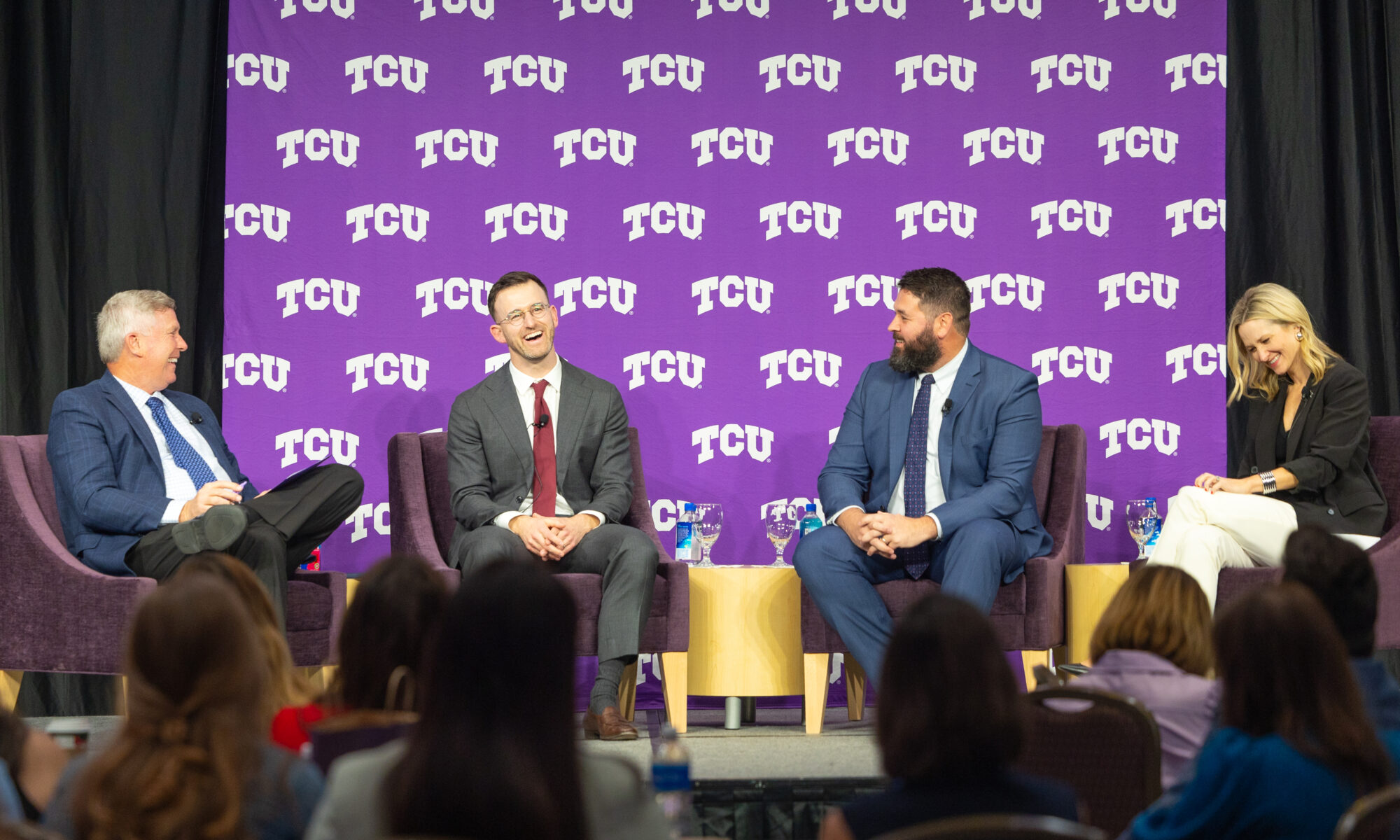
The Fort Worth Report hosted its speaker panel series called “Candid Conversations” where city and community leaders come together to discuss public policy and ideas to move Fort Worth forward. Dean Flynn was a featured panelist along with Tricia Elliott, M.D., Professor at Burnett School of Medicine at TCU; Kirk Calhoun, M.D., President of UNT Health Fort Worth; and Elyse Stolz Dickerson, CEO and Co-Founder of Eosera based in Fort Worth.
The hour-long discussion, sponsored by TCU and the Burnett School of Medicine, touched on a range of topics that would contribute to Fort Worth’s growth as a medical innovation hub. The panelists talked about the need for more medical research, the impact small businesses have on medical innovation, and how community-based care that puts patients first could fuel collaboration.
FORT WORTH – In today’s world, everyone wants to know how to go viral. For J Mack Slaughter, M.D., it all starts with the kind of content you are posting.
“To have physicians online sharing their expertise and education is extremely important in the fight of misinformation,” Slaughter, who is known as Dr J Mack online, told a room filled with aspiring physicians and Texas Christian University students.
Slaughter said it’s imperative for physicians to create content online and emphasized how important it is for physicians to show patients that they are still learning and growing.
“Dr. J Mack was the perfect person for this workshop,” said Jacqueline Navarrete, M.Ed., who is Innovation Network Director at TCU. “His career demonstrates what is possible when you merge expertise and creativity and it made him an inspiring and relevant voice.”
TCU alumnus Dr. J Mack ’09 is an emergency medicine physician who has more than a million followers on his social media platforms.
“I thought the workshop was really informative, especially for medical students who are looking to go into the social media space and expand their practice beyond medicine,” said Marisa Fat, MS-2 at the Burnett School of Medicine.
Fat was one of many Burnett Brand Ambassadors who attended the workshop to get tips on how to grow their social media platforms.
During the session, Dr. J Mack talked about the “Four Es” of social media that are essential to help build an audience and go viral: Entertainment, Education, Emotion and Engagement.
“Anytime you are making content, think about the Four Es in your head,” Slaughter said. “The more you can cram in one video, the better. Everybody wants to know how you can go viral; this is it.”
“As physicians and future physicians, we have an obligation to deliver information to patients,” Fat said. “Creating engaging content on social media allows us to reach them.”
Navarrete said the workshop was a success: “I’m thankful that the Innovation Network and Burnett School of Medicine were able to collaborate on this event.”
“Becoming the Tarrant County Medical Society’s President is one of the greatest honors of my professional career to date,” Dr. Hurd said. “To be able to serve our physician community and advocate for excellence in patient care while supporting our already strong work through Project Access, Women in Medicine, vaccines drives and more, is truly humbling but also invigorating.”
The event gathers health care professionals and future health care professionals together to celebrate leadership and the successes of the medical community.
“Seeing another faculty member achieve leadership in their county medical society will spur more students to become more active themselves,” Dr. Hurd said. “I hope this leads many of them to pursue future positions where they can influence the direction of health care and make lasting contributions to their communities.”
“This is such an honor to be recognized by my peers and colleagues for serving the Fort Worth community,” Dr. Capper said. “It has been my honor to work alongside all the wonderful physicians in this community to try and improve the health and well-being of our neighbors and patients.”
The award dates to the late 1600s when the most outstanding physicians in London were given the famous Gold-Headed Cane in gold, silver or ivory. The widow of the last recipient in 1823 gave it to the Royal College of Physicians in London where it remains. The TCMS later established the award in Tarrant County in 1951 to recognize a physician who symbolizes the pursuit of the highest standards of scientific excellence and integrity.
There is no nomination or campaigning a recipient can do for this honor. The Gold-Headed Cane recipient is described as the Doctor’s Doctor.
“This is a humbling honor with so much history attached to it,” Dr. Capper said. “My hope is that this serves as inspiration for our Empathetic Scholars® the next generation of physicians that we are training to value people with humility serving serve all with respect, dignity and kindness.”
Despite having a robust family with 13 children, Anthony Wallace and Onia Mayberry-Wallace, of Fort Worth, know the risks involved with each of Onia’s pregnancies because of her kidney failure diagnosis.
“I am a mom with a chronic illness; I’ve had my diagnosis since I was 15,” Mayberry-Wallace said. “From my second pregnancy on out, I had the realization that I’m a high-risk pregnancy moving forward.”
All their children have been born in Tarrant or Dallas counties. Their 13th child, Fancy-Jolene, and Mayberry-Wallace defied the odds of survival when physicians found out Mayberry-Wallace needed emergency kidney removal surgery 21 weeks into her pregnancy. Mayberry-Wallace had to have an emergency cesarean section, more commonly known as a C-section, to deliver her daughter along with the kidney surgery.
On the operating table, Onia had a conversation with her doctor: “There will not be a baby at the end of this; we just need to get to your organs at this point,” Mayberry-Wallace recalled.
The North Texas Maternal Health Accelerator (MHA) comprised of city government, universities, health systems, and community organizations in Tarrant and Dallas counties have come together to address maternal morbidity through medical research and making parenting resources available free of cost for all moms in North Texas. The Anne Burnett Marion School of Medicine at Texas Christian University and the University of Texas Southwestern Medical Center have joined forces to lead the MHA program.
“No other major city across the U.S. is coming together with the strategic investments and innovations to invest in maternal health and the overall well-being of moms and their babies,” said Sadie Funk, Co-founder and National Director of The Best Place For Kids®.
While pregnant with Fancy-Jolene, Mayberry-Wallace used Parent Pass™, a mobile application, to help her navigate her high-risk pregnancy.
“I fell in love with the app immediately,” Mayberry-Wallace said. “The app was like having a village in your phone.”
Mayberry-Wallace was one of 80 moms in Tarrant County who gave input on the development of Parent Pass™, which was created by The Miles Foundation and Best Place For Kids with grant funding support from the North Texas Community Foundation. The app is a central access point for mothers in Tarrant and Dallas counties, and provides a seamless way to connect to more than 600 local resources, according to Sara Redington, Chief Philanthropy Officer for The Miles Foundation.
“What we heard from moms in Tarrant County is that they had no idea of even half of the resources that were available to them from prenatal to one year postnatal,” Redington said. “This is a technology that was built by local families and for local families and that’s really a first-of-its kind technology.”
Fancy-Jolene was born at 21 weeks, and miraculously, was able to breathe on her own. Despite a lengthy stay in the Neonatal Intensive Care Unit (NICU) during her first months of life, the infant thrived and remains healthy.
“I have wonderful doctors and we’ve developed a wonderful relationship; they don’t beat around the bush – they give it to me straight so I know what to prepare for,” Mayberry-Wallace said.
Thanks to Parent Pass™, Mayberry-Wallace has a team of healthcare professionals helping her navigate Fancy-Jolene’s premature birth. She said the app helped “guide me through that process.”
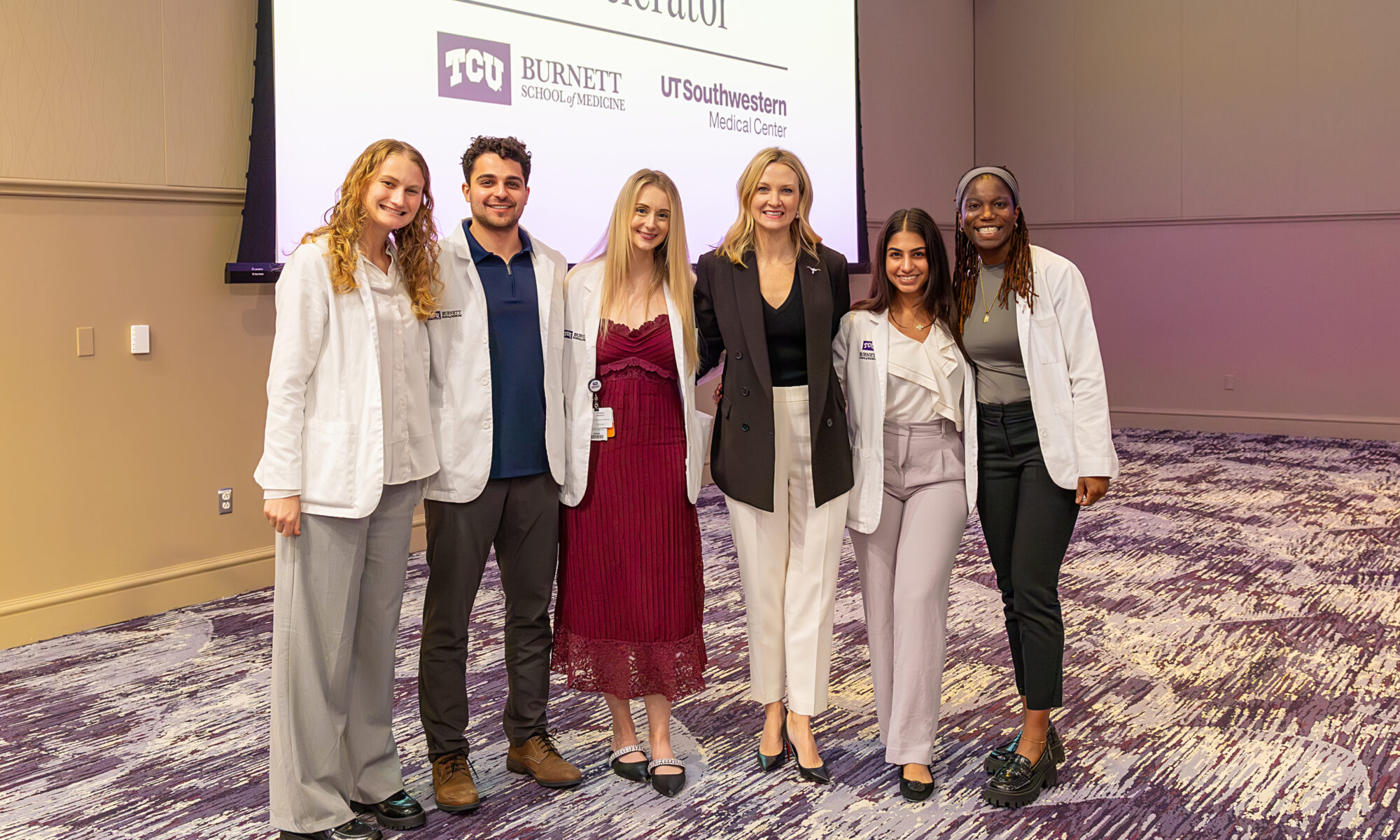
FORT WORTH – Nov. 17, 2025 – The Anne Burnett Marion School of Medicine at Texas Christian University and UT Southwestern Medical Center have joined forces to address some of the highest maternal morbidity rates in the country by forming the North Texas Maternal Health Accelerator (MHA).
“At the Burnett School of Medicine, we are deeply committed to improving health care access and outcomes for all Texans. We recognize the immense value of this initiative in fostering sustainable, systemic change in maternal health care delivery,” said Stuart D. Flynn, M.D., the Founding Dean of the Burnett School of Medicine at TCU. “This truly is a great example of collaboration, where Texans are coming together to help Texas and the entire country.”
Fort Worth Mayor Mattie Parker, who helped form this coalition, is one of the MHA’s many government partners, who include leaders at the local, county, state, and federal levels. Coordination with agencies and elected leaders has already mobilized millions of dollars in additional public funding that supports the MHA’s objective to enhance maternal health care across Texas and the country.
The program, led by Dr. Flynn as PI with UT Southwestern and Parkland Health as co-investigators, will be coordinated by the nonprofit, Child Poverty Action Lab (CPAL), based in Dallas. My Health My Resources of Tarrant County (MHMR) and Parkland Center for Clinical Innovation (PCCI) serve as key partners.
The MHA’s dual goals are to (1) reduce severe obstetric complications (SOCs) by more than 20% over three years through implementation of novel technologies and strategies, and (2) to develop economic models that reward maternal health improvements via sustainable incentives for keeping mothers and babies healthy.
“We are honored and proud of the many partnerships that make this innovative program possible,” said David Nelson, M.D., Division Chief of Maternal-Fetal Medicine at UT Southwestern Medical Center. “The foundation of the clinical program is built using evidence-based strategies from health care experts who are a part of this talented team. The future of maternal health care across the United States starts today in North Texas.”
Since December 2024, 11 philanthropic partners across North Texas have committed nearly $25 million to support the MHA’s maternal health initiatives.
In addition to TCU and UT Southwestern, area hospitals from every major health system in North Texas, including Baylor Scott & White, JPS Health Network, Texas Health Resources, Medical City Healthcare and Methodist Health System, have committed to this work with the shared goals of reducing maternal morbidity and deaths. More than 50 other partners, including MHMR, PCCI, Best Place for Kids, The University of Texas at Arlington, Catholic Charities Fort Worth, Catholic Charities Dallas and Delighted to Doula, along with more than 60 healthcare clinics, managed care organizations and a host of other partners throughout the North Texas region, are engaged in this novel health program.
“Advancing new models for maternal health at a regional scale requires an up-front investment in infrastructure that unites dozens of providers and community partners around a shared vision,” said Alan Cohen, Founder & CEO of CPAL. “We have the opportunity to improve outcomes for mothers and babies in North Texas and demonstrate a replicable approach to delivering care in ways that also reduce costs.”
MHA’s first initiative, launched in spring 2025, addresses the area’s most common severe obstetric complication: blood transfusions. Free, over-the-counter iron supplements are already being distributed to pregnant mothers across Tarrant and Dallas counties to reduce their risk of needing a blood transfusion after delivery. This intervention is based on research from UT Southwestern and Parkland Health that showed about a one-third decrease in blood transfusions among patients who were given prenatal iron supplements from their health care provider, rather than being recommended to take the once-a-day pills.
“We can make a large impact on our patients’ health and outcomes by implementing simple interventions,” said Catherine Spong, M.D., Professor of Obstetrics and Gynecology at UT Southwestern, who co-led the study, which also included Dr. Nelson. “This study demonstrates the efficacy of a public health initiative to reduce maternal anemia and the most common cause of severe maternal morbidity and gives other institutions data to implement similar programs in their own populations.”
The iron supplement distribution began at John Peter Smith Family Health Center in Fort Worth and has expanded to 16 different community clinic partners across 60 North Texas sites.
The research program traces its origins to the Tarrant County Maternal & Infant Health Coalition (MIHC), started by Mayor Parker in September 2022 to find solutions to the city’s critical maternal and infant health outcomes. Fort Worth’s 76104 ZIP code had one of the highest infant mortality rates of any ZIP code in the United States, with 19 infant deaths per 1,000 live births between 2011 and 2014, according to Tarrant County Public Health. The average U.S. infant mortality rate is 5.61 deaths per 1,000 live births.
“I believe the way we care for mothers and children in Fort Worth is a true measure of our city’s success,” Mayor Parker said. “When I first convened the Maternal & Infant Health Coalition in 2022, Fort Worth and Tarrant County already had exceptional medical providers and resources – but we lacked the coordination needed to truly improve outcomes for mothers and babies. This project and its funding will enhance that collaboration and create real impact in our region for years to come.”
The Anne Burnett Marion School of Medicine at Texas Christian University opened in July 2019 in Fort Worth, Texas, to transform health care by inspiring Empathetic Scholars®. The allopathic (M.D. granting) medical school was fully accredited by the Liaison Committee on Medical Education (LCME) in 2023. The innovative curriculum includes an emphasis on compassionate patient care, a four-year Longitudinal Integrated Clerkship and a four-year Scholarly Pursuit and Thesis research project. Preparing students for the way medicine will be practiced in the future, the Burnett School of Medicine focuses on future advances while keeping the patient at the center of care.
About UT Southwestern Medical Center
UT Southwestern, one of the nation’s premier academic medical centers, integrates pioneering biomedical research with exceptional clinical care and education. The institution’s faculty members have received six Nobel Prizes and include 24 members of the National Academy of Sciences, 25 members of the National Academy of Medicine and 13 Howard Hughes Medical Institute Investigators. The full-time faculty of more than 3,200 is responsible for groundbreaking medical advances and is committed to translating science-driven research quickly to new clinical treatments. UT Southwestern physicians provide care in more than 80 specialties to more than 140,000 hospitalized patients, more than 360,000 emergency room cases and oversee nearly 5.1 million outpatient visits a year.
About the Child Poverty Action Lab (CPAL) The Child Poverty Action Lab (CPAL) operates as an unofficial R&D department for Dallas, rethinking how data can be integrated into public systems, community programs and neighborhood life to break cycles of intergenerational poverty. One of CPAL’s initiatives increases North Texas’ capacity to compete for and secure meaningful federal grants, unlocking resources to drive local impact.
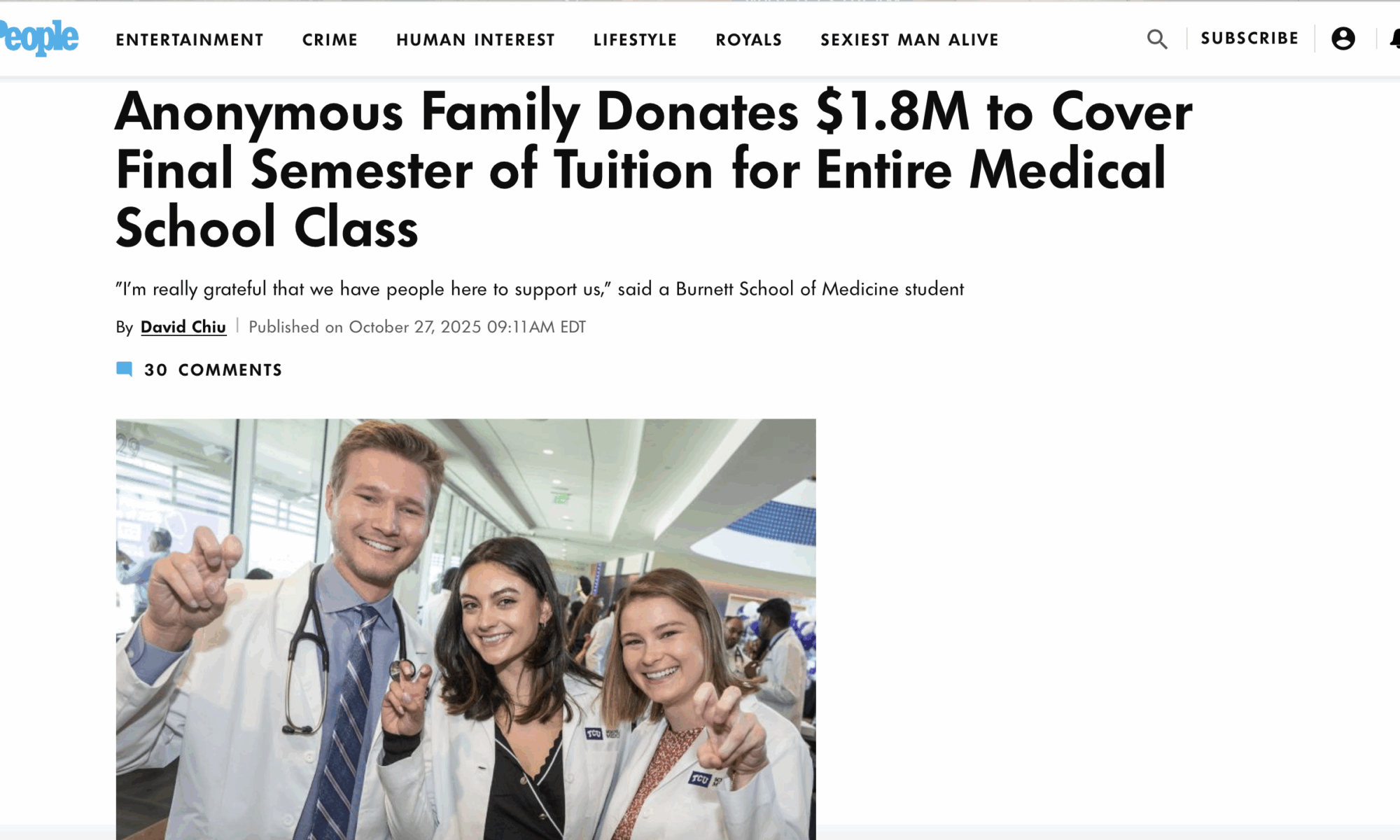
The transformative gift allows the medical students to focus on a medical specialty that resonates with them, while also reinforcing the values of being an Empathetic Scholar®. The scholarship gift was announced during a Zoom meeting with Stuart D. Flynn, M.D., Founding Dean of Burnett School of Medicine at TCU, while many of the members of the class of 2026 were on away rotations auditioning for residency spots at hospitals across the United States. The People story highlighted the reactions from class of 2026 members Angela Abarquez, MS4 and Cort Ewing, MS4.
The People story was syndicated across 25 TalkRadio 1080AM radio stations in Phoenix, Denver, Portland, Salt Lake City, and more. It was also syndicated with NewsNation and Yahoo News to reaching international audiences across the web. Read the story here.
“As a novel medical school, we had to find an equally innovative approach to communicate our school’s unique curriculum,” said Maricar Estrella, MBA, Director of Digital Development and Content Strategy at the Burnett School of Medicine at TCU, who founded the program.
A committee consisting of faculty and staff evaluates and selects students who apply to the program, which is voluntary.
The program has grown to include media training from local journalists such as CBS 11 Investigative Reporter Andrea Lucia, NBC 5 Sports Director Newy Scruggs, ’23 EMBA, and social media influencers such as J Mack Slaughter, Jr., M.D., an emergency medicine physician.