Brick by brick, Burnett School of Medicine at TCU’s medical education building nears completion

An estimated 225,000 ACME bricks will cover the exterior of Anne Burnett Marion at Texas Christina University's new medical education building.

FORT WORTH – When you drive down West Rosedale Street in Fort Worth’s Medical Innovation District (MID), you will see a new medical education building that has the unmistakable look of Texas Christian University’s main campus.  

In episode eight of On Site: Construction of the Anne Burnett Marion School of Medicine at Texas Christian University hosted by Founding Dean Stuart D. Flynn, M.D., Dean Flynn discusses  the rich history behind the buff-colored TCU bricks that make up the outside façade of the new building. 

“The TCU campus is very inviting to me and that’s a beautiful thing,” Dean Flynn said. “Bringing these same bricks to this building sends that same wonderful message that the TCU central campus sends.” 

In the episode, Dean Flynn is joined by Dennis Knautz ‘75, MBA ’76, former President of Acme Brick Company, to explain how Acme has continued to supply TCU with the bricks for its campus buildings for more than 100 years.  

“Not very many places in the U.S. have that buff burning clay,” Knautz said. “We found that in the town of Perla, Arkansas, which has a brick plant there.” 

Construction firm Linbeck estimates that there will be 225,000 buff-colored TCU bricks covering the exterior of the new medical education building upon its completion.  

ABC’s Good Morning America Spotlights Burnett School of Medicine at TCU Student’s Research Project

Michael Rose and Sam Sayed, MS4, Co2024 share a handshake in a shoe store in Fort Worth.

FORT WORTH – A Good Morning America camera crew witnessed first hand how new shoes brought joy to several Dallas-Fort Worth children in December.

The GMA segment titled “Full of Sole” aired on December 20 and featured Sam Sayed, a fourth-year medical student at the Anne Burnett Marion School of Medicine at Texas Christian University,

Sayed’s work on his non-profit organization that aims to combat education inequalities through the gift of shoes for children has also become his 4-year Scholarly Pursuit & Thesis (SPT) research project at the Burnett School of Medicine at TCU. He plans to answer the research question: Can a new pair of sneakers lead to improved mental health for kids in impoverished neighborhoods, while also instilling cultural competency in future doctors?   

GMA came to one of several shoe distributions Sayed’s charity Dayna’s Footprints conducts throughout the year. View the story here.

FIND OUT MORE ABOUT DAYNA’S FOOTPRINTS

Can a new pair of sneakers improve a child’s mental health and instill cultural competency in future doctors?

Sam Sayed, MS-4, CO2024 high fives underserved children for his charity Dayna's Footprints and they host an event to give out shoes to those in need.

FORT WORTH –  The gift of a new pair of sneakers can brighten the day and instill confidence in almost any child, but can it improve a child’s mental health and instill cultural competency in future doctors?

This is the question that Sam Sayed, MS-4 at Anne Burnett Marion School of Medicine at Texas Christian University, is trying to answer with his four-year Scholarly Pursuit & Thesis (SPT) research project.

DAYNA’S FOOTPRINTS FEATURED ON GOOD MORNING AMERICA

Sayed’s non-profit organization Dayna’s Footprints, which is at the center of the research, aims to combat education inequalities through the gift of shoes for Dallas-Fort Worth children. 

“We hope that they see themselves walking in our shoes,” Sayed said. “Perhaps one day becoming a doctor or at least being able to dream bigger with that increased sense of confidence.” 

This year, several first-year medical students and kids from the COMO community will be surveyed before and after the shoe shopping events as a part of Sayed’s SPT research project. He adapted a survey from Alexander Green, MD, MPH, Co-Founder of Quality Interactions, Associate Professor of Medicine at Harvard Medical School, and Senior Investigator in the Division of General Medicine at Massachusetts General Hospital, to gauge the cultural competency of the first-year medical students. 

It all correlates with building empathy and the Empathetic Scholar™ curriculum at the medical school, according to Stuart D. Flynn, M.D., Founding Dean of Burnett School of Medicine at TCU.  

“Every one of these projects by definition has something to do with medicine and it has something to do with patients,” Dean Flynn said. “I can guarantee you with Sam when he goes to one of his clinics in one of these underrepresented areas Sam looks at that patient base very differently than if he wasn’t doing this project.” 

Sam and his brother Sharif Sayed started Dayna’s Footprints in 2018, which is a nonprofit organization named after their late sister, Dayna Sayed. Dayna died in a drive-by shooting on March 8, 1997, when she was 16. At the time, Sam was 11 and Sharif was 9. 

Before that tragic event, Dayna had gotten her first summer job at Just For Feet in Arlington, Texas. She saved up enough money to buy her siblings brand new pairs of Nike sneakers. It was the very first pair of notable footwear either of them had received. 

It was a pivotal and emotional moment, Sam Sayed said.  

“It felt like just overnight our confidence grew,” he said. “Having a pair of shoes that made us excited just to wake up in the morning and put them on and rush out the door to go to school.” 

At 34, Sam began medical school at Burnett School of Medicine in July 2020 during the COVID-19 Pandemic. Since 2020, with help from his classmates, the organization has raised more than $250,000 to buy more than 1,000 pairs of sneakers for Dallas-Fort Worth area kids. 

Sam and Sharif have also used their love for health and fitness to create the Million Pound Challenge (MPC) with Dayna’s Footprints. Each holiday season on social media, from November 1 through January 1, they lift more than a million pounds of total weight volume and share their progress on social media using the hashtag #daynasfootprints. They ask other participants to post videos of themselves lifting weights using the hashtag to create a buzz to help spur donations.   

Sayed’s work on his SPT research project is like a chemical reaction in, “the way he’s bringing other students along for the journey,” Dean Flynn said.  

Sam Sayed praised his classmates who have selflessly taken time to help him do meaningful work to connect and improve health care in the Fort Worth community. 

“They selflessly want to be a part of this,” Sayed said. “It was easy for them to want to show up on a Saturday and help some kids gain some confidence and see some joy in their eyes.” 

Away Rotations: Antonio Igbokidi, MS4, Shares Experiences at Columbia University, UCLA and UT-Southwestern

Antonio Igbokidi, MS4

FORT WORTH – Each year as Fall arrives, fourth-year medical students all over the United States are finishing up their away rotations and the interviewing cycle for Graduate Medical Education (GME)/residency positions begins. Those four-week auditions during away rotations carry a huge weight as they interview residency slots at hospitals or healthcare centers in the U.S.  

While away rotations are not required to apply to a residency program, they can give medical students an opportunity to distinguish themselves from others in hopes of making a lasting impression on residency directors.   

Antonio Igbokidi 

Hometown: Little Rock, Arkansas 

Classification: MS-4 

Medical Specialty: Psychiatry 

Away Rotations: New York-Presbyterian/Columbia University Irving Medical Center, University of California at Los Angeles (UCLA) Medical Center and UT Southwestern Medical Center  

Competing to become a physician in three of the biggest metropolitan cities in America such as New York City, Los Angeles and Dallas-Fort Worth is a tall task for almost any medical student.  

Antonio Igbokidi, MS-4 at Anne Burnett Marion School of Medicine at Texas Christian University, was up for the challenge.

“I think this part is so surreal,” Igbokidi said. “This is the part that we’ve worked our whole lives to get towards and it’s fun.” 

Igbokidi was born to Nigerian parents and raised in Little Rock, Arkansas. He is hoping to become a psychiatrist when Match Day rolls around in March 2024. He did away rotations at NewYork-Presbyterian/Columbia University Irving Medical Center, University of California (UCLA) Medical Center and UT Southwestern Medical Center. 

His immersion into psychiatry began early on at the Burnett School of Medicine at TCU in 2020. He credited the medical school’s Longitudinal Integrated Clerkship (LIC) curriculum with getting him and his classmates in front of patients from the outset of their education.  

“A big thing about psychiatry is feeling comfortable enough to establish that rapport with a patient,” Igbokidi said. “Seeing patients early on in my psychiatry outpatient clinic and in the inpatient hospitalization times provided me this confidence and calmness with patients.”  

Students are partnered with a preceptor in their first year, begin following patients, and learn how comprehensive care works.  

In their second year, students get 10 weeks of inpatient hospital immersions and 40 weeks of clinical ambulatory rotations in 8 medical specialties (Emergency Medicine, Family Medicine, Internal Medicine, Obstetrics & Gynecology, Neurology, Pediatrics, Psychiatry and Surgery). In their third year, students continue to participate in comprehensive care of patients alongside a dedicated preceptor in those same medical specialties. 

Igbokidi was able to spend a lot of time working with adolescents at John Peter Smith (JPS) Hospital in Fort Worth’s Medical Innovation District (MID) alongside his preceptor long before his away rotations began. 

“He was really big on me getting experience in a variety of different settings,” Igbokidi said.  

His preceptor, along with other child psychiatrists, let Igbokidi work with adolescents as early as his second year of medical school. During that time, he learned how pharmacology works hand-in-hand with treating patients. The Empathetic Scholar® curriculum at the medical school set him up for success during his away rotations, Igbokidi added. 

“I felt more sure and that gave me more time to focus on the small things the interpersonal things,” Igbokidi said.  

That level of comfort and familiarity working with patients during medical school made his away rotation experiences in the nation’s biggest cities much more exciting.  

“From where I started to seeing the transition in myself is such a magical thing,” Igbokidi said. “I’m ready to go into Match Day and seeing where I match for residency and ultimately seeing my story unfold even more.” 

With Burnett School of Medicine Students, Mercy Clinic Will Increase Patient Care by 30% in 2024

Raika Bourmand, CO2027 works Uday Rallabhandi, CO2025 at the Mercy Clinic in Fort Worth as they partner to provide care to a patient.

FORT WORTH – In her first six months of medical school, Raika Bourmand has already had several patient encounters at the Mercy Clinic of Fort Worth.

“Not only do we have early clinical experience, we also develop that confidence in the clinical environment,” said Bourmand, an MS-1 at the Anne Burnett Marion School of Medicine at Texas Christian University, “We also have these extra opportunities outside the curriculum like Mercy Clinic where we not only get clinical experiences, but we are learning the importance of community.” 

Thanks to an ongoing partnership between the Burnett School of Medicine at TCU and the Mercy Clinic, the health care facility is expected to increase patient care by 30 percent in 2024.

“We will be able to do an additional 230 patient visits,” said Aly Layman, Executive Director of Mercy Clinic. “That’s a big number in jumps for us.  It’s about a 30 percent increase from what we have been doing so we are grateful for that.” 

For the past 10 years, Mercy Clinic has been a beacon of hope for patients in South Fort Worth.  The clinic provides free health care for those in the 76104 and 76110 ZIP codes who are uninsured and are at 200% or below the poverty level.  Starting in 2024, Burnett School of Medicine students will be at the Mercy Clinic every Monday night.   

This partnership provides an opportunity for medical students and faculty members to provide health care to an underserved community. 

“This is a real clinic with real patients,” said Ric Bonnell, M.D., Burnett School of Medicine at TCU’s Director of Service Learning.  “We don’t sacrifice care, time, and attention.  The patients at Mercy are treated just like I treat patients in any other setting.” 

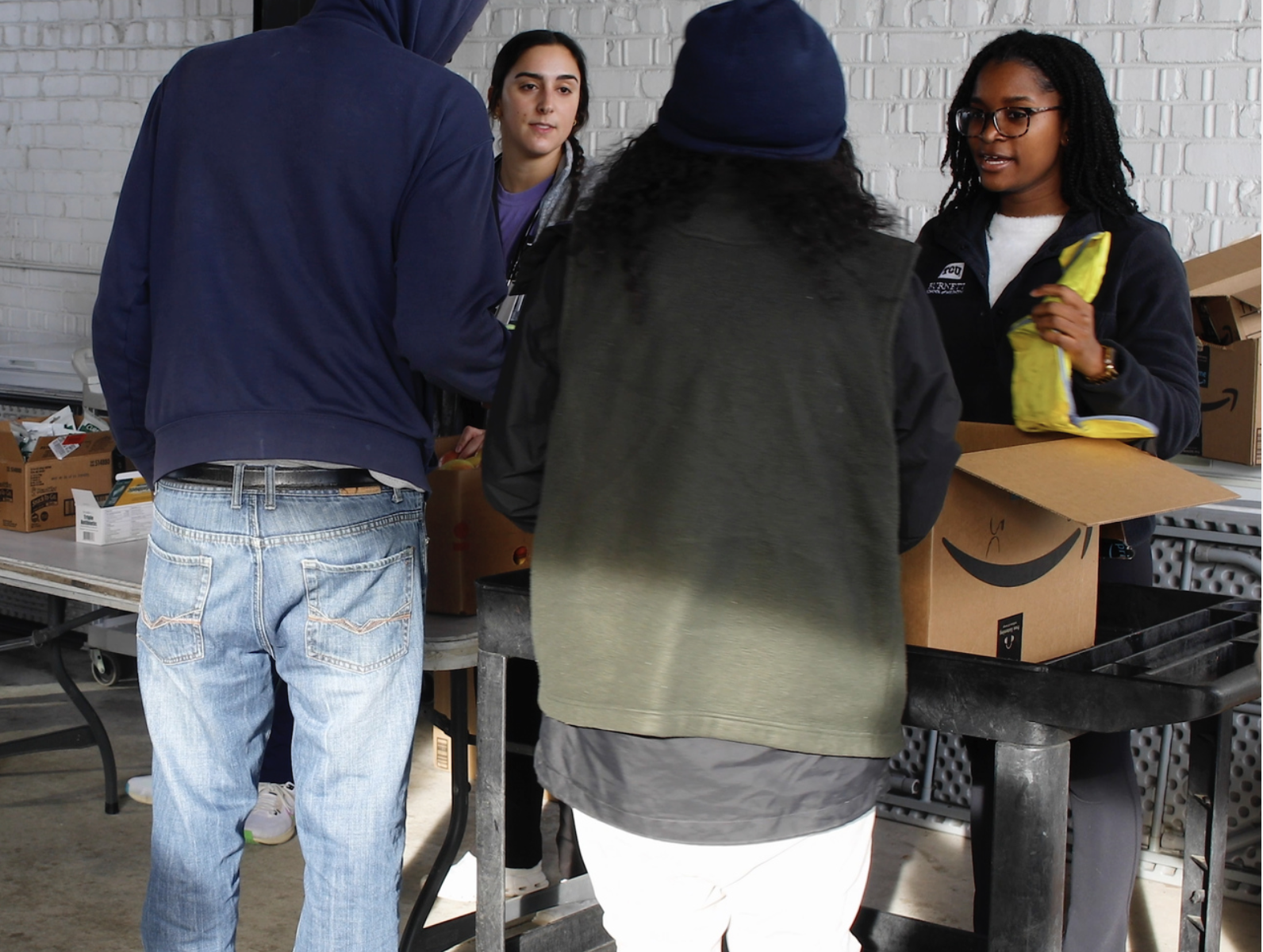
Medical students perform tasks such as drawing blood, checking blood pressure, and giving assessments, all under the watchful eye of faculty. 

“They love it,” said Sandra Esparza, M.D., the medical school’s Director of Clinical Skills.  “They are the primary people who see the patients.” 

Students are excited about this opportunity to learn while giving back to the community:  “It’s a great learning experience for the students,” said Andrew Goh, MS-2. “We get to help out this population that doesn’t usually receive medical care.” 

Medical Students Mentor Fort Worth Fourth-Graders

Anne Burnett Marion School of Medicine at Texas Christian University students mentor fourth-graders as part of the Academy 4 program in Fort Worth, Texas.

FORT WORTH – Youth who regularly meet with mentors can avoid severe consequences such as being incarcerated, using illegal drugs and drinking alcohol, according to mentoring.org.

Students at the Anne Burnett Marion School of Medicine at Texas Christian University are trying to make a difference in the lives of Fort Worth fourth-graders by being mentors to them. As mentors in the Academy 4 program, medical students meet with youth once a month during the school year.

Fourth grade is a critical time for these students because it’s when they begin to formulate opinions and become individualistic.

“During this time, this is where their values, their ethics and their morals are being formed,” said John Shearer, Executive Director for Academy 4.  “It’s this sweet spot where we can show up and have a big impact and big influence on the life of a child.” 

The children who end up being incarcerated start turning to drugs and alcohol in fourth grade, said Ric Bonnell, M.D., Director of Service Learning at Burnett School of Medicine at TCU. “If you’re going to make a difference, that is the critical period in that kid’s life to do it.” 

“One of the neat things about our medical students is they’re still young enough and energetic enough that these kids are really looking up to them and identifying with them,”Bonnell said.  

Fiza Baloch, MS-1, who was one of the many medical students taking part in Academy 4, said: “It was really important for me to be able to give back and inspire and build a relationship with a fellow student and have the opportunity to every month play games and talk about life topics.” 

If you would like to be an Academy 4 mentor, go to www.academy4.org. 

Burnett School of Medicine Student Gets National Fellowship

Anand Singh, MS3

WASHINGTON, D.C. – Doctors for America announced that Anand Singh has been accepted as a 2023/24 Copello Health Advocacy Fellowship member.

Singh, a third-year medical student at the Anne Burnett Marion School of Medicine at Texas Christian University, was one 12 leaders chosen to the program, which is open to medical students, residents, practicing physicians and retirees who have a willingness to learn and the desire to make a difference in health advocacy.

Singh, who was recently elected as the 2023-2024 Medical Student Section (MSS) Chair-Elect for the American Medical Association, is passionate about healthcare policy, community health, and mentorship. He is currently a member of the American Medical Association Foundation Board of Directors where he oversees initiatives to improve our nation’s health. He is actively involved in organized medicine at local and national levels, holding several leadership positions with the goal of promoting health equity through advocacy and policy-making.

Through Singh’s experience with health equity research, street medicine, and the Albert Schweitzer Fellowship, he has seen health disparities within his own community which require structural change. He aspires to be a physician-advocate who not only positively impacts his patients’ lives but also creates systemic solutions to improve population health.

The Copello Fellows will meet monthly to learn from national experts and each other about advocacy, community organizing, media relations, writing and giving testimony, how to impactfully engage with legislators and more. Each member will also participate in a topic focused area, and attend DFA’s National Leadership Conference in Washington, DC, June 6 – 8, 2024.

Burnett School of Medicine Students Create ‘Joyful Movement’ with Fort Worth Elementary Students

Anne Burnett Marion School of Medicine at Texas Christian University exercise and play with CC Moss Elementary students in Fort Worth.

FORT WORTH – Roughly one in six youth have obesity in the United States, according to the Centers for Disease Control (CDC).  

One way to tackle childhood obesity is to introduce and encourage children to experience joyful movement, according to Hannah Smitherman, M.D., Pediatric Clerkship Director at the Anne Burnett Marion School of Medicine at Texas Christian University. 

CC Moss Mural Project 

“If we could just somehow capture that joyful movement and continue that on through adolescence and even into adulthood, I think we would be a healthier community,” Smitherman said. Joyful movement goes beyond exercise and turns it into something fun, achievable and less stressful, she said. 

Recently, second-year medical students at the Burnett School of Medicine at TCU spent time with Christene C Moss Elementary School as part of the school’s Service Learning program. While at the CC Moss, medical students participated in the elementary students’ P.E. class. CC Moss Elementary has a minority enrollment rate of 98%. The National Survey of Children’s Health (NSCH) showed in 2021-2022, children in the lowest income group had the highest rates of obesity (24.1%) while children in the highest income group had the lowest (9.7%). 

Dr. Smitherman said it was beneficial for the medicals students to connect with youth in the Fort Worth community: “This is our future, these are our community members.”

Essay: The Job

The day I graduated with my PhD, just a few hours after I walked the stage and celebrated with my family, I got a call from my dream job employer. This was a call I had been waiting for. I knew we were going to talk today. My future employer knew today was my doctoral graduation. We scheduled this call two weeks prior. The job was mine. My family and I celebrated it along with my graduation. Long story, short: I didn’t get the job! I was absolutely crushed. What had started out to be one of the best days of my life turned out to be one of the worst!

I’m so negative. No, really! People who “kind of” know me, probably can’t believe that’s true. It’s true! My wife will confirm. At my worst, if left unchecked, I’m a real Debbie Downer. Everything, and everyone, is awful! Graduation day was no different. Though it’s likely stronger in me than most, we, human beings, all have a negativity bias, also known as positive/negative asymmetry. This simply means that we all tend to focus on the negative more than the positive. Psychologist Rick Hanson says that our brains are like Velcro for negative things and Teflon for positive. The “good” stuff slides right off, while the “bad” stuff really sticks with us. I’m sure you know what I am talking about.

Picture this: You’re having a great day, and then bam! You have one particularly negative interaction, and your whole day (or life) is ruined. If someone asks how your day was, you will tell them it’s terrible and overlook all the other relatively positive things you’ve experienced and accomplished. And if you’re expert-level negative like me, you will ruminate, or fume, about that one negative thing for some time to come. On the day of my doctoral graduation, I went from focusing on one of life’s greatest accomplishments to focusing on being jobless, worthless, and hopeless with absolutely zero backup plans (or money). This is the negativity bias at work.

The negative is stickier and louder and automatically influences us more than the positive. While that can certainly lead us in the wrong direction – it did for me after graduation, like it so often does – it’s not inherently bad. It’s likely that this negativity bias has been selected for and evolved over the course of time as a protective mechanism. Good, rewarding, pleasurable stuff doesn’t matter if imminent danger awaits. We need to be aware of threats and learn from our missteps, and the negativity bias helps us with that. And fortunately, there’s still more to this story.

Beyond and to counter the negativity bias, we also have a fading affect bias. Over time, the feelings and emotions that come with negative experiences fade faster than those of positive ones. This means that, over time, many negative things aren’t remembered, perceived, or felt so negatively. In fact, many negatives become positive, or at least, lead to positives, and that’s what sticks around. This is great news for you and me, especially me. With a little bit of time and space, things changed a lot for me. What I didn’t realize in the initial moment of disappointment and fear was that I was going to learn, grow, and gain so much.

First, I learned that I was cared for and loved no matter my external, material achievements, or lack thereof. Family, friends, and colleagues rallied to support me and help me find new paths and opportunities. In fact, the support I received from not getting the job was so much greater, so much more meaningful, than the praise or recognition I have ever been given for any major or minor accomplishment in my life. This reinforces that I am, we are, human beings, not human doings. In the eyes of those who know, love, and care for me, I am so much more than a doer, a striver, an achiever. Yes, I can go, go, go, and get. I can also, and should, go easy, go easy on myself, and get perspective, often, on what really matters. If you are a doer, a striver, an achiever, make some space to go easy, go easy on yourself, and remember what is most important.

Second, I learned about humility. Nothing is guaranteed, and I am not as important, special, or as significant as I can make myself out to be in my head. Rarely am I the most important person in the room. As a healthcare professional you are not the most important person in the room; your patient is. This is all quite relieving. When I am really stressed, I am way too focused on myself and what I think I should have done or how I think things should be. What I am learning is to take the focus off myself and put it sincerely onto someone else. Rumination doesn’t bring out the best in me; service does. If you’re really feeling stressed or pressed for time, it seems so counterintuitive, but I promise it’s just the way things work: focus less on yourself and more on others.

Third, I learned that life goes on. No, really. Life goes on, and so can I. And I did – you can, too. You can. You are. You will. Keep going!

Fourth, I learned to be open. Change is the only constant. Change isn’t what’s hard, it’s the resistance to the change that’s hard. If there’s tension in your life right now, investigate what change is happening and practice living one day, one moment, at a time in that new direction.

Fifth, I learned that happiness, contentment, wellbeing is, in part, about wanting what you have, not having what you want (hat tip to the Buddha for that insight). I wanted that job so bad. There was nothing else, in my closed mind, that I wanted to do. With just a little bit of time and with openness to more information that was always there, I quickly realized that I had painted far too many red flags, green. That job would have been terrible for me. What I had – not what I wanted – was more time to learn, to grow, and to find the place where I needed to be planted. What all do you have right now that you overlook or undervalue because you are too focused on what you think you want and don’t have?

Finally, I learned that I am not in control. The great writer and professor, Joseph Campbell, said, “You must give up the life you planned in order to have the life that is waiting for you.” This one took the most time. Honestly, I am still working through this one. But it is undoubtedly the most important, the most valuable lesson. Almost three months to the day of getting my PhD, i.e. not getting the job, I started a new job. I started this job. I wish I could tell you how great this job has been for me, but that’s another article altogether. Suffice it to say, this job has not been great because it’s without its challenges, on the contrary. It’s the challenges – the professional, the personal, the relational, even the deeply spiritual ones – that make this job so great. Time, space, perspective, and fading affect have shown me that I wouldn’t have grown if I was planted in that other job. Here, I can grow, and maybe, one day, bloom. Are you ready for the life that is waiting for you? There’s a way forward.

Here’s what I want you to know: I am just starting to really understand what I’ve learned, what I’ve gained, and seen how I’ve grown and how I can still grow. I spent too much time with what I didn’t get and didn’t have, all the negatives, feeling like something had been done to me instead of for me. I missed the lessons, the learnings, the opportunities for growth, and all that I was given and have. And to be clear, this isn’t “toxic positivity”. The negatives are real, they can hurt, they can be challenging, and they must be recognized, felt, and experienced. The negatives are an integral part of what leads us in a better direction if we are actually open to them and not trying to resist or be without them. But the negative cannot be the only focus. Start now, seriously acknowledging your negative experiences. Write them down and leave them be for a while. Give yourself a little time and space. Then come back to them and reflect (write this down, too) on what you’re learning from them, how you’re growing, and what barriers and obstacles have actually been there to point you in new and better directions in life. This is the way of our individual, and collective, evolution. It’s not the way of the animal. It’s the way of the spiritual, the divine, the transcendent. As a helper, healer, or servant leader, this is your job. It’s certainly my job. And I am so glad I finally got here.

Craig Keaton, PhD, LMSW

Burnett School of Medicine at TCU Director of Wellbeing

Medical Students Inspire Fort Worth Elementary Students During Service Learning Project


FORT WORTH – Settling in at a new school can be difficult for children of any age, but for students with disabilities the transition can be more challenging.  

Messiah Douglas, 6, a first-grader at Christene C. Moss Elementary, was diagnosed with autism at the age of 3. Art has been one of the ways he’s acclimated himself to his new school. He enjoys drawing steam engines and coloring most things with his favorite color, blue, even during recess.  

“I like to have free time,” Douglas said. “I’m going to be an engineer. I want to make steam trains.”  

His grandmother, Pamela Thomas, 56, a campus monitor at the elementary school, took the job this Fall to help him transition to his new school. 

“Before him, I knew nothing about autism,” Thomas said. “But I’ve educated myself to get into his world to try to understand him and help him through daily life.” 

When Ric Bonnell, M.D., Director of Service Learning at the Anne Burnett Marion School of Medicine at Texas Christian University, approached Charla Staten, Principal of Christene C. Moss Elementary, about having medical students paint a mural inside the school a year ago she was excited. On the first day of school, the students lit up with joy when they saw the first mural. 

“The kids were super-duper excited and were just like oh my goodness it’s beautiful,” Staten said. “When you tell them who helped to paint them they truly become great TCU frog fans.”  

A year later, the same group of medical students returned to paint new murals alongside first-grade, third-grade and fourth-grade students. It’s all a part of the Service-Learning curriculum at the Burnett School of Medicine at TCU. The unique curriculum puts medical students into communities to meet patients in their own environments. It also helps the medical students inspire the next generation of students to go into medicine. 

That’s what Burnett’s about, Dr. Bonnell added. 

“Instead of talking to them in a lecture about getting out into the community and doing service learning why not bring them out and do it for real,” Dr. Bonnell said.  

Messiah was excited to meet the medical students and paint. It was all he talked about, according to Principal Staten.  

“Just being able to feel like he has an intricate part in making our school beautiful is going to be such a lasting effect on him,” Staten said.  

As you walk up the hallways of the first and second floors of the elementary school you see messages of empowerment like, ‘Let Your Light Shine,’ ‘Learn Something New Today,’ or ‘I Am Brave I Am Loved I Am Strong.’   

The words in the murals are filled with every color possible. They are surrounded with flowers, friendly-faced animals and there is even a mural with the face of Ms. Opal Lee, a Fort Worth native who helped make Juneteenth a national holiday 

Alejandra Dominguez, MS-2 at Burnett School of Medicine, joined Messiah’s group to paint one of several murals.  

“He just wanted to paint one color but we got to take him around and paint that same color in different hallways,” Dominguez said. “You can tell that getting a creative outlet like this is something he needs often to get his energy out.” 

This is another way of learning and practicing medicine, Dr. Bonnell added.  

“We have several of our students that are going into neurology and going into pediatrics,” Dr. Bonnell said. “It’s good for them to see those students and see them as kids rather than as patients in the hospital.” 

Christene C. Moss Elementary is in Fort Worth’s Eastland neighborhood. The school’s student body is half Hispanic and half African American, according to Principal Staten. The service-learning activity resonated heavily with Dominguez who is Hispanic and was raised by Cuban parents in Miami, Florida. Growing up, her parents only spoke Spanish at home. She learned to speak English at a school with a similar student body population.   

“I understand their environment and where they’re coming from,” Dominguez said. “I can see how having medical students around me in elementary would’ve impacted me positively.” 

She also helped raise her nephew who has autism. 

“It reminded me a lot of working with him when he was that age,” Dominguez said. “He needed a little bit more instruction but once he has the instruction, he’s able to follow it well and regulate his emotions.” 

As Messiah painted with Dominguez he made, ‘choo-choo,’ noises and told her, “When I get grown, I’m going to drive the engine number nine steam train.” 

Service learning is only a few hours out of the classroom and clinic for medical students, but the impact can have a lasting effect on kids, Thomas added. 

“The children might not ever get a chance to do things like this outside of TCU coming in to help,” Thomas said. “Just giving time back to the community means a lot. I love it.”